
Categories List
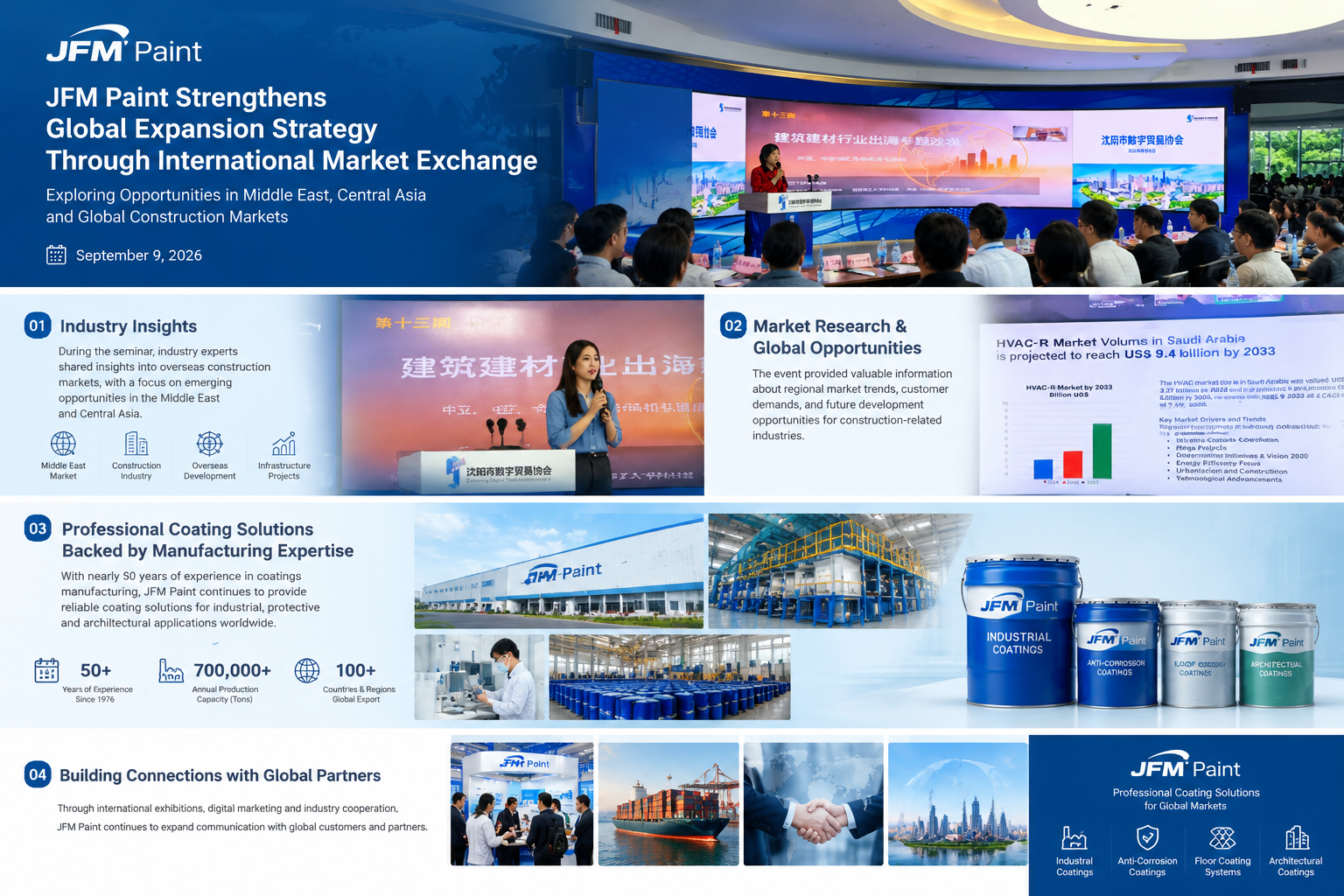
 JFM Paint Strengthens Global Expansion Strategy Through International Market ExchangeSep 10, 2026
 JFM Paint Strengthens Global Presence Through Successful Participation in KOREA BUILD WEEK 2026Aug 27, 2026
 EU REACH Adds 12 New SVHCs, Forcing Industrial Coating Export Declarations UpdateAug 16, 2026
- Vietnam Rule: Industrial Coating Imports Need SVHC Declaration from China Starting Oct. 1Aug 15, 2026
- China Customs Launches Paint Export PrecheckAug 14, 2026
- Nippon Paint Reacquires European Auto Coatings UnitAug 12, 2026




Leave A Reply
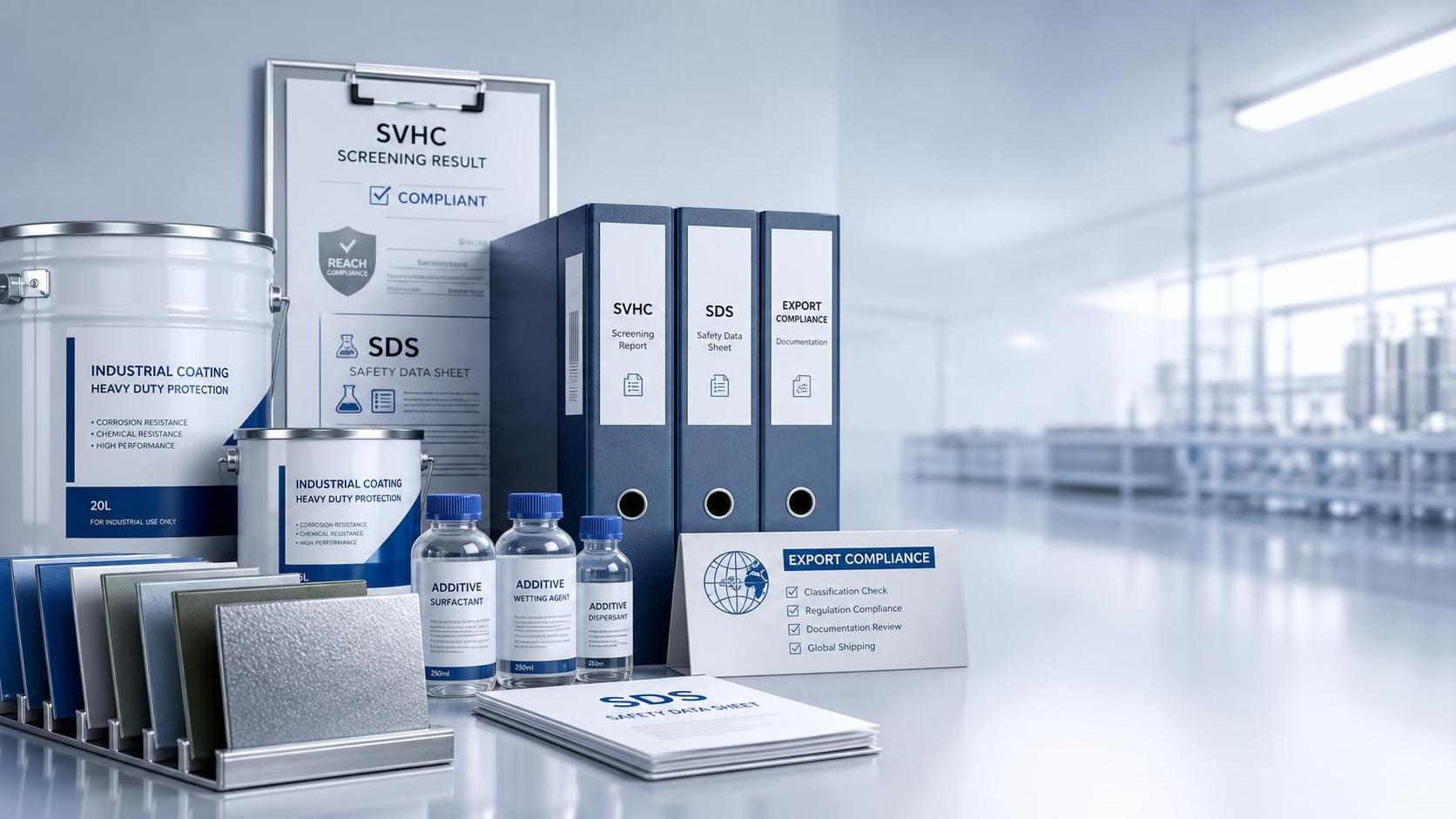
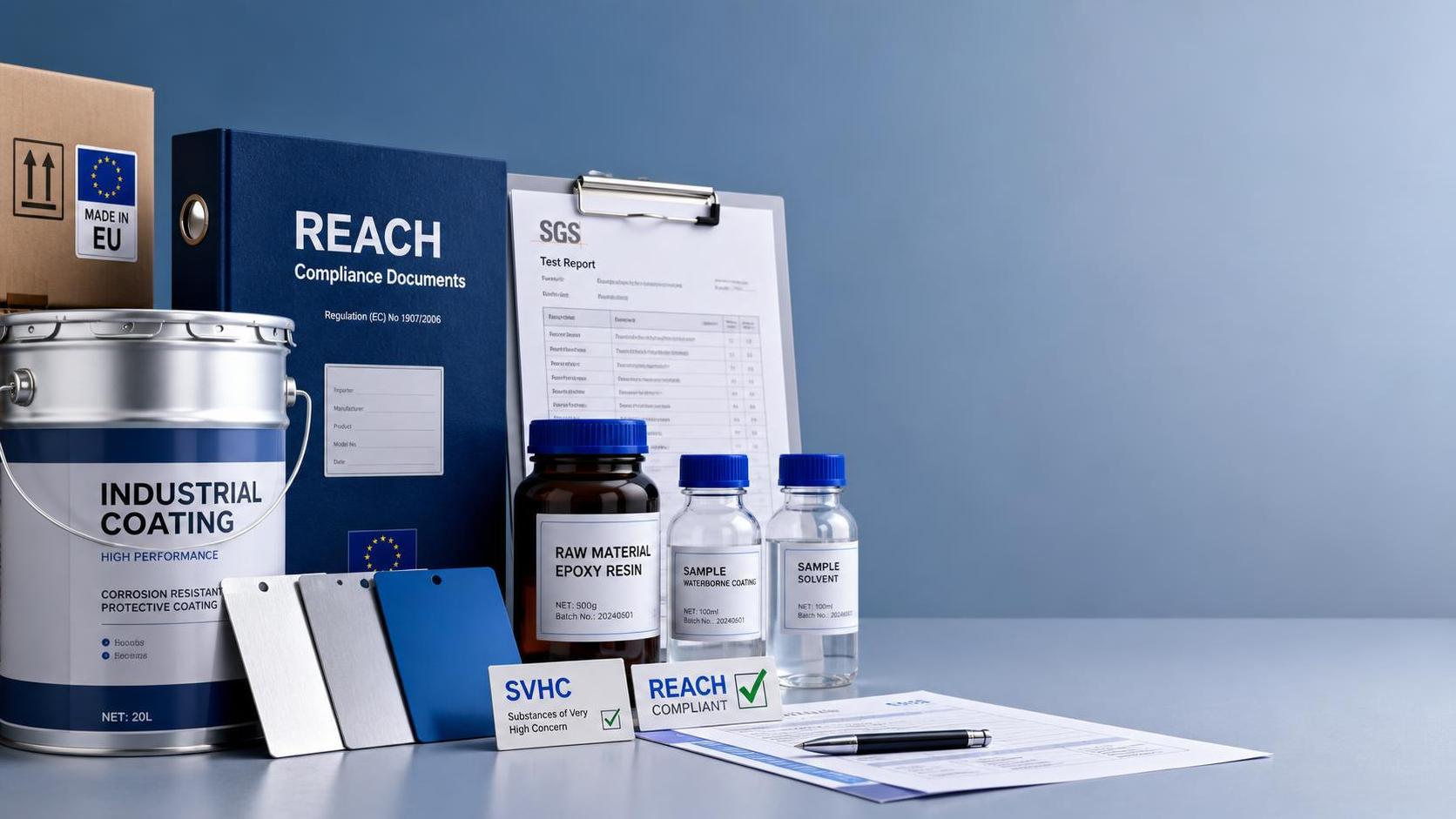
On August 4, 2026, the European Chemicals Agency (ECHA) updated the SVHC Candidate List to include two organotin stabilizers, DBT and MBT, which are commonly used in curing and leveling systems for industrial anticorrosion coatings. With SCIP notification duties and downstream SDS disclosure requirements applying from November 2026 for exported products containing more than 0.1%, this development is directly relevant to coating exporters, EU import-facing supply chains, procurement teams, and compliance functions that manage market access and delivery to Europe.
What the update confirms
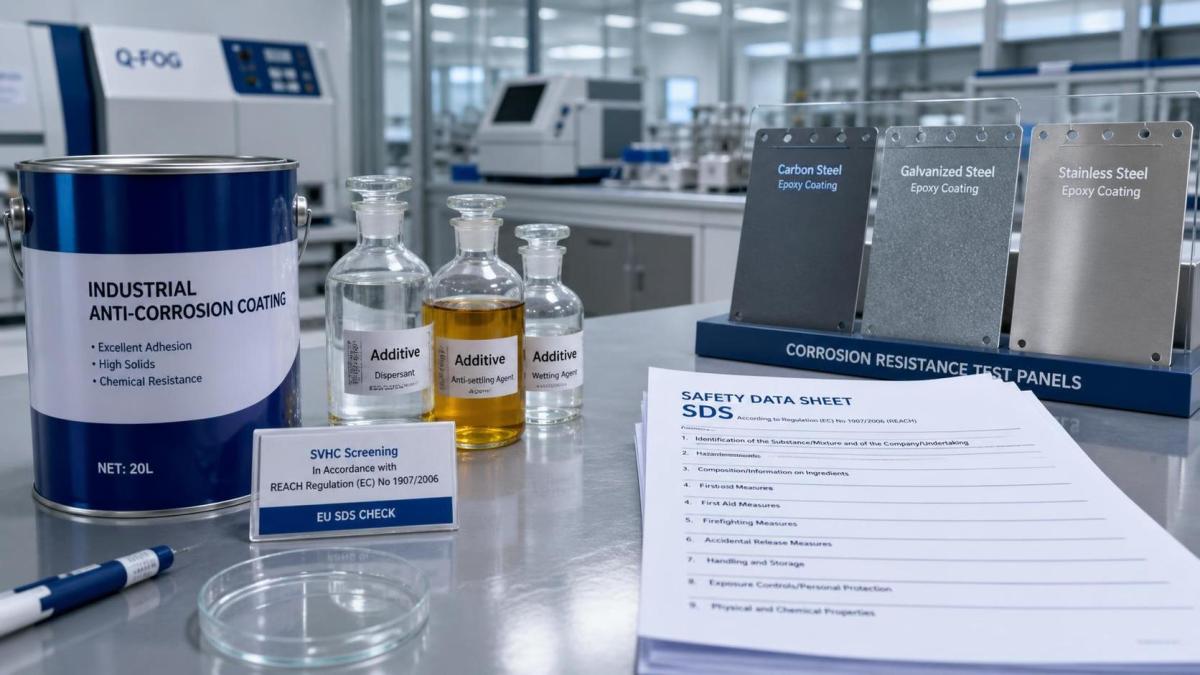
The confirmed facts are limited but commercially significant. ECHA formally added DBT and MBT to the SVHC Candidate List on August 4, 2026. Both substances are described in the provided event summary as commonly used additives in the curing and leveling systems of industrial anticorrosion coatings. The same summary states that, from November 2026, exported products containing these substances above 0.1% must complete SCIP notification and provide a complete safety data sheet (SDS) to downstream importers. The event summary also indicates that this change directly affects the compliance delivery process for Chinese heavy-duty anticorrosion coating suppliers such as JinFeiMa serving the EU market.
Where the pressure will appear first in the supply chain
Export coating suppliers will face a tighter documentation threshold
For companies shipping heavy-duty anticorrosion coatings or related products into the EU market, the immediate issue is not only material composition but also whether internal compliance files support timely SCIP notification and downstream SDS delivery. The business impact is likely to appear in pre-shipment review, customer document requests, and release approval before goods are delivered.
Procurement and formulation teams may need earlier substance screening
Companies sourcing additives or managing formulation decisions may be affected because DBT and MBT are identified in the event summary as common inputs in relevant coating systems. From an operational perspective, what deserves closer attention is whether procurement specifications, supplier declarations, and internal material records are detailed enough to identify products that may cross the 0.1% threshold referenced in the update.
EU-facing distributors and import-side partners will need clearer handover files
Channel and import-side participants may be affected through the handover of compliance documents. Since the provided summary specifically mentions complete SDS delivery to downstream importers, the pressure point may shift to document completeness, version control, and whether technical and trade teams are aligned on what must accompany each shipment.
Testing, compliance support, and supply chain service functions may see more review work
Analysis shows that service providers involved in compliance review, document preparation, or shipment coordination may need to respond to more detailed customer checks. The practical effect is likely to center on substance identification, documentation consistency, and delivery timing rather than on any single commercial transaction alone.
What companies should review now
Check which exported products may fall into the new disclosure scope
Companies serving EU customers should review whether any exported products contain DBT or MBT above the 0.1% concentration level cited in the event summary. This is a practical screening step tied directly to the stated SCIP and SDS obligations, rather than a general regulatory exercise.
Re-examine SDS readiness and downstream document flow
The update points to a documentation requirement that reaches beyond internal records. Businesses should pay attention to whether their SDS files are complete, current, and ready for delivery to downstream importers, and whether the process owner for that handover is clearly defined across sales, regulatory, and logistics teams.
Review supplier declarations and formulation records
Observably, companies that rely on externally sourced additives or intermediate materials should verify whether existing supplier information is sufficient to support concentration assessment and product-level declarations. Where records are incomplete, the risk may show up later as delivery delay or additional customer queries rather than as an immediate technical failure.
Track how customers reflect the change in tenders and order conditions
The provided information does not include detailed enforcement language or customer-side implementation rules. For that reason, companies should monitor whether buyers, importers, or project documents begin to incorporate new declaration requests, revised compliance clauses, or expanded technical file expectations linked to SVHC status.
Why this reads as an execution signal
From an industry perspective, this update is more appropriate to understand as a concrete compliance trigger than as a distant policy discussion. The key reason is that the provided event summary already points to a defined regulatory consequence from November 2026: products above the stated concentration threshold must enter SCIP reporting and be accompanied by complete SDS information for downstream importers. At the same time, analysis shows that the full market impact still depends on how customers, import-side partners, and supply chain actors translate that requirement into document review, purchasing conditions, and delivery acceptance.
How the market is likely to read this development
A balanced reading is that the ECHA listing of DBT and MBT matters less as a headline and more as a change in the operating conditions for EU-bound coating business. It does not by itself confirm every downstream commercial outcome, but it clearly raises the compliance standard for affected products and related documentation. At this stage, it is more appropriate to understand the update as an already landed rule change with follow-on execution details still worth watching closely.
Basis of this article and what still needs verification
This article is generated from the user-provided news title, event date, and event summary. For developments of this type, relevant source categories usually include official notices, publications by regulatory authorities, customs or trade administration information, industry association updates, standards-related documents, and reporting by authoritative trade media. A specific official source link was not provided in the input, so the original source document and any later implementation details still need to be verified on an ongoing basis. What remains worth tracking includes detailed policy wording, compliance interpretation in practice, tender document changes, importer requirements, industry feedback, and how affected companies execute these obligations in actual deliveries.