
Categories List
 JFM Paint Strengthens Global Expansion Strategy Through International Market ExchangeSep 10, 2026
 JFM Paint Strengthens Global Presence Through Successful Participation in KOREA BUILD WEEK 2026Aug 27, 2026
 EU REACH Adds 12 New SVHCs, Forcing Industrial Coating Export Declarations UpdateAug 16, 2026
- Vietnam Rule: Industrial Coating Imports Need SVHC Declaration from China Starting Oct. 1Aug 15, 2026
- China Customs Launches Paint Export PrecheckAug 14, 2026
- Nippon Paint Reacquires European Auto Coatings UnitAug 12, 2026





Leave A Reply
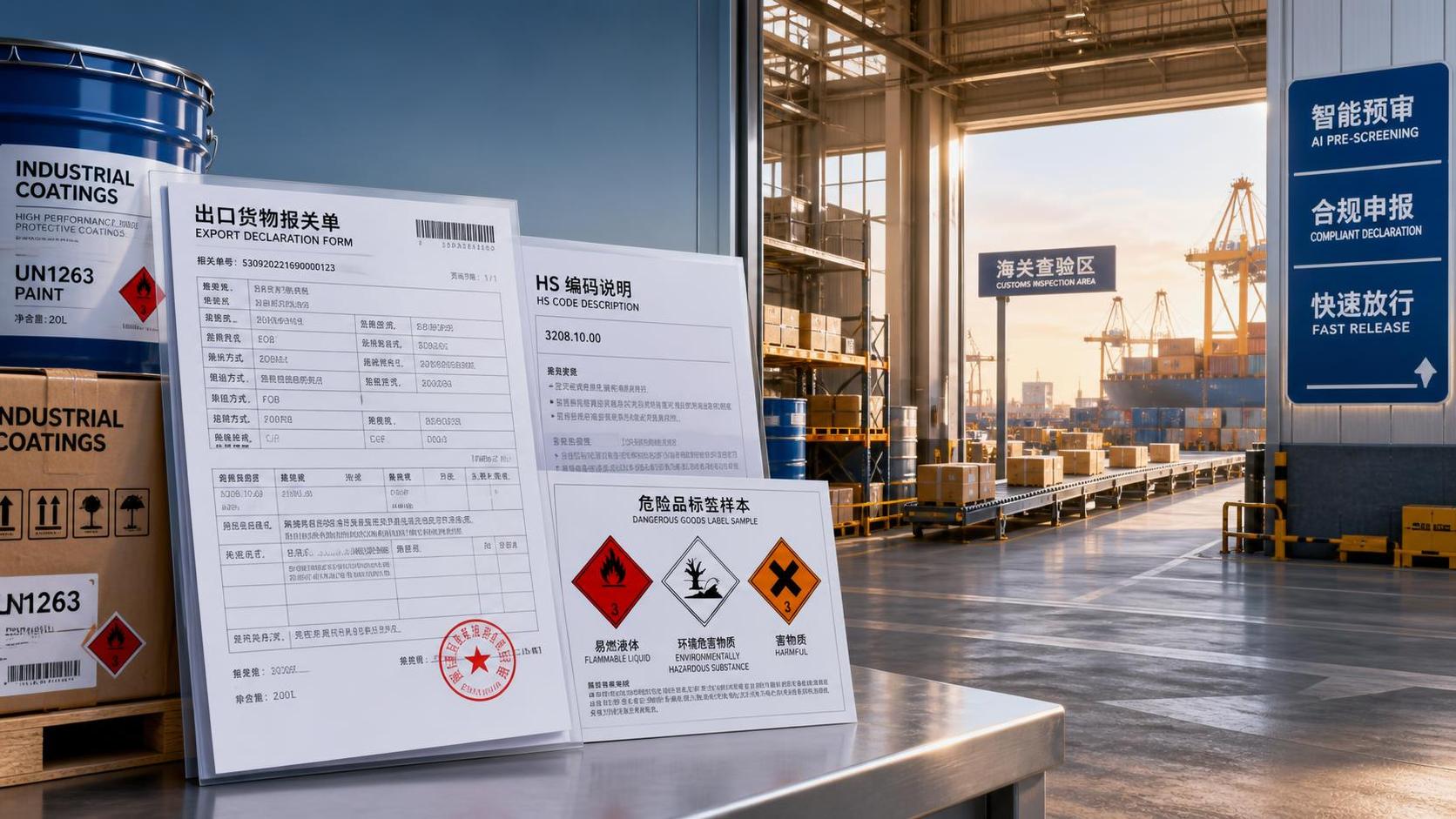
On 13 August 2026, China’s General Administration of Customs began using an AI-based preclassification review channel for paint exports at ports nationwide. The move is notable for exporters, overseas importers, distributors, and project buyers that rely on Chinese industrial coatings, because it targets HS code identification, compliance labels, and hazardous goods attributes before declaration, reducing pre-clearance checking time and making shipment timing easier to anticipate.
What changed at the border
According to the information provided, China Customs has opened an intelligent pre-review channel for export declarations involving paint products across all ports in China. The system uses AI algorithms to automatically identify HS codes, compliance labels, and hazardous goods characteristics, which shortens the verification work required before submission. The reported result is a 40% reduction in customs clearance time.
For overseas importers, the immediate consequence described in the announcement is more predictable arrival schedules, lower risk of customs-related port delays, and more stable supply chain response. The impact is described as especially relevant for distributors and project procurement teams in the EU, Southeast Asia, and the Middle East that depend on spot delivery of Chinese industrial coatings.
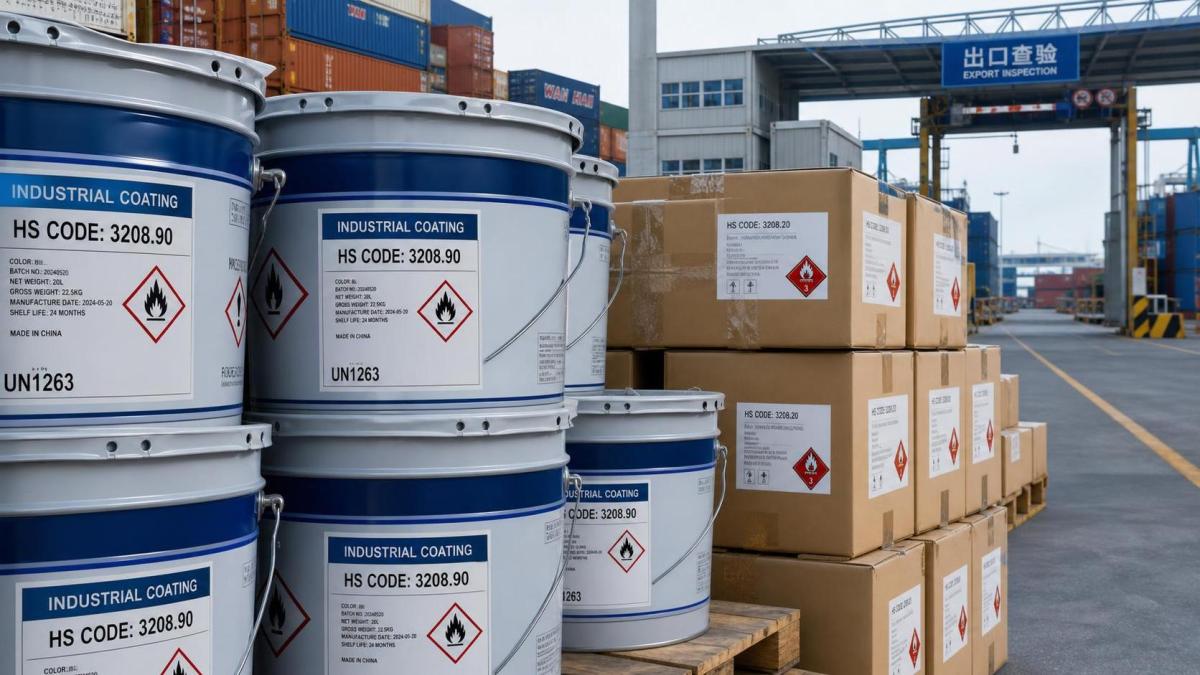
Where the operational pressure may ease
Exporters handling classification-heavy shipments
Analysis shows that exporters are likely to feel the first effect in the declaration workflow. Paint products often require careful classification and supporting compliance information, so any reduction in pre-submission review time directly affects how quickly shipments can move from internal preparation into customs filing. The key area to watch is whether internal document checks and product classification work become more standardized.
Importers that plan against fixed delivery windows
From an industry perspective, overseas buyers that schedule installation, retail replenishment, or project handover around confirmed delivery dates are the clearest beneficiaries of more predictable clearance timing. What deserves closer attention is whether the shorter precheck process translates into fewer last-minute schedule adjustments in real transactions.
Distributors working with cross-border stock turnover
Distribution businesses may see the practical effect in inventory rotation and customer commitment timing. If declaration review is faster and more consistent, it becomes easier to align inbound replenishment with downstream demand. The main business point is not volume expansion, but better timing control.
Supply chain service providers and documentation handlers
Freight forwarders, customs brokers, and other service providers are likely to face stronger demand for accurate product data and cleaner document sets. The AI review channel reduces some manual checking, but it also raises the importance of consistent HS coding, labels, and hazardous goods information before submission.
What companies should watch next
Official wording on scope and use cases
What deserves closer attention is whether later official communication defines the scope of products, port coverage details, or special handling rules more precisely. At present, the confirmed point is the launch of the channel for paint exports nationwide; anything beyond that should remain under observation until further notice is released.
Document accuracy becomes more visible
Companies should pay close attention to how product data is prepared before filing, especially HS codes, compliance labels, and hazardous goods attributes. The new channel suggests that errors in these areas may surface earlier in the process, so internal review discipline matters more, not less.
Customer communication may need tighter timing language
For suppliers serving overseas buyers, delivery promises should continue to reflect actual customs processing rather than assuming the reported 40% improvement will appear identically in every case. It is more appropriate to treat the announcement as a signal of faster pre-clearance, not as a guarantee that every shipment will move on the same schedule.
Project buyers should keep buffer planning in place
For project procurement teams, especially in markets that rely on Chinese industrial coatings for scheduled work, the practical question is whether the new channel reduces delay risk enough to narrow contingency buffers. For now, the safer approach is to observe performance across several shipments before adjusting lead-time assumptions.
A useful signal, but not a final conclusion
Observably, this development should be read as a process-level improvement rather than a broad market reset. It points to faster customs-side verification for paint exports and a more data-driven declaration workflow, but it does not by itself prove a permanent structural change in trade conditions. The more defensible interpretation is that China Customs is tightening pre-clearance efficiency in a category where classification and compliance checks matter.
For the industry, the value of this update lies in its operational implications: more predictable timing, lower documentation friction, and a clearer premium on accurate data preparation. It is a development worth monitoring because the practical outcome will depend on how consistently the system performs across ports, product types, and shipment profiles.
What this means for now
This is best understood as an early operational signal with immediate relevance for exporters and overseas buyers, rather than a finished trend story. The confirmed facts point to a faster pre-review channel for paint exports and a shorter customs processing window, while the broader commercial effect will need continued observation as the system is used in practice.
Source note and follow-up
This article was generated from the user-provided news title, event date, and event summary. No specific official source link was included in the input, so the underlying official release still needs to be verified against customs notices, enterprise announcements, industry association updates, or authoritative media reports. Ongoing attention should remain on how the new preclassification channel is applied in actual export declarations and whether further official guidance is issued.