
Categories List
 JFM Paint Strengthens Global Expansion Strategy Through International Market ExchangeSep 10, 2026
 JFM Paint Strengthens Global Presence Through Successful Participation in KOREA BUILD WEEK 2026Aug 27, 2026
 EU REACH Adds 12 New SVHCs, Forcing Industrial Coating Export Declarations UpdateAug 16, 2026
- Vietnam Rule: Industrial Coating Imports Need SVHC Declaration from China Starting Oct. 1Aug 15, 2026
- China Customs Launches Paint Export PrecheckAug 14, 2026
- Nippon Paint Reacquires European Auto Coatings UnitAug 12, 2026




Leave A Reply

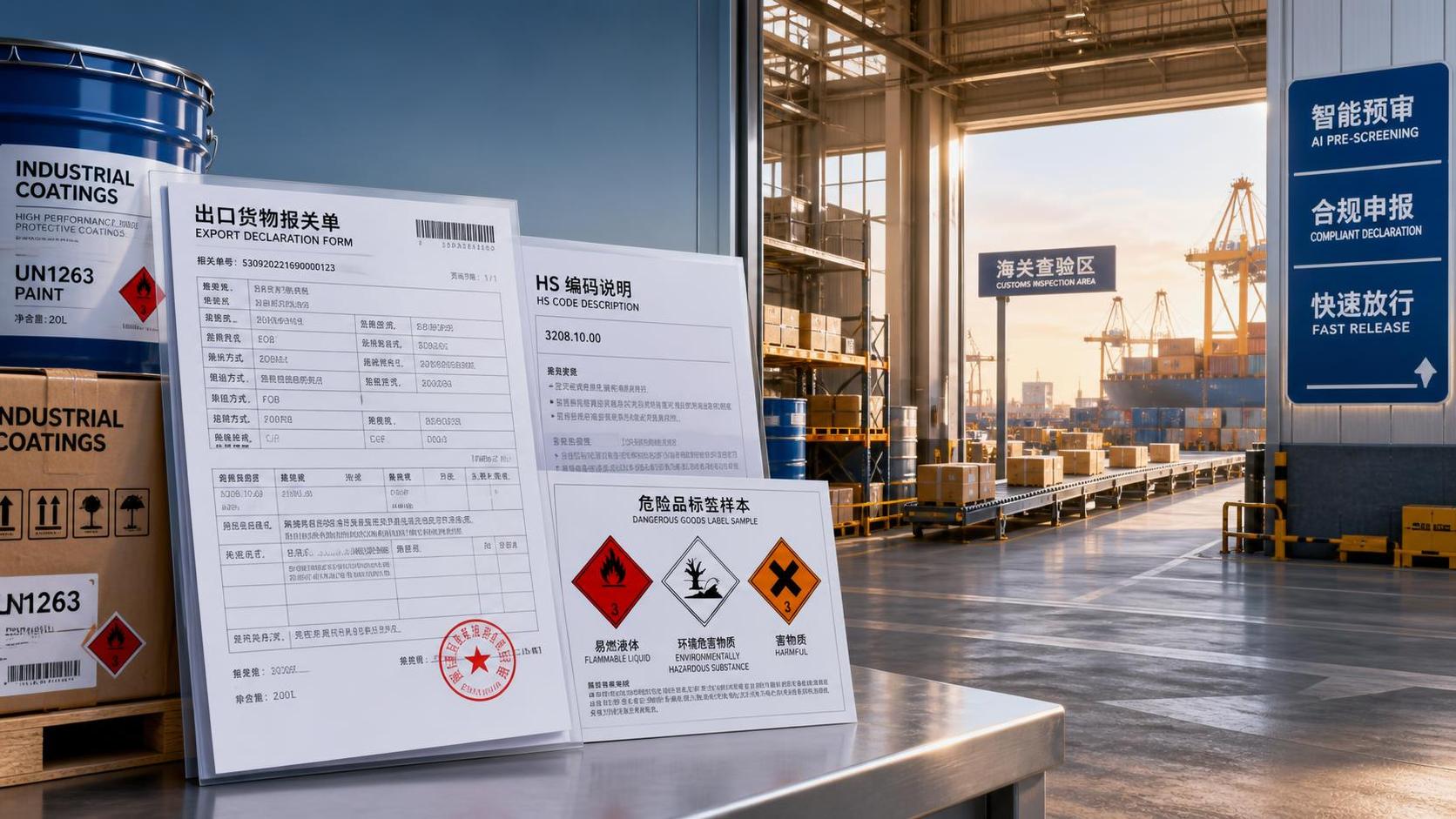
On August 1, 2026, China Customs began using a dedicated export inspection code, HS 3208.90.90.11, for high-solids and solvent-free heavy-duty anticorrosion coatings. For exporters, manufacturers, customs teams, and supply chain service providers, the update matters because it links product classification more directly with compliance documents, while also connecting the code to electronic customs clearance systems used by RCEP member markets, including ASEAN, Australia, and New Zealand.
What the customs update confirms
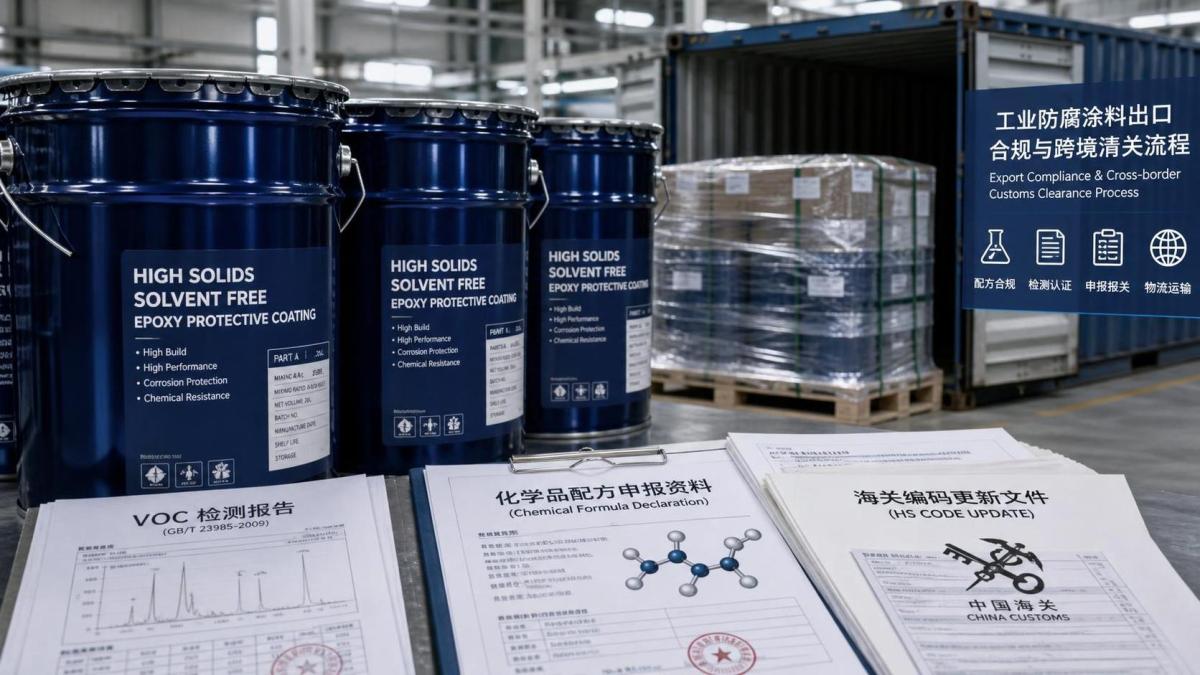
According to the provided information, the new code applies to high-solids and solvent-free heavy-duty anticorrosion coatings from August 1, 2026. Export declarations under this code must be accompanied by a VOC content test report and a formulation declaration. The code has also been integrated into the electronic clearance systems of RCEP member countries, which may speed up customs processing in ASEAN markets as well as Australia and New Zealand. The same information indicates that the measure improves export data transparency, while products that do not meet the relevant requirements may face return shipment or additional inspection risk.
Where the impact is likely to be felt first
Export declaration and customs handling
From an industry perspective, direct trading companies and in-house export teams are likely to feel the change most immediately at the declaration stage. The reason is straightforward: classification now sits alongside required supporting documents, which means the accuracy of HS coding, VOC reporting, and formulation disclosure will become more tightly linked in day-to-day export operations.
Manufacturing and product documentation
Manufacturers of high-solids and solvent-free heavy-duty anticorrosion coatings may be affected through technical documentation workflows. Analysis shows that the requirement to submit both a VOC content test report and a formulation declaration brings product data, compliance files, and shipment readiness into the same process. For producers, the practical issue is not only what is manufactured, but whether supporting records are ready in a form that matches customs requirements.
Regional shipments under RCEP-linked clearance
Supply chain service providers, freight coordinators, and exporters focused on ASEAN, Australia, and New Zealand should pay attention to the code's integration into RCEP electronic clearance systems. Observably, this creates a potential efficiency gain for compliant shipments, but it also means misclassification or incomplete paperwork may become visible earlier in the clearance process.
Buyers and downstream delivery schedules
Procurement teams and downstream project buyers may also need to watch this change, especially where delivery timing depends on smooth export release. The stated risk of return shipment or additional inspection for non-compliant products suggests that customs readiness can now have a more direct effect on delivery reliability.
What companies should check now
Confirm which products fall under the new code
Companies should first review whether their exported heavy-duty anticorrosion coatings fall within the high-solids or solvent-free category covered by HS 3208.90.90.11. What deserves closer attention is the consistency between product positioning, declaration practice, and supporting technical files.
Prepare VOC and formulation documents as shipment documents
The update is not only about classification. It also changes the document package required at export. Businesses should therefore treat the VOC content test report and formulation declaration as core customs documents for affected shipments, rather than as internal technical materials that can be assembled later.
Separate faster clearance potential from guaranteed faster delivery
Analysis shows that integration into RCEP electronic clearance systems should be read carefully. It points to the possibility of faster customs handling in certain markets, but it should not automatically be treated as a guarantee of shorter overall delivery cycles. The business outcome will still depend on whether declarations and supporting materials are complete and aligned.
Prepare for customer and service-provider coordination
Exporters, brokers, logistics partners, and overseas customers may need aligned expectations on document lead times and clearance readiness. For affected product lines, the practical focus is likely to be on file completeness, declaration accuracy, and contingency planning where additional inspection or return risk could affect shipment schedules.
Why this looks like more than a coding adjustment
As an editorial observation, this update is better understood as both an immediate procedural change and a longer-term compliance signal. In the short term, it changes how certain coating exports are declared and documented. In a broader sense, it also suggests closer alignment between customs classification, environmental compliance information, and digital cross-border clearance processes. That said, it is still more appropriate to understand this as a developing regulatory signal rather than a fully defined shift in market outcomes, because the provided information does not establish how widely the new code will reshape trade behavior beyond the stated requirements and risks.
How the industry may need to read this signal
The most grounded takeaway is that this is not simply a technical customs label update. It connects product type, VOC-related reporting, and export processing into one compliance step for a defined coating category. For the industry, the change is best read as a near-term operational requirement with longer-term implications for documentation discipline and data transparency, while the full commercial impact still needs continued observation.
Basis of this article and what still needs verification
This article is based on the user-provided news title, event date, and event summary. Information of this kind is commonly cross-checked against source types such as official customs notices, company disclosures, industry association updates, authoritative media reporting, and standard-related documents. No specific official source link was provided in the input, so the exact official publication path still requires follow-up verification. Continued monitoring should focus on whether further official wording, implementation detail, or clarifying guidance is issued around product scope, documentation practice, and clearance execution.