
Categories List
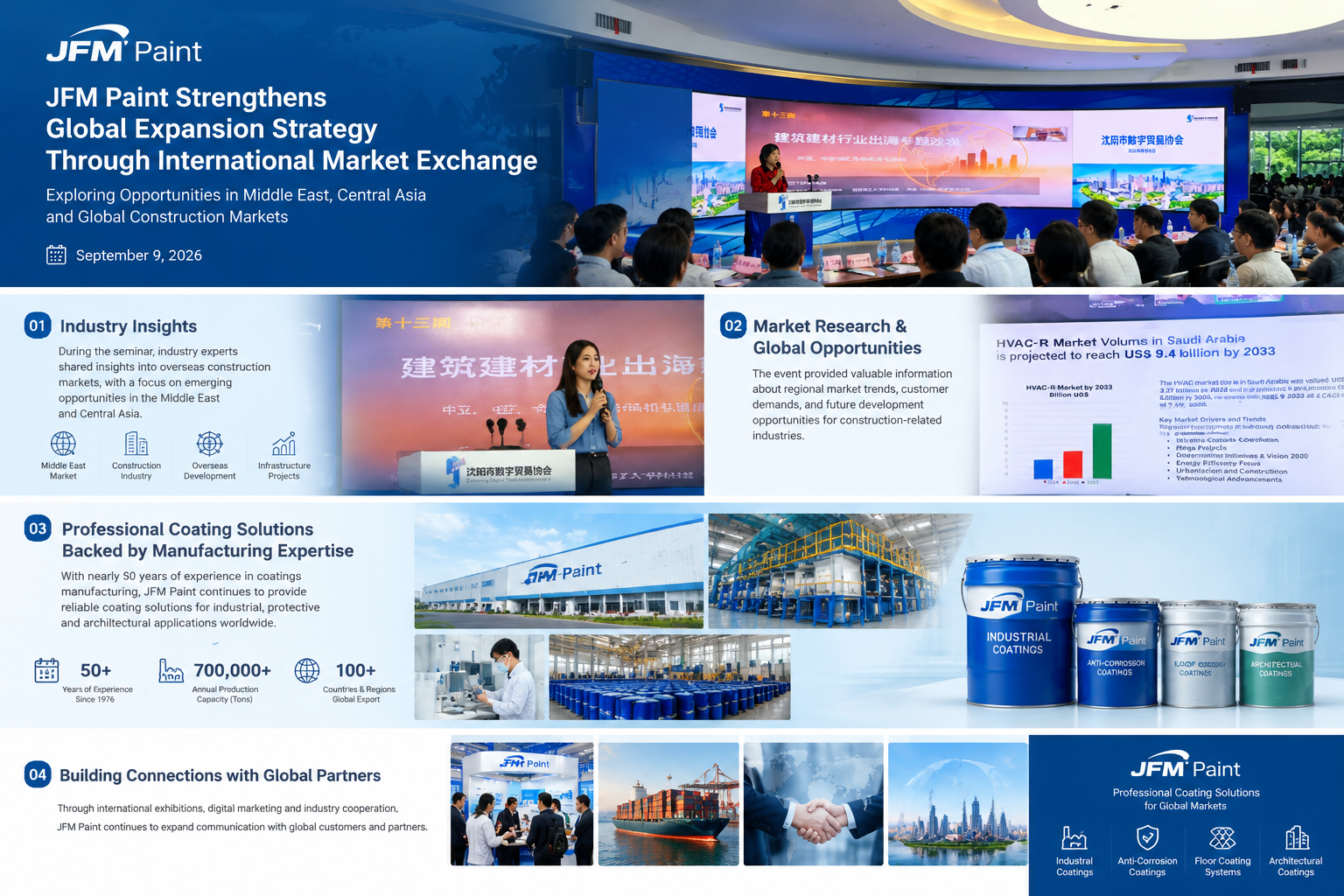
 JFM Paint Strengthens Global Expansion Strategy Through International Market ExchangeSep 10, 2026
 JFM Paint Strengthens Global Presence Through Successful Participation in KOREA BUILD WEEK 2026Aug 27, 2026
 EU REACH Adds 12 New SVHCs, Forcing Industrial Coating Export Declarations UpdateAug 16, 2026
- Vietnam Rule: Industrial Coating Imports Need SVHC Declaration from China Starting Oct. 1Aug 15, 2026
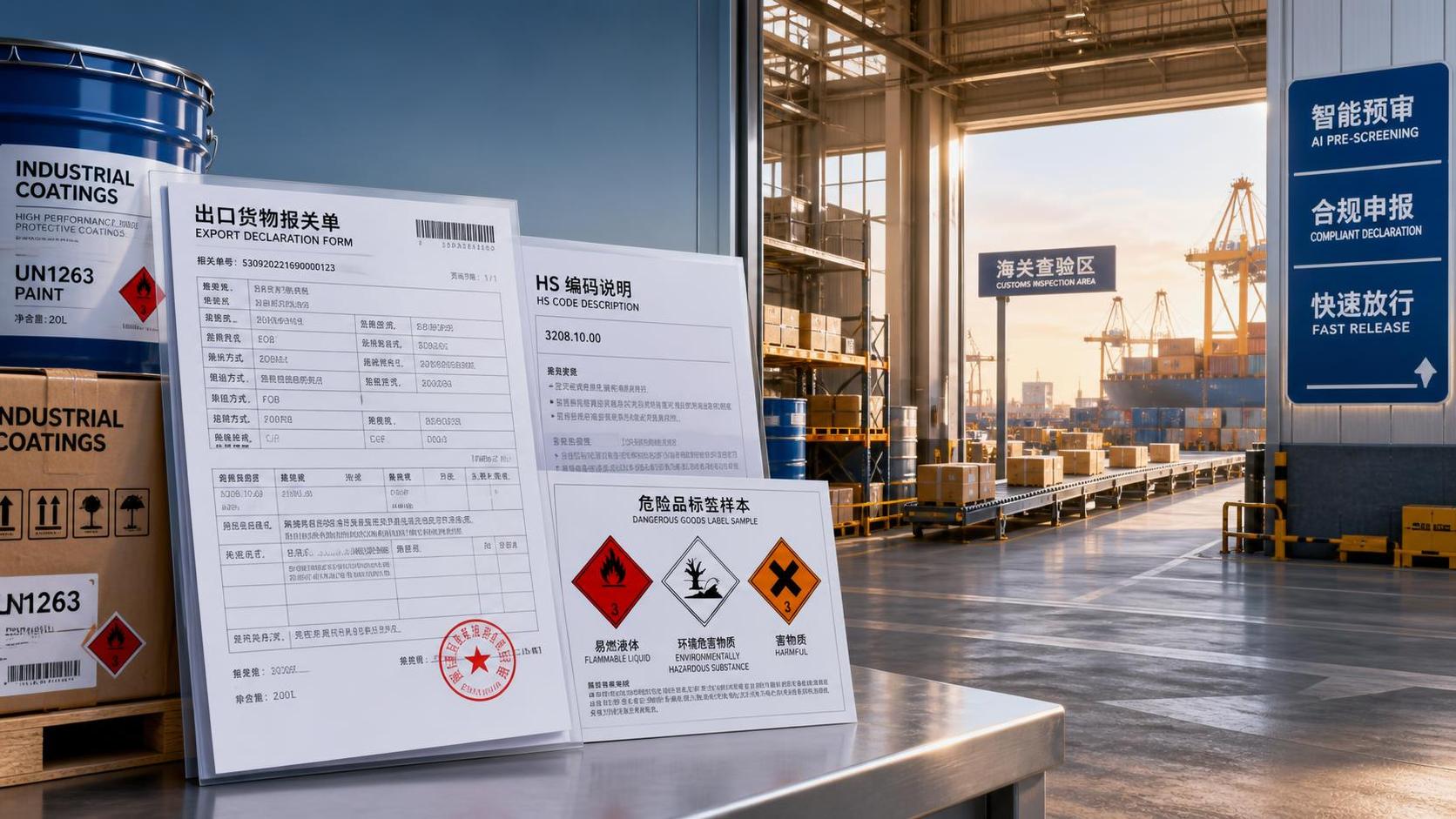
- China Customs Launches Paint Export PrecheckAug 14, 2026
- Nippon Paint Reacquires European Auto Coatings UnitAug 12, 2026



Leave A Reply
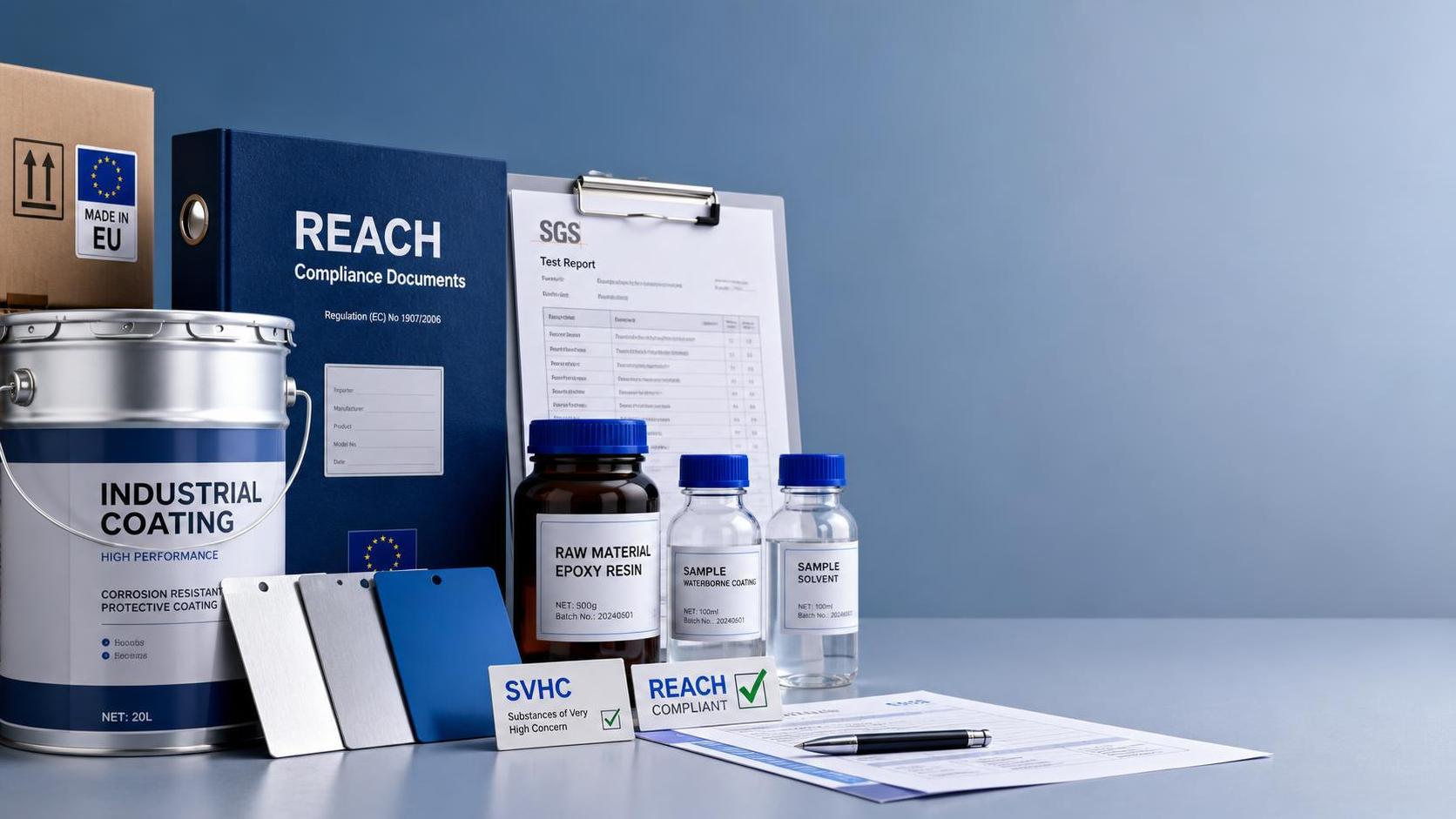
On August 15, 2026, the European Chemicals Agency formally added 12 new substances to the REACH Candidate List of Substances of Very High Concern. Based on the information provided, the newly listed substances involve certain organic pigments, flame retardants, and preservative additives, creating a direct compliance impact for industrial coatings exported to the European Union, including heavy-duty anti-corrosion coatings under the JinFeiMa brand.
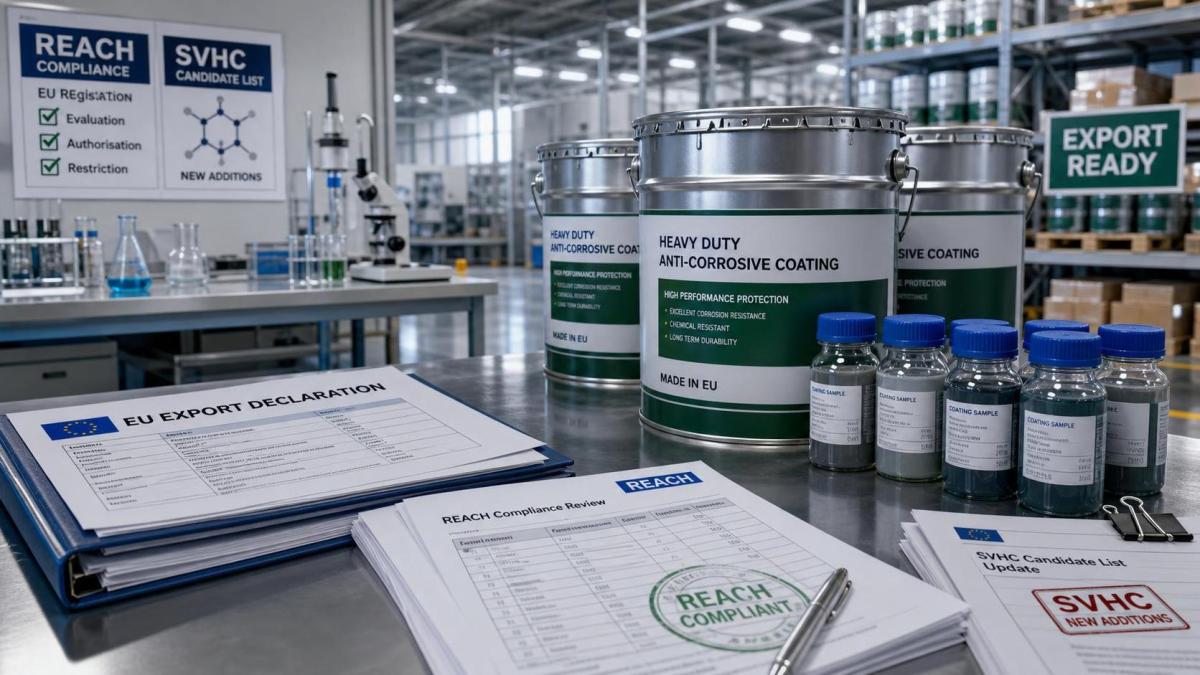
The immediate issue is not only the expansion of the SVHC list itself, but the documentation requirement tied to market access. From November 1, 2026, importers are required to provide, alongside their EU SCIP database submission, an SVHC content conformity declaration signed by the Chinese manufacturing plant. For exporters and supply chain partners, this shifts compliance work from a general regulatory awareness issue to a document-driven clearance requirement.
Why this change matters for coating exporters
For industrial coating suppliers, the impact is likely to be most visible in customs and customer-side compliance review. Products containing any of the newly listed substances may face closer scrutiny at the point of import. If the required declaration is missing, incomplete, or inconsistent with the importer’s SCIP filing, the risks described in the current information include customs delays, returned shipments, or a sales ban in the market.
This means the pressure does not stop with formulation review. Exporters may also need to verify how product composition data is collected, how supplier inputs are documented, and how declarations are aligned between factory, exporter, and importer. In practice, the regulatory burden may fall most heavily on products with more complex raw material structures or on shipments moving under tight delivery schedules.
A signal for supply chain coordination
From the current information, this development points to a tighter connection between substance control and cross-border product documentation. The requirement for a declaration signed by the Chinese factory suggests that downstream importers will likely ask for more precise and more timely compliance support from manufacturers. That could accelerate requests for updated ingredient screening, declaration templates, and batch-level confirmation where customers believe exposure risk is higher.
For companies exporting industrial coatings to Europe, a practical near-term concern may be whether existing compliance statements, technical files, and internal review procedures are still adequate after the Candidate List update. Even where product formulations do not change, the compliance status of individual components may need to be reassessed against the revised list.
What the market should watch next
The information available here supports a clear near-term conclusion: the deadline creates a short adjustment window between the August listing update and the November filing requirement. What remains worth watching is how quickly importers begin revising their purchasing and document review standards, and whether customers start requesting updated declarations before the formal deadline to reduce clearance risk.
This article is based solely on the information provided for this event. For follow-up tracking, the most relevant public materials will likely be official regulatory notices, importer compliance communications, company disclosures, and other authoritative reporting related to REACH, SCIP submission practice, and export documentation requirements.