
Categories List
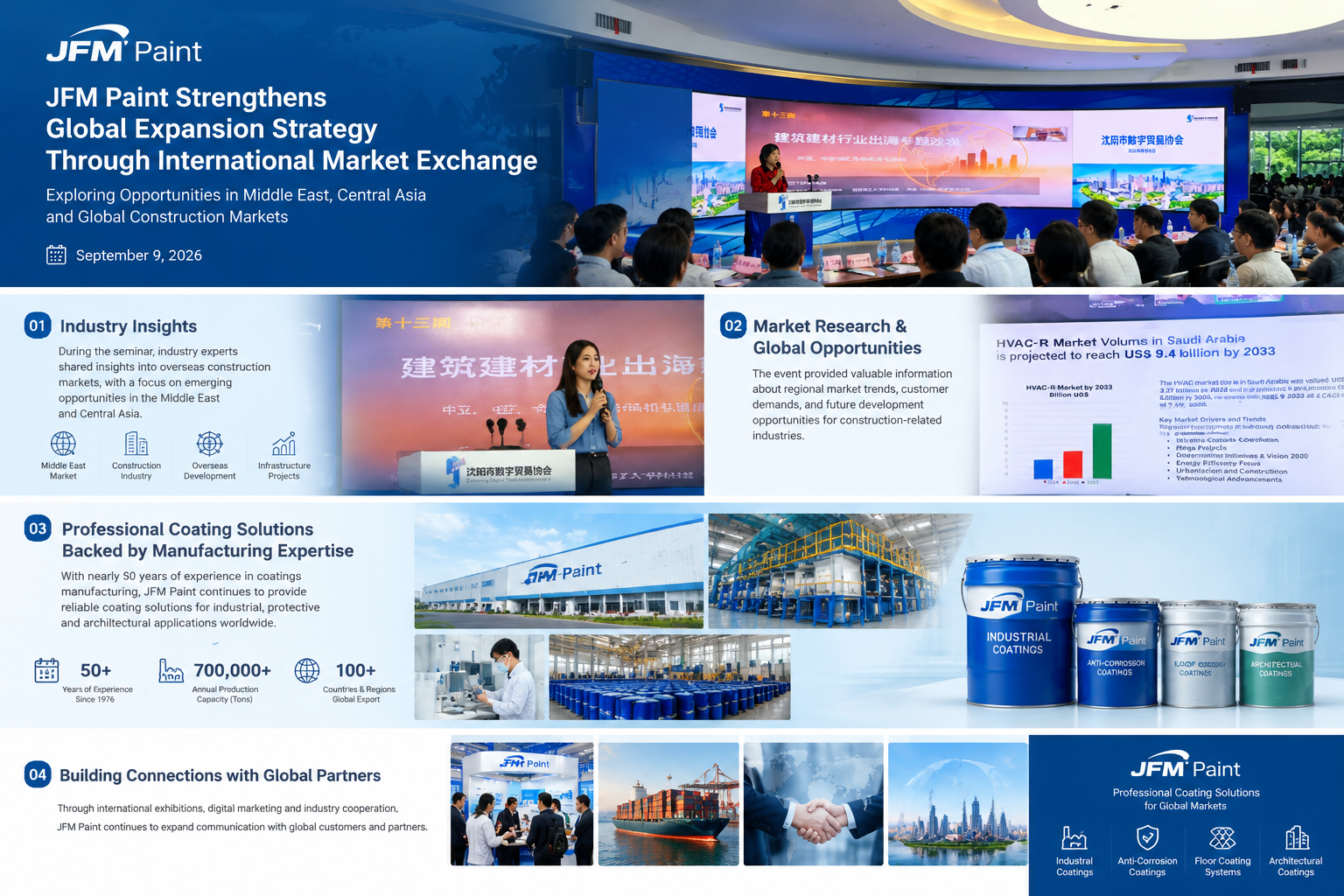
 JFM Paint Strengthens Global Expansion Strategy Through International Market ExchangeSep 10, 2026
 JFM Paint Strengthens Global Presence Through Successful Participation in KOREA BUILD WEEK 2026Aug 27, 2026
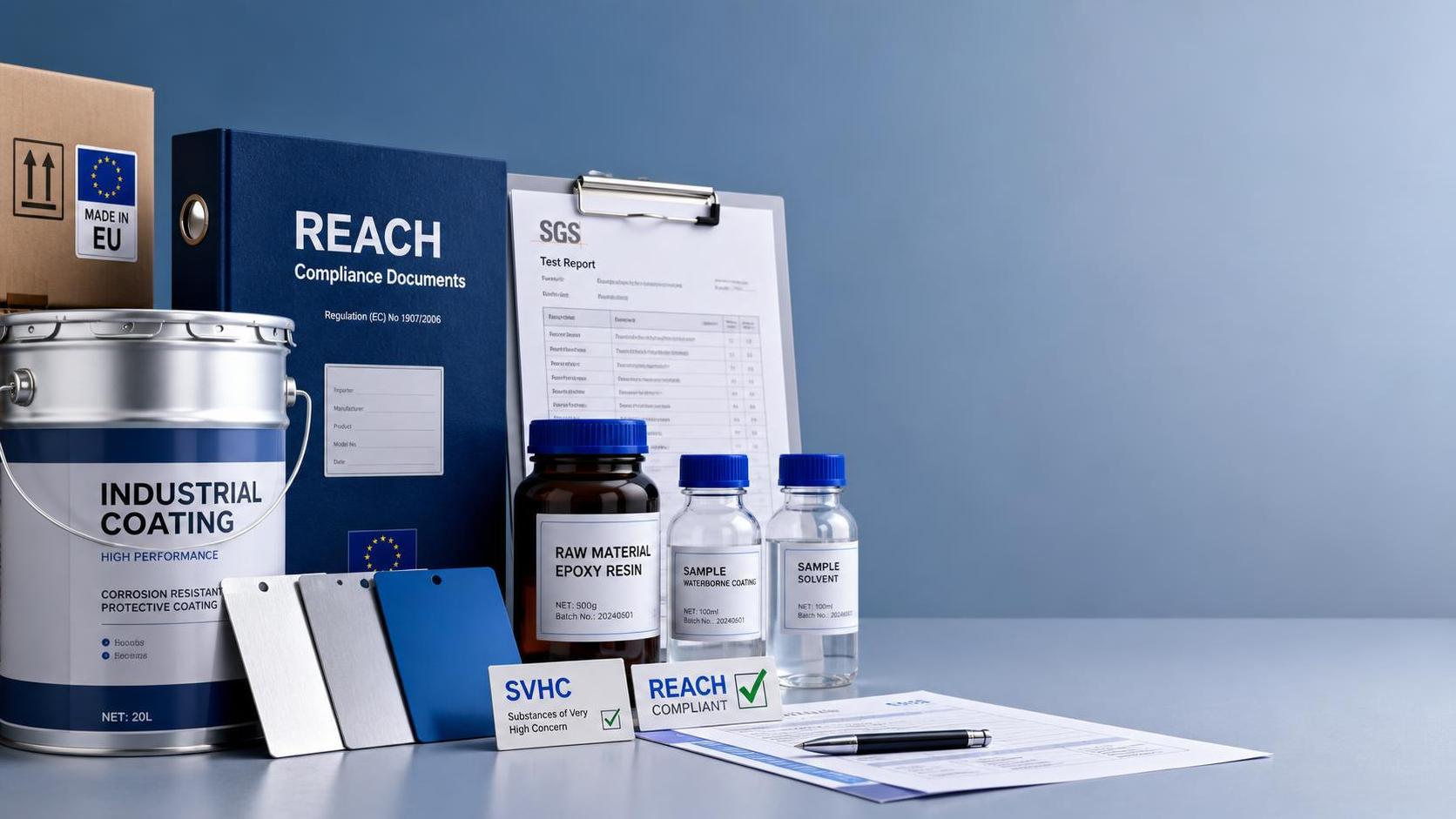
 EU REACH Adds 12 New SVHCs, Forcing Industrial Coating Export Declarations UpdateAug 16, 2026
- Vietnam Rule: Industrial Coating Imports Need SVHC Declaration from China Starting Oct. 1Aug 15, 2026
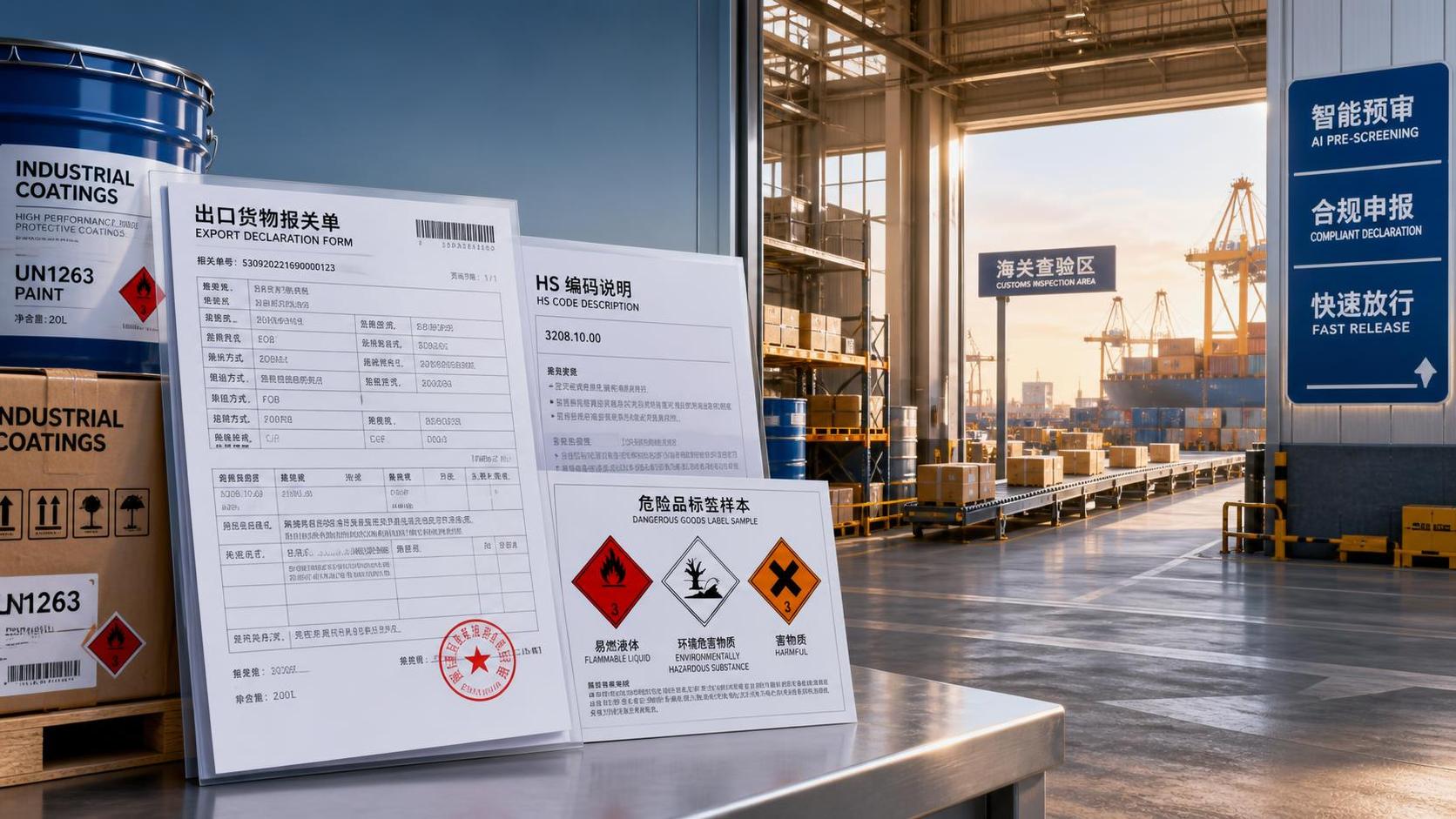
- China Customs Launches Paint Export PrecheckAug 14, 2026
- Nippon Paint Reacquires European Auto Coatings UnitAug 12, 2026



Leave A Reply
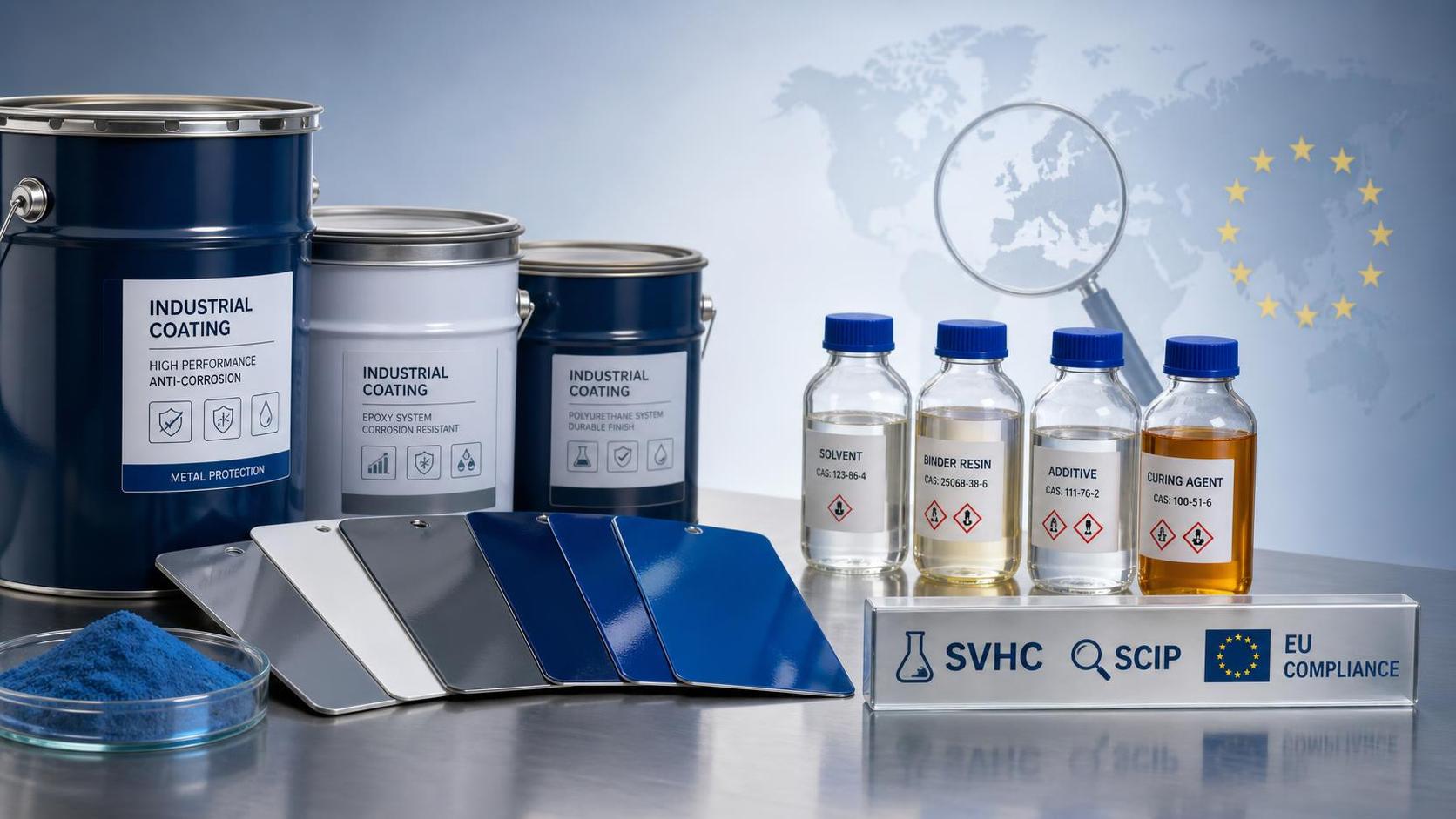
On July 29, 2026, the European Chemicals Agency (ECHA) updated the SVHC Candidate List by adding five substances used in coating applications, including chemicals commonly associated with film-forming aids in waterborne industrial coatings and anticorrosive pigments. For coating products exported to the EU, the change matters because from October 1, 2026, products containing these substances at or above 0.1% w/w will be subject to SCIP database notification. This is especially relevant for industrial coating exporters, formulation teams, compliance functions, and cross-border supply chain partners that now face a tighter preparation window.

What the July 29 update confirmed
The confirmed facts are limited but commercially significant. ECHA updated the SVHC Candidate List on July 29, 2026 and added five substances that are commonly used in coating-related applications. The information provided indicates that these include 2-methyl-2,4-pentanediol and zinc molybdate derivatives, with the affected use cases involving waterborne industrial coating film-forming aids and anticorrosive pigments.
The same input also confirms that, starting on October 1, 2026, coating products exported to the EU must fulfill SCIP database notification obligations when the concentration of the relevant substance reaches or exceeds 0.1% w/w. The adjustment directly affects the compliance preparation cycle and formulation reconstruction schedule of Chinese industrial coating exporters.
Where the pressure is likely to appear first
Export-facing coating suppliers
From an industry perspective, the most immediate impact is on companies shipping coating products into the EU market. Their exposure is tied directly to whether affected substances are present at or above the stated threshold. The practical pressure points are product screening, substance identification, document readiness, and shipment-related compliance timing.
Formulation and raw material management
Manufacturers and procurement teams may be affected because the substances mentioned are associated with coating formulation functions such as film formation and corrosion protection. Analysis shows that this can shift attention to raw material composition review, supplier disclosures, and the feasibility and timing of formulation adjustments where EU-bound products are involved.
Compliance and supply chain coordination
What deserves closer attention is the coordination burden across compliance, sourcing, production, and customer-facing teams. Where exports to the EU are involved, SCIP notification is not just a regulatory issue in isolation; it can affect internal data collection, technical communication with suppliers, and delivery planning tied to customer orders.
What companies should focus on now
Check which EU-bound products may cross the threshold
Companies should first identify which exported coating products may contain the newly listed substances at or above 0.1% w/w. The immediate issue is not broad market positioning, but whether specific products, formulations, or material combinations fall within the reporting trigger described in the input.
Verify supplier information and formulation documentation
Observably, substance-related compliance becomes difficult when upstream documentation is incomplete. For affected coating systems, closer review of supplier declarations, formulation records, and substance content information is likely to be necessary to support notification decisions and customer communication.
Separate notification readiness from reformulation decisions
It is more appropriate to understand this as both a compliance task and a formulation management issue, but the two should not be treated as the same decision. Some businesses may need to prepare SCIP notification in the short term, while separately assessing whether formulation reconstruction is necessary for certain EU-facing products.
Prepare for customer and delivery-side questions
For sales, technical service, and account teams, the likely operational issue is not only internal compliance but also external communication. Buyers and downstream partners may ask about substance status, notification obligations, and potential changes to product composition or lead times. That makes response consistency and document control an immediate concern.
Why this looks like more than a routine list update
Analysis shows that the significance of this development lies less in the number of substances added and more in the combination of regulatory trigger and short implementation window. The update points to a concrete compliance obligation from October 2026 for affected coating products exported to the EU, while also creating pressure on formulation review for companies that rely on the listed substances in industrial coatings.
At the same time, it would be premature to treat this as a fully settled long-term outcome for every product category or export model. Observably, the current signal is strongest for businesses with direct EU exposure and products that may approach or exceed the stated concentration threshold. For others, this remains a development that requires screening rather than assumption.
How this update is best understood at this stage
The industry meaning of this update is practical rather than abstract. It is not merely a watch-list item for regulatory teams; it has implications for export compliance timing, formulation review, supplier coordination, and customer communication in the coating sector. A measured reading is that this is already a short-term operational issue for affected EU-bound coating products, while also serving as a longer-term signal that substance compliance and formulation resilience are becoming more tightly linked.
Basis of this article and points for continued verification
This article is based on the user-provided news title, event date, and event summary. For developments of this kind, relevant source types usually include official notices, company disclosures, industry association updates, authoritative media coverage, and standard-setting or regulatory documentation. The specific official source link was not provided in the input, so further verification is still required. The main follow-up areas to watch are any additional official wording around the listed substances, product-scope interpretation in practice, and how affected exporters adjust notification preparation and formulation timelines.