
Categories List
 JFM Paint Strengthens Global Expansion Strategy Through International Market ExchangeSep 10, 2026
 JFM Paint Strengthens Global Presence Through Successful Participation in KOREA BUILD WEEK 2026Aug 27, 2026
 EU REACH Adds 12 New SVHCs, Forcing Industrial Coating Export Declarations UpdateAug 16, 2026
- Vietnam Rule: Industrial Coating Imports Need SVHC Declaration from China Starting Oct. 1Aug 15, 2026
- China Customs Launches Paint Export PrecheckAug 14, 2026
- Nippon Paint Reacquires European Auto Coatings UnitAug 12, 2026


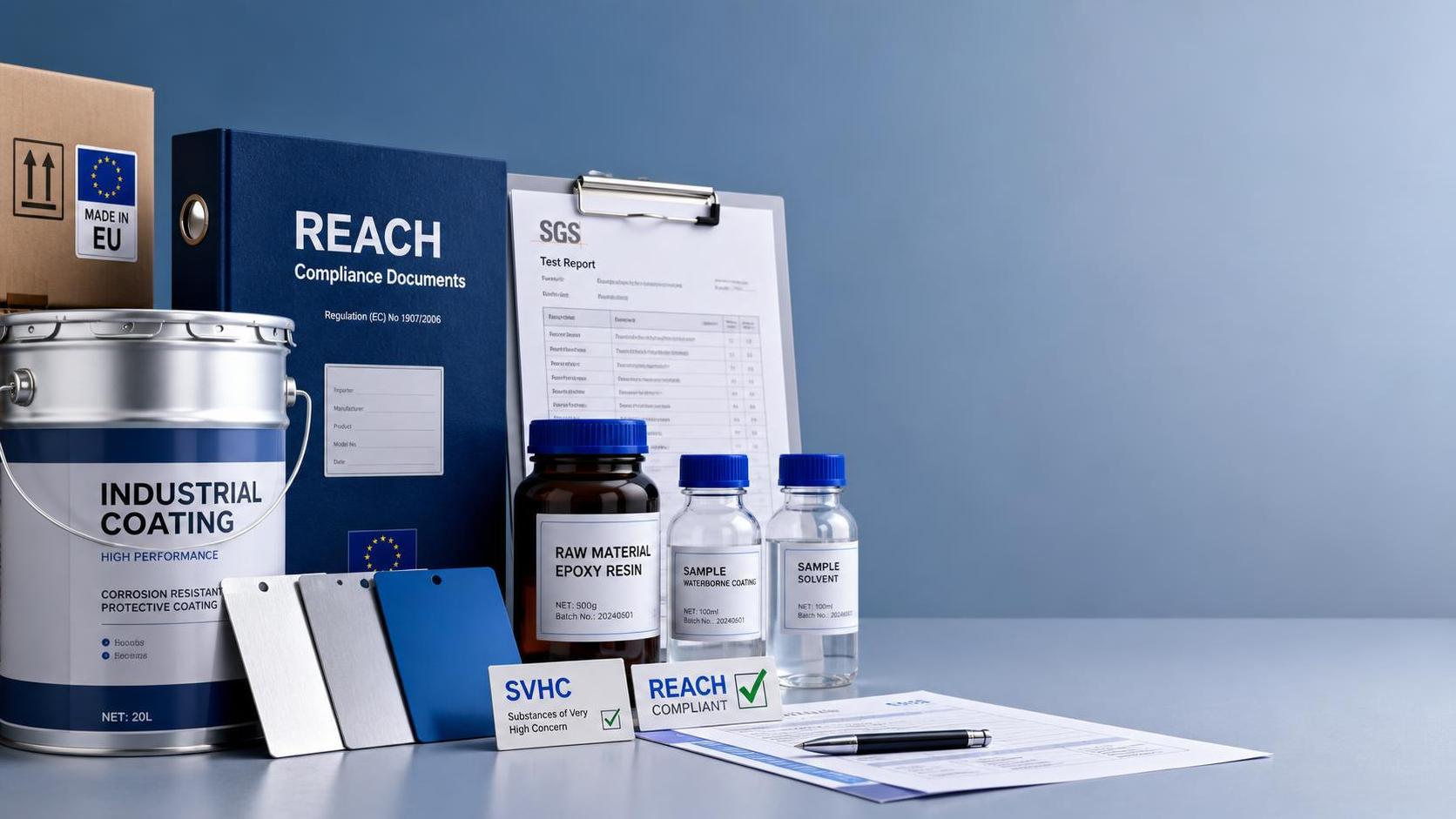



Leave A Reply

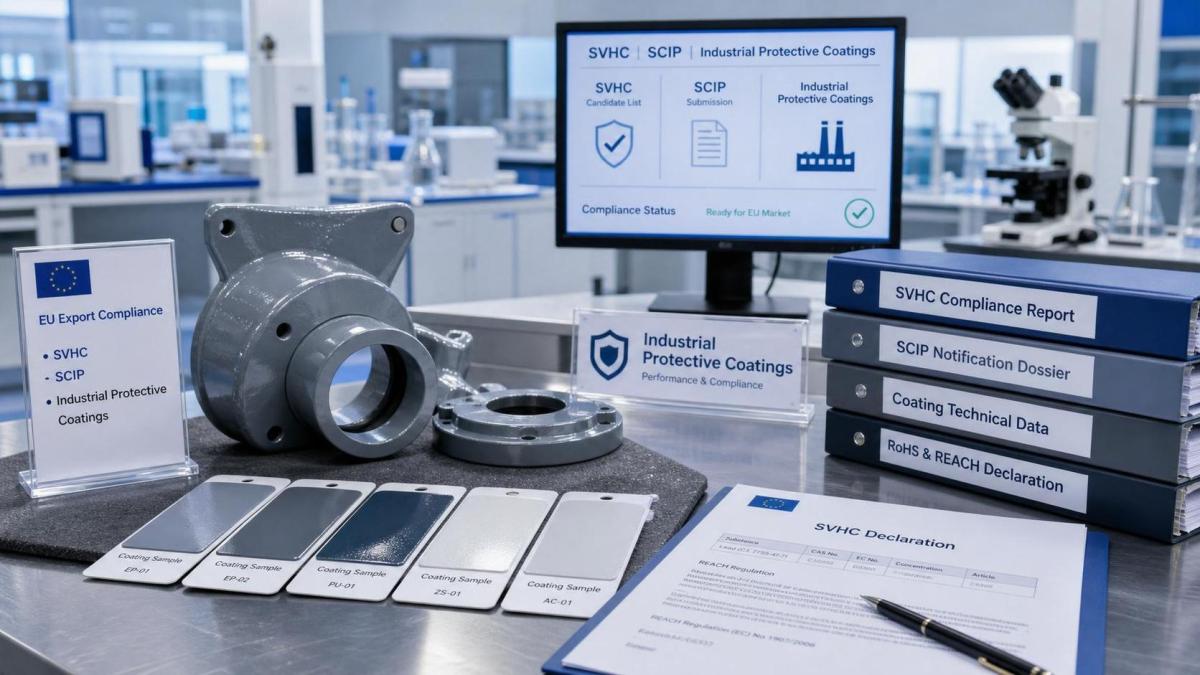
On July 8, 2026, the European Chemicals Agency (ECHA) added three coating-related substances commonly used as auxiliaries in industrial anti-corrosion coatings to the SVHC Candidate List, including certain benzotriazole derivatives and modified polysiloxanes. From October 1, 2026, imported coated products containing any one of these substances at a concentration of 0.1% or above will need SCIP notification and related safety information communication to downstream customers. For industrial coatings exporters serving the EU market, this is not just a regulatory update; it directly affects compliance delivery, technical documentation, and customer-facing coordination.
What Has Been Confirmed So Far
According to the information provided, ECHA included three categories of auxiliaries used in industrial anti-corrosion coatings in the SVHC Candidate List on July 8, 2026. The substances mentioned include specific benzotriazole derivatives and modified polysiloxanes.
The same information states that, starting on October 1, 2026, imported coated products that contain any of these substances at a concentration of 0.1% or higher must be notified to ECHA through SCIP. In parallel, safety-related information must be passed on to downstream customers.
The update is described as having a direct impact on Chinese industrial coatings exporters such as JinFeiMa, especially in relation to EU compliance delivery procedures and preparation of technical documentation.
Where the Pressure Will Be Felt Across the Chain
Export-facing coating suppliers will face tighter document readiness
From an industry perspective, companies exporting industrial coatings or coated products to the EU are likely to feel the most immediate impact. The reason is straightforward: once the listed substances are present at or above the stated threshold, regulatory communication is no longer limited to internal formulation knowledge and must be translated into filing and customer-facing documentation. The main pressure point is likely to be the handoff between formulation data, compliance review, and shipment readiness.
Manufacturers of coated products may need earlier substance checks
For processing and manufacturing businesses using industrial anti-corrosion coatings in exported products, the issue is not only the coating itself but whether the finished imported coated product entering the EU falls within the notification trigger described in the update. What deserves closer attention is the verification step before export, especially where coating auxiliaries are embedded in a broader product delivery workflow.
Supply chain and compliance service teams may see heavier coordination work
Supply chain service providers, compliance teams, and related service partners may also be affected because SCIP notification and downstream safety communication depend on timely, consistent technical inputs. Analysis shows that the operational burden may appear less in a single regulation-reading step and more in document collection, version control, customer responses, and cross-party timing.
EU buyers and downstream customers will likely ask sharper questions
For procurement parties and downstream users in the EU market, this update may lead to closer scrutiny of safety data and substance declarations attached to coated products. The practical effect is likely to show up in supplier qualification reviews, order release conditions, and requests for more complete technical files before delivery.
What Companies Should Watch Before October 2026
Separate the listing event from the filing deadline
Analysis shows that the July 8, 2026 listing date and the October 1, 2026 notification requirement should be treated as two different management points. One is the regulatory change itself; the other is the operational deadline for products entering the EU market. Companies should avoid treating them as the same milestone, because internal preparation time may be shorter than it appears once product screening and document assembly begin.
Identify affected formulations and coated product lines early
What deserves closer attention is the mapping between substance content and specific export items. Businesses that ship industrial anti-corrosion coatings, or products carrying those coatings, need to determine which formulations or coated product categories may contain the listed substances at or above the stated threshold. This is a practical screening issue tied directly to filing exposure and customer disclosure obligations.
Review technical files and customer communication paths
The update explicitly points to compliance delivery procedures and technical document preparation. That means businesses should pay close attention to whether existing safety data, substance statements, and downstream communication materials can support EU-facing requests in time. The issue is not only whether information exists, but whether it can be provided in a consistent form across internal teams, suppliers, and customers.
Track any further official clarification
Observably, the current update gives a clear trigger point for SCIP notification and downstream safety communication, but companies should still watch for any later official wording, interpretive clarification, or implementation detail that could affect product scope or documentation practice. In regulatory execution, the difference between a policy signal and day-to-day filing expectations often appears in the follow-up details.
Why This Looks Like More Than a Routine Listing Update
Observably, this development should not be read only as a narrow substances list change. It is also a signal that coating-related auxiliaries used in industrial anti-corrosion applications are drawing closer compliance attention when products move into the EU market. That said, it would be premature to overstate the broader market outcome based solely on the provided information.
It is more appropriate to understand this as a near-term operational change with longer-term compliance implications. The near-term element is clear: some imported coated products may require SCIP notification and downstream safety communication from October 2026. The longer-term element is that exporters and manufacturers may need to treat formulation transparency and technical file readiness as a more regular part of EU delivery discipline.
How This Update Is Best Understood Now
At this stage, the most reasonable reading is that the update creates a defined compliance task rather than a fully knowable market result. The confirmed facts already matter for exporters, coated product manufacturers, and EU-facing procurement workflows, because the threshold, timing, and communication obligations are directly tied to shipment readiness.
From an industry perspective, this is best understood as a concrete short-term compliance change and a longer-term signal worth continued monitoring. It does not by itself determine commercial outcomes, but it does raise the importance of substance screening, documentation quality, and customer communication in EU-related coatings business.
Basis of This Article
This article is based on the user-provided news title, event date, and event summary concerning ECHA's July 8, 2026 addition of three coating-related SVHC substances and the October 1, 2026 SCIP notification requirement for imported coated products meeting the stated threshold.
For reporting of this type, commonly relevant source categories may include official regulatory announcements, company disclosures, industry association updates, authoritative media coverage, and standard-setting or compliance-related documents. A specific official source link was not provided in the input, so the exact source document should continue to be verified.
Any follow-up interpretation should continue to monitor later official clarification, implementation wording, and practical filing expectations related to SCIP notification and downstream safety information communication.