
Categories List
 JFM Paint Strengthens Global Expansion Strategy Through International Market ExchangeSep 10, 2026
 JFM Paint Strengthens Global Presence Through Successful Participation in KOREA BUILD WEEK 2026Aug 27, 2026
 EU REACH Adds 12 New SVHCs, Forcing Industrial Coating Export Declarations UpdateAug 16, 2026
- Vietnam Rule: Industrial Coating Imports Need SVHC Declaration from China Starting Oct. 1Aug 15, 2026
- China Customs Launches Paint Export PrecheckAug 14, 2026
- Nippon Paint Reacquires European Auto Coatings UnitAug 12, 2026



Leave A Reply
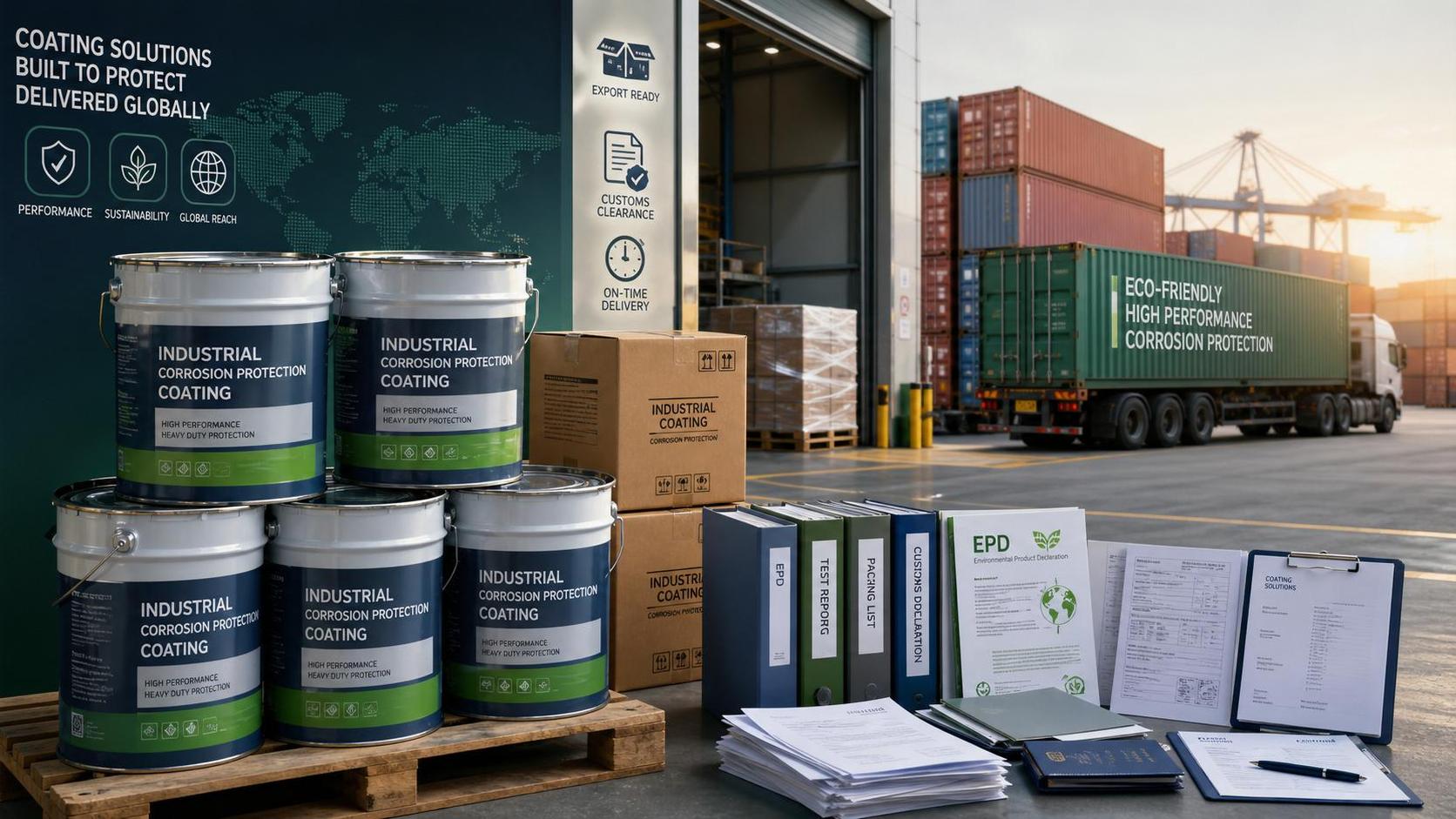
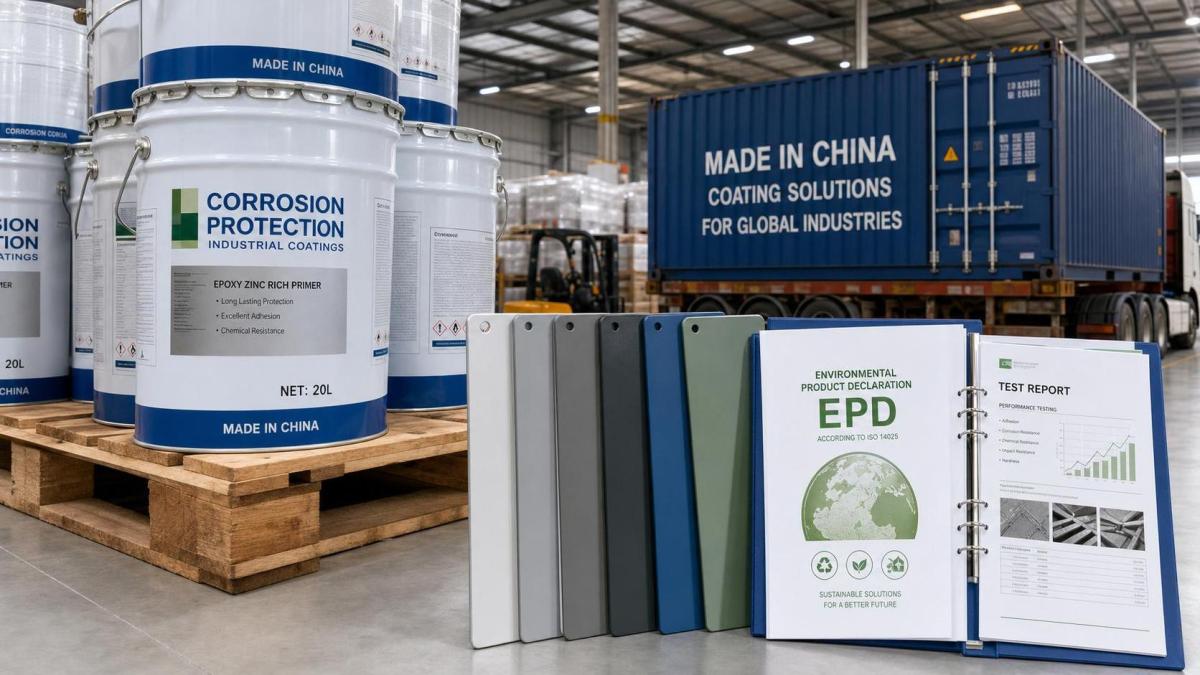
On July 1, 2026, a new compliance requirement for China’s industrial coatings exports takes effect: exporters shipping to markets with established green access mechanisms, including the EU, South Korea, Canada, and Singapore, must submit an Environmental Product Declaration (EPD) report issued by a CNAS-accredited institution alongside the shipment. For exporters of industrial and heavy-duty anti-corrosion coatings, including companies such as JinFeiMa, this is not just a documentation update but a trade execution issue, because missing or non-compliant paperwork may lead to customs clearance delays or return-shipment risks.
What the new filing requirement confirms
According to a joint announcement by the Ministry of Ecology and Environment and the General Administration of Customs, the requirement applies from July 1, 2026.
The confirmed scope covers industrial coatings products exported to the EU, South Korea, Canada, Singapore, and other markets that have already established green access mechanisms.
The required document is an Environmental Product Declaration (EPD) report issued by a CNAS-accredited institution.
The disclosed summary also makes clear that the requirement affects exporters of heavy-duty anti-corrosion coatings, including JinFeiMa and similar companies.
If the required compliance documents are not in place, the stated business risk is customs clearance delays or the possibility of returned shipments.
Where the pressure is likely to show up first
Export execution becomes more document-sensitive
From an industry perspective, direct exporters are the first group likely to feel the impact because the new rule attaches a specific environmental compliance document to outbound trade flows. The immediate effect is likely to appear in export documentation review, customs preparation, and shipment release timing.
Manufacturers may need tighter coordination with compliance work
For coatings manufacturers, especially those supplying industrial and heavy-duty anti-corrosion products, the issue is not only production but whether product-related documentation can move in step with delivery schedules. What deserves closer attention is the interface between manufacturing, compliance preparation, and export shipment planning.
Supply chain and logistics service providers face timing risks
Supply chain service providers, customs brokers, and logistics coordinators may also be affected if required EPD documents are incomplete or not synchronized with shipment files. Analysis shows the operational pressure is likely to concentrate in booking, customs filing, and delivery commitment management.
Overseas buyers may focus more on pre-shipment readiness
For buyers in the covered markets, the change may shift attention toward whether suppliers can provide compliant EPD documentation before shipment. Observably, the practical concern is less about marketing claims and more about whether orders can clear customs and arrive without avoidable disruption.
What companies should watch now
Track the exact wording of follow-up implementation language
Analysis shows companies should pay close attention to any further official wording related to scope, filing practice, and document handling, because the summary confirms the requirement but does not provide full operational detail in the input provided here.
Review which products and destinations fall into the highest-priority category
Exporters should first identify industrial coatings shipments going to the named markets and other destinations with established green access mechanisms. In practice, this helps companies decide which orders, product lines, and customers require the fastest compliance alignment.
Check document readiness against shipment timelines
What deserves closer attention is whether EPD issuance by a CNAS-accredited institution can be aligned with contract performance and delivery schedules. The rule matters operationally because a document gap at the time of export may directly affect customs clearance.
Prepare customer and partner communication in advance
For exporters, suppliers, and service partners, early communication on required documentation, lead times, and submission responsibility may reduce friction. This is especially relevant where buyers, freight partners, and customs-facing teams all depend on the same set of compliance documents.
Why this reads as more than a routine paperwork change
Observably, this development signals that environmental documentation is moving closer to the core of export compliance for industrial coatings, at least for the covered markets named in the input. That does not by itself confirm broader market effects beyond the stated scope, but it does show that carbon-footprint-related reporting is becoming part of practical trade access rather than a separate sustainability discussion.
It is more appropriate to understand this as an already effective rule change for the specified export flows, and at the same time as a longer-term policy signal that deserves continued monitoring. The immediate result is document compliance pressure; the broader industry meaning will depend on how implementation unfolds in real transactions.
How to read the significance at this stage
At this stage, the most balanced reading is that the new requirement creates a clear near-term compliance checkpoint for industrial coatings exporters serving covered green-access markets. It does not, based on the provided information alone, establish a full industry-wide outcome beyond those cases. Even so, the rule is significant because it links environmental declarations directly to customs and delivery risk, making documentation readiness a business continuity issue rather than a secondary reporting task.
Basis of this article and what still needs verification
This article is generated from the user-provided news title, event date, and event summary.
For this type of industry development, the most relevant source categories usually include official government announcements, customs notices, company disclosures, industry association updates, authoritative media coverage, and standards-related documents.
No specific official source link was provided in the input, so the exact original notice and any later implementation details still require ongoing verification.
Key follow-up points to monitor include whether additional official clarification is issued on product scope, filing practice, and the practical handling of EPD documents in export procedures.