
Categories List
 China Customs Launches Smart Preclassification Channel for Coatings ExportsAug 16, 2026
- China Customs Launches AI Preclassification Channel for Paint ExportsAug 15, 2026
- 越南要求进口工业涂料提交SVHC声明Aug 14, 2026
- China Customs Opens Smart Pre-Review for Coating ExportsAug 13, 2026
- EU REACH Limits NMP in CoatingsAug 13, 2026
- Shenzhen Fluorosilicone Expo Opens in October 2026Aug 12, 2026


Leave A Reply

On June 12, 2026, Shandong Fengsheng Environmental Technology formally announced that its waterborne alkyd heavy-duty anticorrosion series had passed the UAE ESMA/GSO mandatory fire safety certification under GSO 5037:2025. For coating suppliers, exporters, project bidders, and procurement teams involved in steel structure fireproof applications, this development matters because it points to a concrete compliance threshold tied to access to Middle East infrastructure tenders rather than a routine product update.
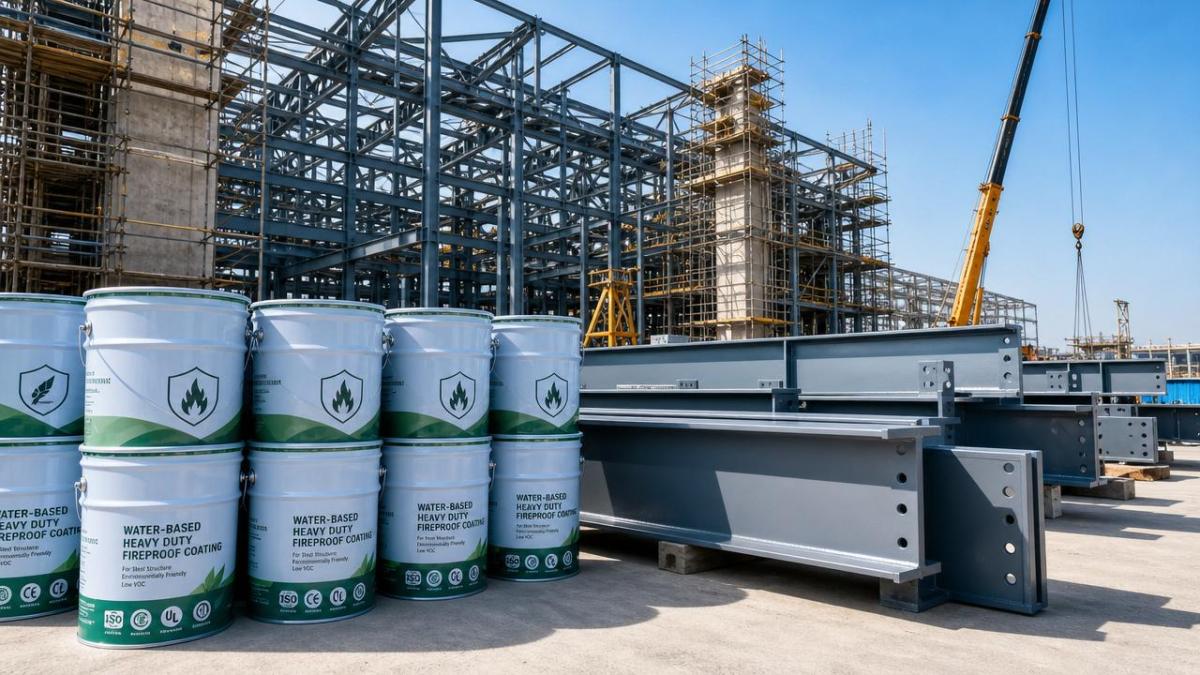
A confirmed compliance milestone in market access
According to the information provided, the announcement followed earlier outbound industry-academia collaboration results referenced at a coating industry technology conference in Ningbo. On June 12, Shandong Fengsheng Environmental Technology stated that its waterborne alkyd heavy-duty anticorrosion series had obtained the UAE ESMA/GSO mandatory fire safety certification, identified as GSO 5037:2025.
The certification is described as covering full-scenario steel structure fireproof coating applications. The same input also states that this certification is a mandatory requirement in Middle East infrastructure project tenders.
Where the compliance effect may be felt first
Export-facing coating suppliers may see certification move from advantage to entry condition
Analysis shows that for industrial coating manufacturers targeting overseas engineering business, the immediate impact is likely to be felt at the market-entry stage. If a fire safety certification is treated as a hard tender requirement, product eligibility may depend not only on technical performance claims, but also on whether certification status can be demonstrated in a form accepted by project owners, tendering parties, or their review teams.
What deserves closer attention is the documentation layer around export business: product certifications, technical files, test-related materials, and the wording used in bid submissions. Even where commercial demand exists, failure to align documents with mandatory certification expectations may affect qualification review, bid participation, or delivery scheduling.
Project procurement teams may need tighter screening at prequalification
From an industry perspective, procurement functions connected to steel structure fireproof applications may face greater pressure to confirm whether candidate products meet mandatory fire safety requirements before supplier selection is finalized. This can affect prequalification, technical bid alignment, approved vendor list management, and the timing of purchase decisions.
Observably, the practical issue is not only whether a supplier says a product is suitable, but whether compliance materials can support tender review and later project execution. Buyers may therefore pay closer attention to certification status, technical consistency across documents, and whether the product scope matches the intended application scenario.
Certification and testing service participants may face more specification-driven demand
Analysis shows that firms involved in certification support, testing coordination, and compliance documentation may also be affected, because a mandatory tender threshold usually raises demand for clearer evidence trails. Their role may become more tied to helping manufacturers and exporters prepare auditable materials for qualification review, submission packages, and post-award verification.
At the same time, this should not be overstated as a broad market shift based on one event alone. It is more appropriate to understand it as a sign that certification-linked access requirements remain central in this application segment.
What companies should track next in practice
Check whether product scope and certification scope fully align
For companies active in comparable application areas, the first practical question is whether the certified scope, product series scope, and intended project use are fully consistent. Where certification is a tender prerequisite, any gap between the certified product description and the actual bid or delivery specification may become a compliance issue.
Prepare tender-ready technical and compliance files
What deserves closer attention is the completeness of tender-facing materials. Companies may need to review how certification references, technical descriptions, and supporting documents are presented in bid packages, product dossiers, and customer-facing compliance statements, especially when steel structure fireproof use is involved.
Monitor execution language in tenders and official communications
Because the input does not provide detailed enforcement guidance beyond the certification requirement itself, companies should avoid assuming a fully settled execution standard across all transactions. It is more appropriate to monitor how certification wording appears in future tender documents, official notices, and procurement reviews, and whether document expectations become more specific over time.
Assess delivery planning and supplier qualification together
For exporters, distributors, and project suppliers, compliance readiness may need to be reviewed alongside lead times, supplier approval status, after-sales responsibilities, and traceability records. Analysis shows that when certification becomes a gatekeeping condition, qualification delays can affect not only bidding, but also downstream delivery coordination.
Why this looks more like an execution signal than a broad policy shift
In editorial observation, this development is best read as an execution-level signal tied to market entry requirements. The key point is not that a new industrial coating trend has been proven, but that a specific mandatory fire safety certification is being treated as a hard threshold for participation in relevant infrastructure tenders.
Observably, the significance lies in how compliance is operationalized: certification affects who can enter the bidding process, how product claims are supported, and whether procurement decisions can move forward without regulatory or tender-related friction. At the same time, broader conclusions about market uptake, competitive restructuring, or widespread rule expansion would go beyond the confirmed facts currently available.
How this event is best understood for now
This announcement points to a concrete compliance development for waterborne industrial coatings seeking access to steel structure fireproof projects linked to Middle East infrastructure tenders. From an industry perspective, the most reasonable reading is that certification is functioning as a practical access requirement in this segment, with likely effects on bidding readiness, procurement review, and export documentation.
It is more appropriate to understand this event as a landed compliance signal rather than a fully mapped market outcome. Companies should therefore treat it as a prompt to review certification alignment and tender preparedness, while continuing to watch how execution standards are reflected in future project documents and market feedback.
Basis of this article and what still needs verification
This article is generated from the user-provided news title, event date, and event summary. The analysis is based only on the confirmed input that Shandong Fengsheng Environmental Technology announced on June 12, 2026 that its waterborne alkyd heavy-duty anticorrosion series passed the UAE ESMA/GSO mandatory fire safety certification under GSO 5037:2025, and that this certification is a mandatory requirement for Middle East infrastructure tenders involving full-scenario steel structure fireproof coating applications.
For this type of event, commonly relevant source categories may include company announcements, regulator publications, trade or customs authority information, industry association releases, standards organization documents, and reporting by authoritative trade media. A specific official source link was not provided in the input, so the exact official publication path still requires follow-up verification. What still needs continued observation includes enforcement detail, certification interpretation in practice, tender document language, industry feedback, and how companies implement related compliance requirements in actual export and delivery workflows.