
Categories List
 China Customs Launches Smart Preclassification Channel for Coatings ExportsAug 16, 2026
- China Customs Launches AI Preclassification Channel for Paint ExportsAug 15, 2026
- 越南要求进口工业涂料提交SVHC声明Aug 14, 2026
- China Customs Opens Smart Pre-Review for Coating ExportsAug 13, 2026
- EU REACH Limits NMP in CoatingsAug 13, 2026
- Shenzhen Fluorosilicone Expo Opens in October 2026Aug 12, 2026



Leave A Reply
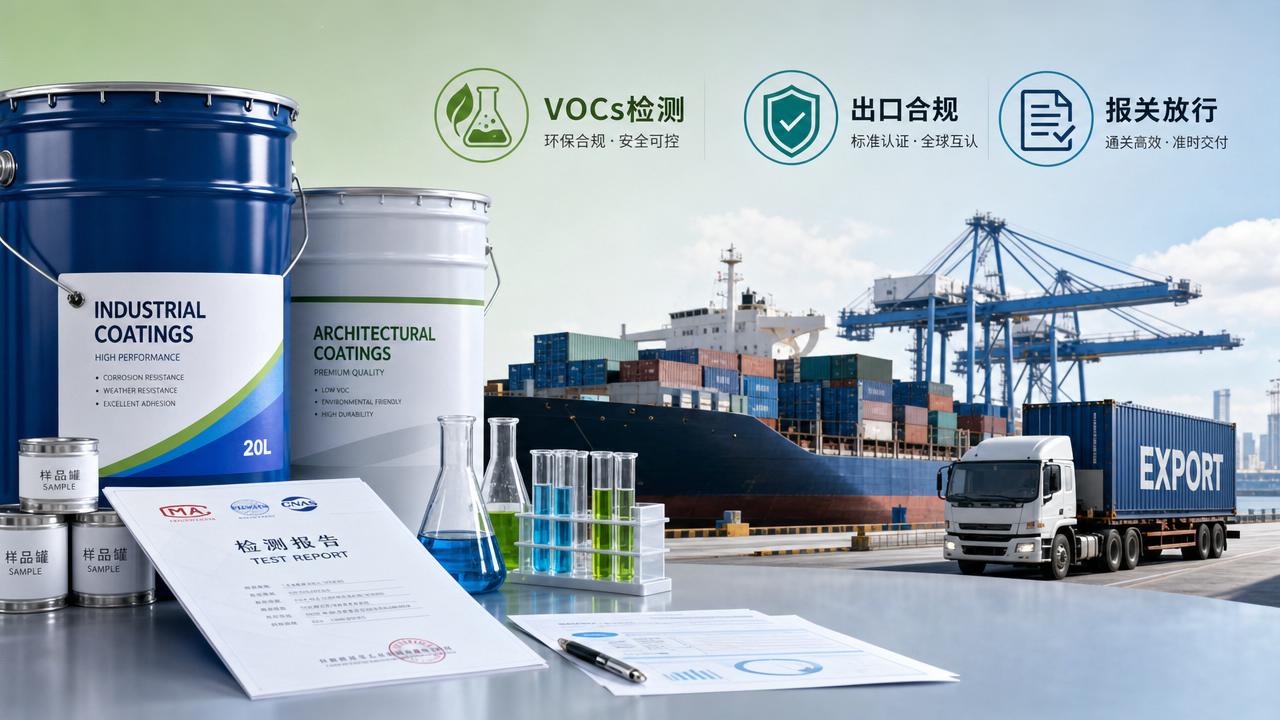
From June 1, 2026, a new export control practice at the core Yangtze River Delta ports has turned VOCs testing from a technical check into a practical customs prerequisite for parts of the coatings trade. For exporters of industrial and architectural coatings, as well as buyers, logistics providers, and testing partners serving shipments to the EU, South Korea, Singapore, and RCEP member markets, the key issue is not only the inspection itself but the immediate effect on documentation, release timing, and cross-border compliance exposure.
What the new port-side inspection now requires
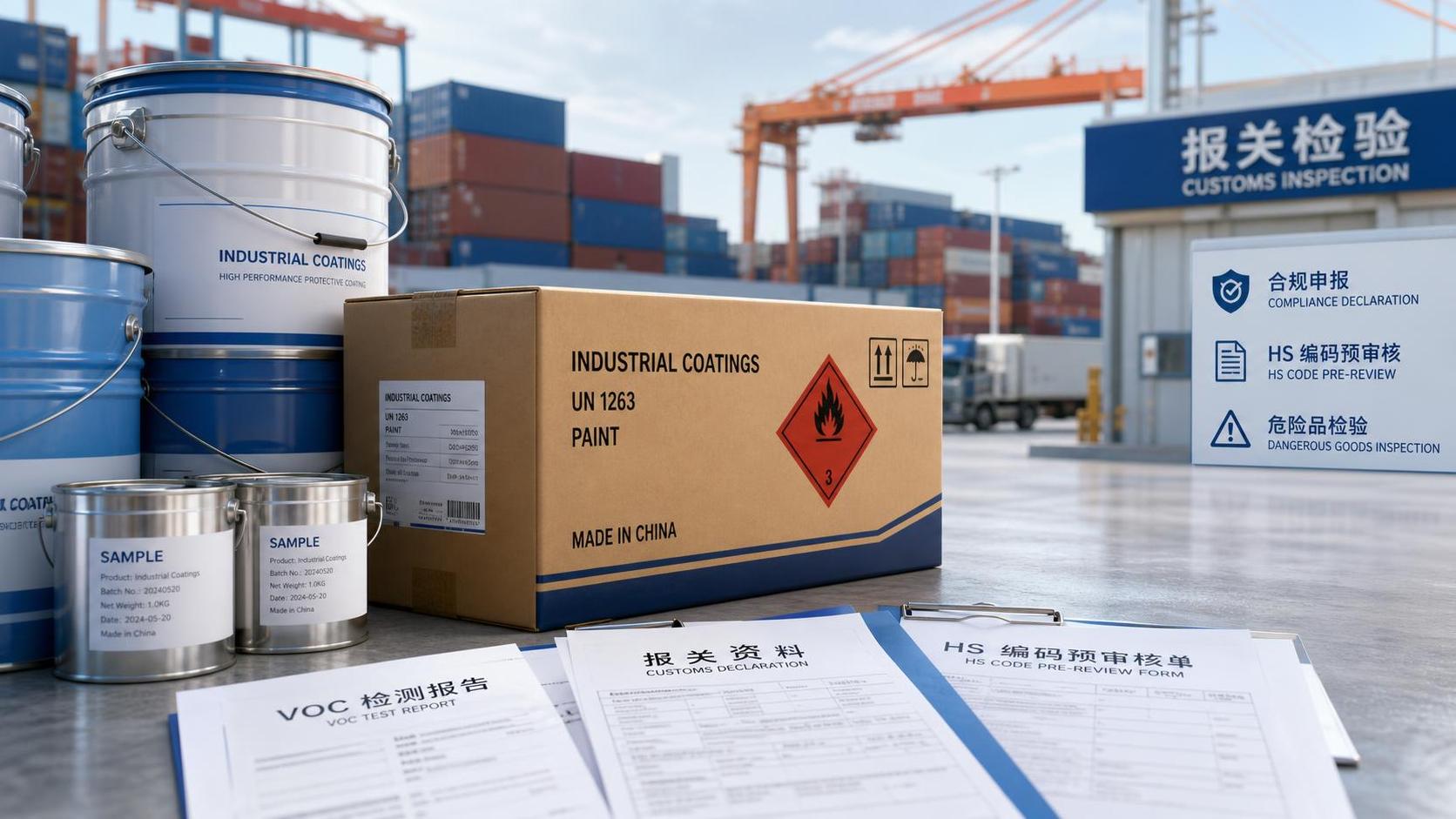
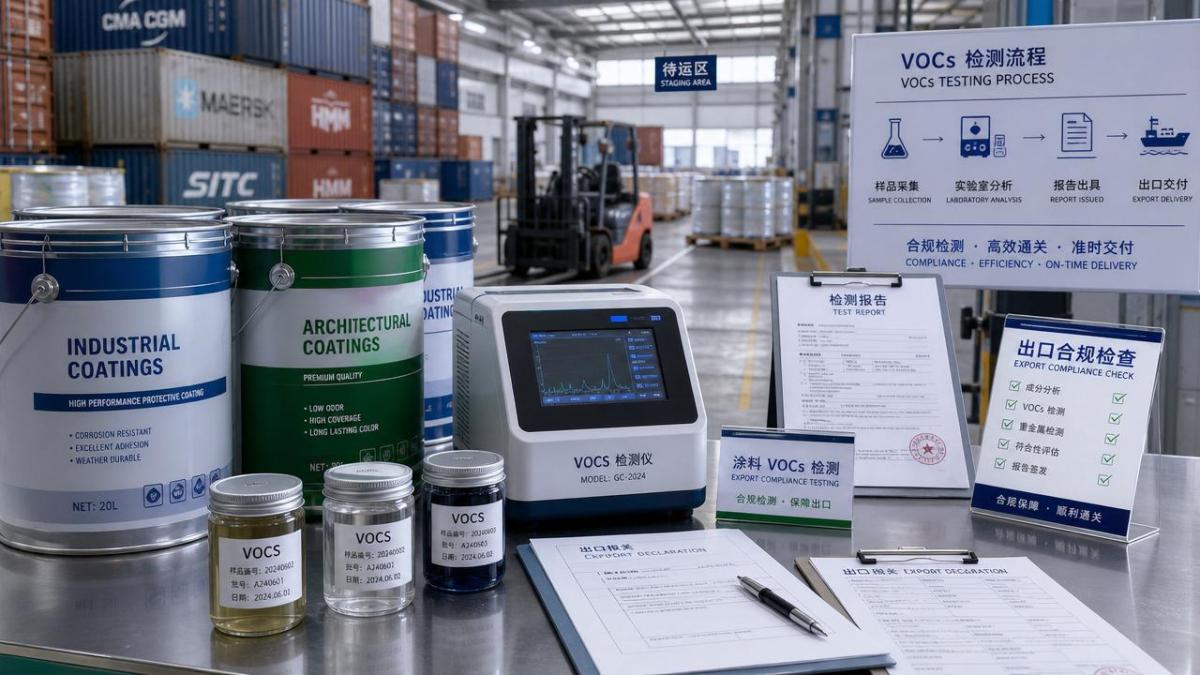
According to the provided event information, starting on 2026-06-01, customs at the three core ports of Shanghai, Ningbo, and Taicang, together with ecological environment authorities, began spot checks on VOCs content in export coatings. The requirement applies to industrial and architectural coatings shipped to the EU, South Korea, Singapore, and RCEP member countries. Shipments must be accompanied by a VOCs test report issued by a CMA-qualified laboratory, with testing conducted under ISO 11890-2 or GB/T 23985. Batches found non-compliant will be held from release and reported to the importing country’s regulator. The measure has already extended delivery cycles for some orders by 5 to 8 working days.
Where the pressure is likely to appear first
Exporters face a document-to-clearance linkage
From an industry perspective, exporters are the first group directly affected because the VOCs report is now tied to customs release in the named destinations and product categories. The operational impact is likely to concentrate on pre-shipment preparation, file completeness, and coordination between factory output, testing completion, and port booking. What deserves closer attention is whether internal export files already align product scope, destination market, and the required test method reference.
Manufacturers may see compliance checks move earlier in production planning
Analysis shows that coating manufacturers serving export orders may need to treat VOCs verification as part of shipment readiness rather than a downstream paperwork task. The effect is not limited to laboratory testing itself; it also touches batch scheduling, product release timing, and technical file management. For suppliers producing both domestic and export batches, the practical concern is whether test evidence can be matched clearly to the goods being declared.
Testing and supply chain service providers become part of delivery risk control
Observably, CMA-qualified laboratories and supply chain intermediaries are likely to become more critical in the export process because report availability now affects whether cargo can move on time. For freight forwarders, customs brokers, and related service partners, the main exposure is in documentation review, customs filing readiness, and communication of possible timing slippage to overseas counterparts. For testing providers, attention is likely to focus on method selection under ISO 11890-2 or GB/T 23985 and the ability to support shipment schedules without creating avoidable bottlenecks.
What companies should monitor in the near term
Check whether every covered shipment has the right report chain
Analysis shows that companies shipping covered coatings to the listed markets should review whether each consignment can be supported by a VOCs report from a CMA-qualified laboratory and whether the referenced method is consistent with the stated requirement. This is especially relevant where export teams, factories, and brokers work from separate document sets.
Rebuild delivery timelines around testing lead time
What deserves closer attention is the scheduling effect. Since some orders have already seen lead times extended by 5 to 8 working days, companies may need to reassess booking windows, customer delivery commitments, and internal release milestones. This should be understood as a planning issue tied to execution at port rather than as a confirmed long-term norm for every shipment.
Review destination-market and product-scope screening
Observably, the rule is framed around both destination markets and product categories. Companies should therefore pay close attention to whether the goods fall within industrial or architectural coatings and whether the destination is among the named markets. This matters for sales contracts, export declarations, and internal compliance review before cargo reaches port.
Watch for further clarification in enforcement practice
It is more appropriate to understand this as an implemented control signal with details that may still require observation in practice. Businesses should continue tracking any later clarification on inspection handling, documentation expectations, and the practical interpretation of the requirement during customs processing.
How this signal should be read
Analysis shows that the development is more than a routine sampling action because the test report has become a hard filing condition for covered exports at key ports. At the same time, it should not be overstated beyond the facts provided. The clearest takeaway for now is that environmental compliance documentation is being enforced at the border in a way that directly affects shipment release, and that non-compliance may also trigger communication with overseas regulators.
A change in execution, not just in wording
From an industry perspective, this update is best read as a rule already entering operational execution rather than as a distant policy discussion. The immediate significance lies in customs clearance, documentation discipline, and delivery planning for affected coating exports. Whether the full market impact broadens further still depends on how consistently the measure is applied in practice and how companies adjust their export workflows.
Basis of this article and what still needs verification
This article is based on the user-provided news title, event date, and event summary. For developments of this type, relevant source categories often include official notices, releases from regulators, customs or trade authorities, industry association updates, standards documents, and reporting by authoritative media. No specific official source link was provided in the input, so the exact official publication path remains to be verified. Continued attention is still needed on enforcement details, certification and testing interpretation, tender or contract document changes, market feedback, and how affected companies implement the requirement in practice.