
Categories List
 China Customs Launches Smart Preclassification Channel for Coatings ExportsAug 16, 2026
- China Customs Launches AI Preclassification Channel for Paint ExportsAug 15, 2026
- 越南要求进口工业涂料提交SVHC声明Aug 14, 2026
- China Customs Opens Smart Pre-Review for Coating ExportsAug 13, 2026
- EU REACH Limits NMP in CoatingsAug 13, 2026
- Shenzhen Fluorosilicone Expo Opens in October 2026Aug 12, 2026

Leave A Reply
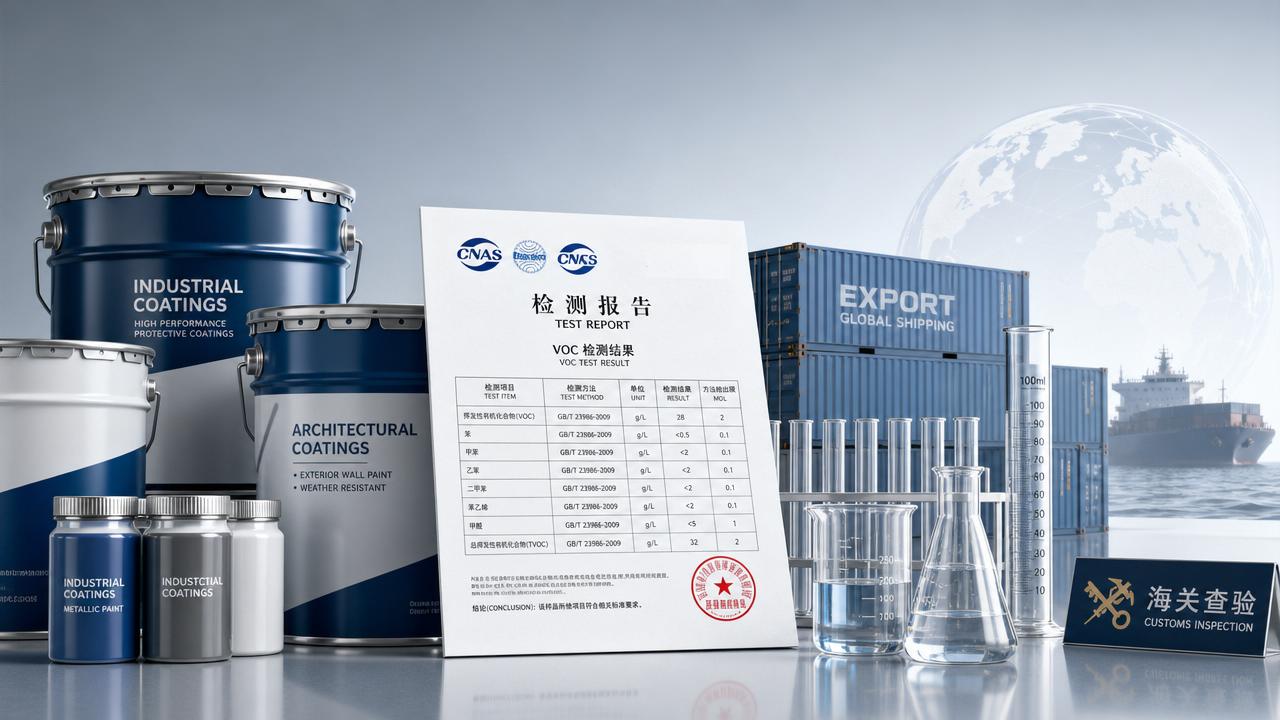
From June 1, 2026, exporters moving architectural and industrial coatings through the Yangtze River Delta ports need to treat VOC documentation as a release condition rather than a supporting file. Based on an operational notice issued by Shanghai Customs on June 12, this change affects export clearance through Shanghai, Ningbo, and Taicang, and it is especially relevant for manufacturers, traders, logistics coordinators, testing providers, and overseas-facing procurement teams handling shipments to markets where VOC limits are mandatory.
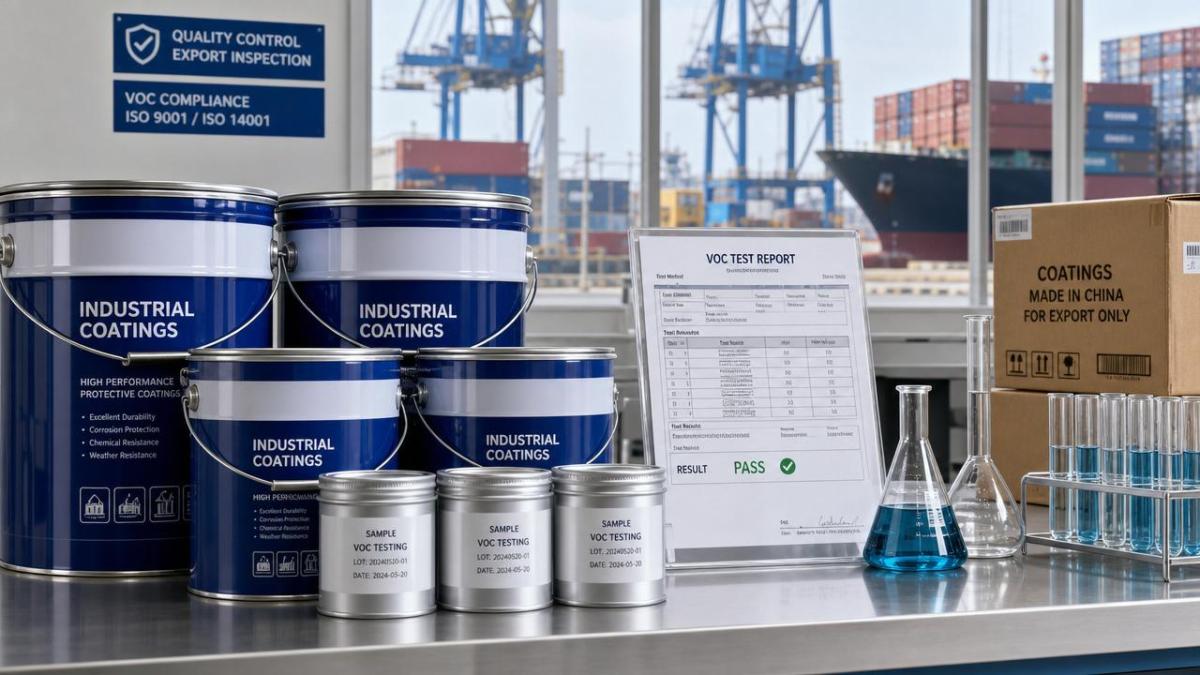
What the port-side requirement now includes
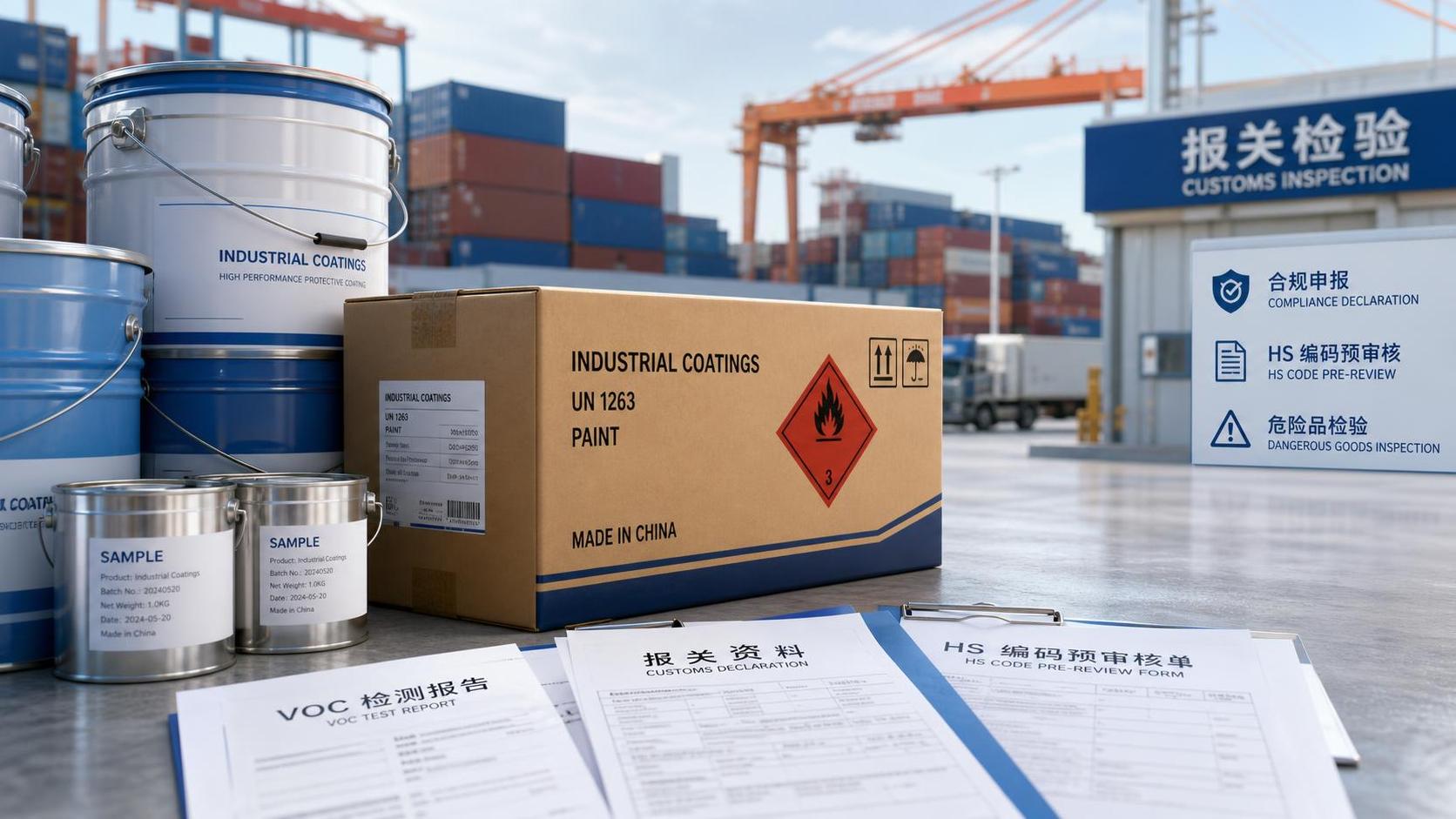
The confirmed change is that all architectural and industrial coatings exported through Shanghai, Ningbo, and Taicang ports must be accompanied by a full-item VOC test report issued by a CNAS-accredited laboratory. The applicable test basis stated in the notice is GB 30981.1-2025 or ASTM D6886. The notice also states that goods without this documentation will not be released.
The same requirement applies to goods routed onward to markets in Europe, the United States, Australia, New Zealand, and South Korea where VOC restrictions are mandatory. The event time provided for this article is June 1, 2026, while the operational notice referenced in the summary was issued by Shanghai Customs on June 12.
Where the operational pressure is likely to appear first
Export shipments face a new document gate
From an industry perspective, exporters are the first group directly affected because the VOC report is now tied to release at the port. The immediate impact is not only technical compliance, but also document readiness before cargo handover, customs filing, and shipment scheduling. What deserves closer attention is whether internal export files, product dossiers, and shipment booking routines are prepared to include a qualifying full-item VOC report each time it is required.
Manufacturers and processors need tighter lab coordination
Analysis shows that coating producers and processors may feel the change in the testing and dispatch sequence. If a shipment cannot move without a CNAS-accredited laboratory report based on the stated standards, production release, lot planning, and handover timing may need closer coordination with test completion. For businesses supplying multiple export destinations, the practical issue is less about broad policy interpretation and more about aligning product documentation with the stated testing route.
Traders and supply-chain service providers may see delivery risk shift upstream
Observably, trading companies, freight coordinators, and related supply-chain service providers may face higher exposure to documentation gaps even when they are not the product manufacturer. The rule change can affect booking arrangements, customs preparation, and delivery commitments if the required VOC report is missing or not accepted for the shipment in question. This makes document collection and review a more central part of export execution.
Testing and compliance support functions become more visible
For laboratories and compliance support teams, the notice signals greater scrutiny around report type, accreditation status, and testing basis. It is more appropriate to understand this as a practical compliance checkpoint at the export stage, meaning that the usability of a report for clearance may matter as much as the existence of test data itself.
What companies should review now
Check whether current reports match the stated requirement
Companies should review whether the VOC reports they currently rely on are full-item reports from CNAS-accredited laboratories and whether they are prepared under GB 30981.1-2025 or ASTM D6886 as stated in the notice. If not, the gap is not theoretical; it relates directly to release risk at the named ports.
Reconfirm document timing in export and procurement workflows
Analysis shows that the timing of testing and paperwork may now matter more than before. Export teams, procurement functions, and shipping coordinators should pay attention to whether test completion, internal approval, and cargo release schedules are still aligned under the new inspection posture.
Pay closer attention to destination-sensitive shipments
The notice explicitly extends to cargo routed to markets with mandatory VOC restrictions, including Europe, the United States, Australia, New Zealand, and South Korea. What deserves closer attention is whether companies segment their shipments, product files, and contract documentation by destination market in a way that reflects this requirement at the port stage.
Keep watching for execution language and file expectations
The summary provided does not include more detailed enforcement criteria beyond the stated test report requirement and non-release consequence. For that reason, businesses should continue monitoring how official wording, practical review standards, and supporting file expectations are expressed in follow-up communications or transaction documents.
Why this reads as an execution signal
Observably, this development is more than a general reminder about VOC control. It is more appropriate to understand it as an execution-level signal because the requirement is tied directly to release at specific export ports and linked to a defined form of laboratory evidence. At the same time, analysis should remain measured: the available information confirms the documentation threshold, but it does not yet provide broader detail on review scenarios, product-specific handling, or how consistently related trade documents may be adjusted in response.
How the market may need to interpret it for now
At this stage, the most balanced reading is that VOC compliance documentation has moved closer to being a front-end shipping prerequisite for the affected coating exports through these ports. The notice does not justify broad claims about wider market outcomes on its own, but it does indicate that exporters and related service providers should treat VOC reporting, laboratory qualification, and file completeness as active parts of shipment readiness rather than back-office formalities.
Source context and what still needs verification
This article is generated from the user-provided news title, event date, and event summary. For events of this kind, relevant source categories usually include official notices, releases from customs or trade authorities, industry association updates, standard-setting documents, and reporting by authoritative media. A specific official source link was not provided in the input, so it still needs to be verified on an ongoing basis. Further observation should focus on detailed enforcement language, compliance interpretation, documentation expectations, tender or contract wording changes, market feedback, and how companies implement the requirement in practice.