
Categories List
 China Customs Launches Smart Preclassification Channel for Coatings ExportsAug 16, 2026
- China Customs Launches AI Preclassification Channel for Paint ExportsAug 15, 2026
- 越南要求进口工业涂料提交SVHC声明Aug 14, 2026
- China Customs Opens Smart Pre-Review for Coating ExportsAug 13, 2026
- EU REACH Limits NMP in CoatingsAug 13, 2026
- Shenzhen Fluorosilicone Expo Opens in October 2026Aug 12, 2026


Leave A Reply
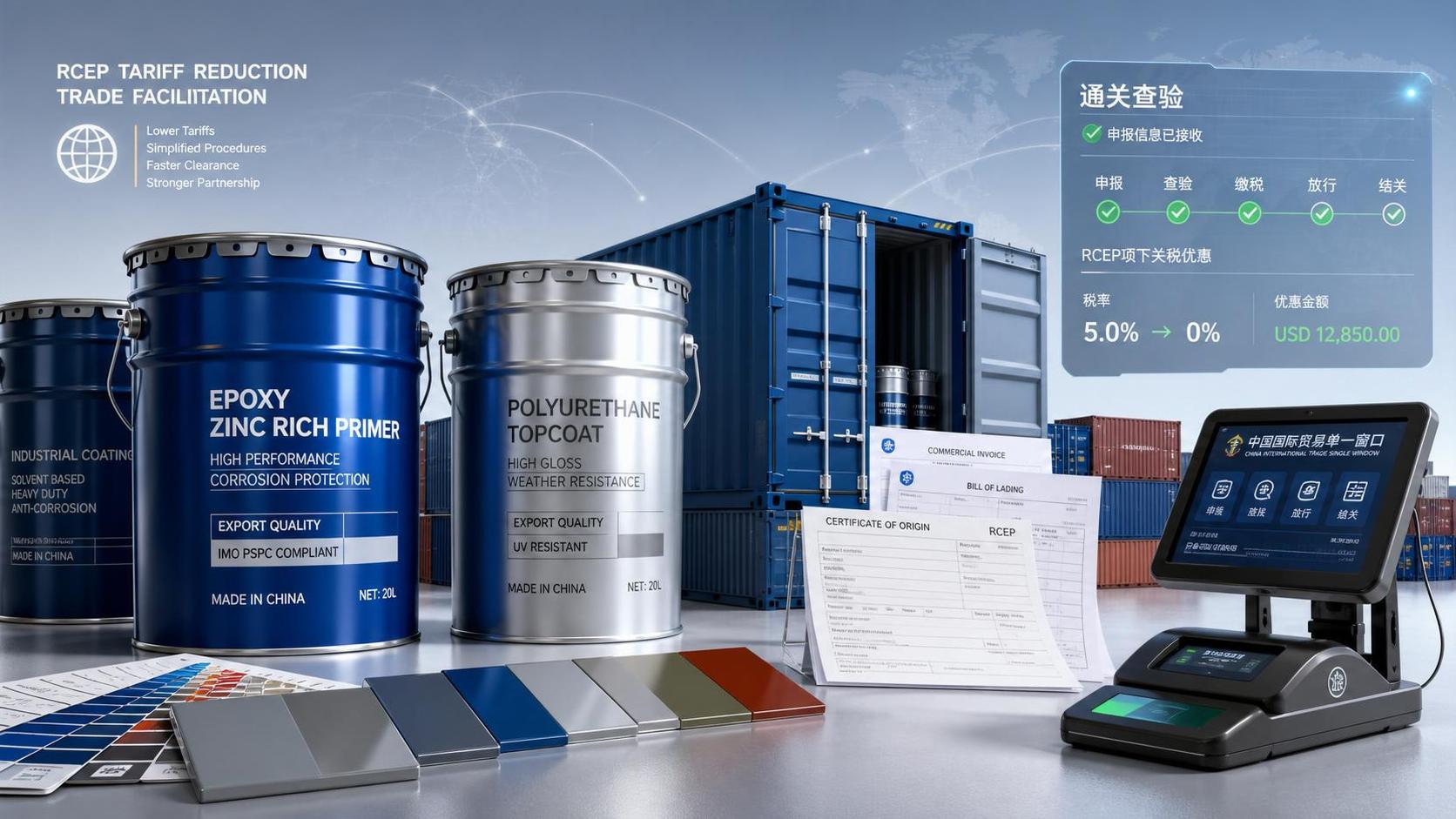
On June 25, 2026, the ASEAN Secretariat confirmed that the third-round RCEP tariff reduction schedule had taken effect, raising the share of duty-free tariff lines for Chinese heavy-duty industrial coatings exported to Vietnam and Indonesia from 81% to 92%. The change directly concerns exporters, buyers, customs and trade operations teams, and supply-chain service providers because it combines tariff treatment adjustments for HS 3208.20 and 3208.90 with a streamlined Form R origin certificate process that now supports electronic verification through a single application for use across multiple countries.
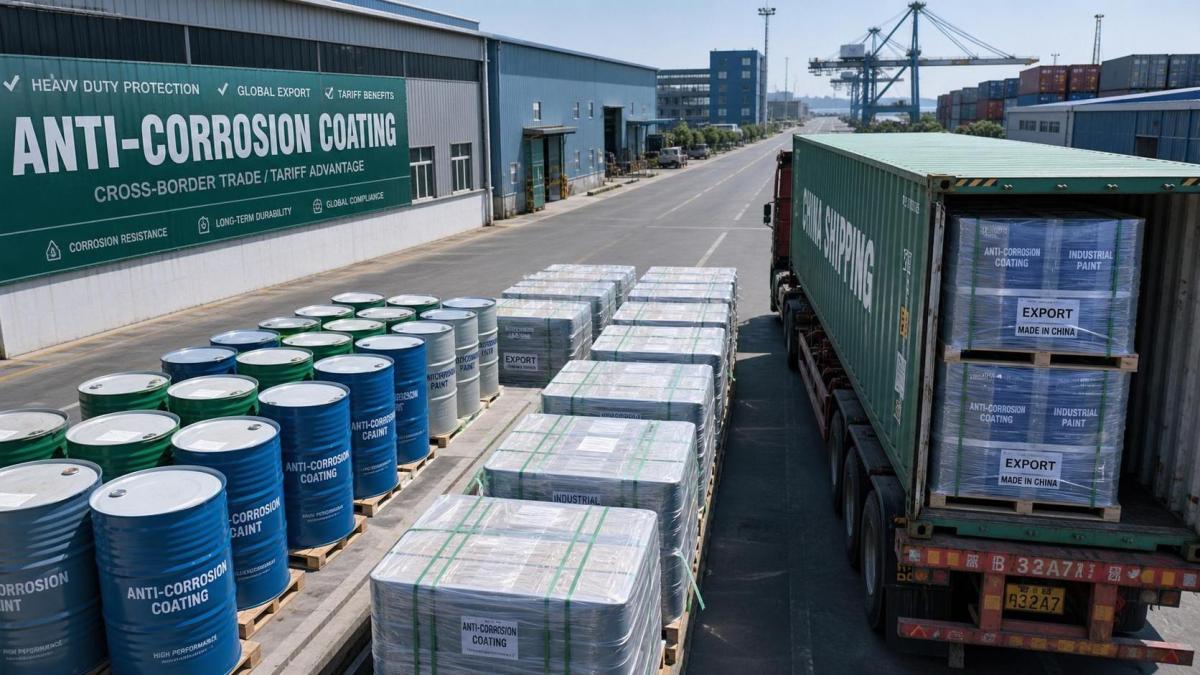
What Has Been Confirmed Under the New Schedule
The confirmed facts are limited but commercially relevant. According to the event information provided, the newly implemented RCEP tariff reduction list adds duty-free coverage for Chinese heavy-duty anticorrosion coatings shipped to Vietnam and Indonesia. Within HS 3208.20 and HS 3208.90, the proportion of zero-tariff items increases from 81% to 92%.
The update also newly covers key export product categories such as epoxy zinc-rich primers and polyurethane topcoats identified as major JinFeiMa export lines. At the same time, the application process for the Form R certificate of origin has been optimized, with electronic verification now supporting a model described as one application for use across multiple countries.
Where the Rule Change May Be Felt First
Export quotations and contract execution
From an industry perspective, exporters of industrial coatings may feel the impact first in quotation logic, contract review, and landed-cost calculations. A broader duty-free range can affect how suppliers structure offers for Vietnam and Indonesia, but the practical benefit still depends on whether the shipment, HS classification, and origin documentation are aligned with the new tariff treatment.
Procurement and buyer-side sourcing decisions
Buyers and procurement teams may need to recheck product lists and sourcing plans for anticorrosion coatings under the newly covered lines. Analysis shows that the tariff-side change matters not only for price comparison, but also for supplier selection, bid evaluation, and delivery planning where origin qualification and document readiness can influence whether the expected tariff treatment is actually available.
Customs, documentation, and trade service workflows
Supply-chain service providers, customs teams, and trade compliance personnel are also likely to be affected because the Form R process has been optimized for electronic verification across multiple countries. What deserves closer attention is not just the certificate application itself, but the coordination between product classification, origin support files, export declarations, and destination-side acceptance of electronic verification records.
Practical Points Companies Should Watch Now
Recheck HS mapping for covered coating products
Analysis shows that companies dealing in products under HS 3208.20 and 3208.90 should first confirm how their export items are mapped internally and in trade documents. This matters especially for product lines such as epoxy zinc-rich primers and polyurethane topcoats that are now described as newly covered within the duty-free expansion.
Prepare origin documentation for electronic review
With Form R procedures now optimized for electronic verification, companies should pay closer attention to the completeness and consistency of origin-related documentation. It is more appropriate to understand this as an operational compliance point: if supporting records, declarations, and product information are not internally consistent, the intended tariff benefit may face delays or additional review.
Track how buyers and tenders reflect the new treatment
Observably, procurement documents, bid conditions, and delivery terms may gradually start reflecting the wider zero-tariff coverage, but the event summary does not provide execution details for how quickly this will occur. For that reason, exporters and distributors should watch for updated wording in customer requirements rather than assume that every transaction will immediately apply the new preference in the same way.
Align delivery planning with document timing
Companies involved in order fulfillment should also monitor the relationship between shipment timing and document issuance. The event confirms a procedural optimization, but not the full operational rhythm in each transaction chain, so coordination among sales, logistics, and compliance teams remains important.
Why This Looks Like More Than a Headline Change
Observably, this development is better understood as a rule implementation signal rather than a general policy statement. The tariff schedule has been confirmed as effective, and the origin certificate process has also been adjusted, which means the change touches both market access conditions and documentary execution.
At the same time, analysis shows that the market still needs to watch how the updated treatment is reflected in customs practice, customer procurement language, and transaction-level document checks. In other words, the rule change has landed, but the full business effect will depend on how consistently it is applied across export, clearance, and purchasing workflows.
How to Read the Change at This Stage
The current update points to a concrete improvement in duty-free coverage for Chinese industrial coatings exported to Vietnam and Indonesia under the specified HS codes, together with a more streamlined Form R verification route. For the industry, the more rational reading is that this is an implemented trade-rule change with immediate compliance relevance, while the pace and depth of commercial impact still require observation through actual orders, tender language, and documentation practice.
Basis of This Article and What Still Needs Verification
This article is generated solely from the user-provided news title, event date, and event summary. Typical source types for developments of this kind may include official announcements, releases from regulatory or trade authorities, customs or trade administration information, industry association updates, standards-related documents, and reporting by authoritative media.
No specific official source link was provided in the input, so the exact official publication path remains to be verified. What still requires continued checking includes detailed implementation language, certification and origin verification practice, changes in tender documents, market feedback, and how companies execute the new requirements in actual export transactions.