
Categories List
 China Customs Launches Smart Preclassification Channel for Coatings ExportsAug 16, 2026
- China Customs Launches AI Preclassification Channel for Paint ExportsAug 15, 2026
- 越南要求进口工业涂料提交SVHC声明Aug 14, 2026
- China Customs Opens Smart Pre-Review for Coating ExportsAug 13, 2026
- EU REACH Limits NMP in CoatingsAug 13, 2026
- Shenzhen Fluorosilicone Expo Opens in October 2026Aug 12, 2026


Leave A Reply
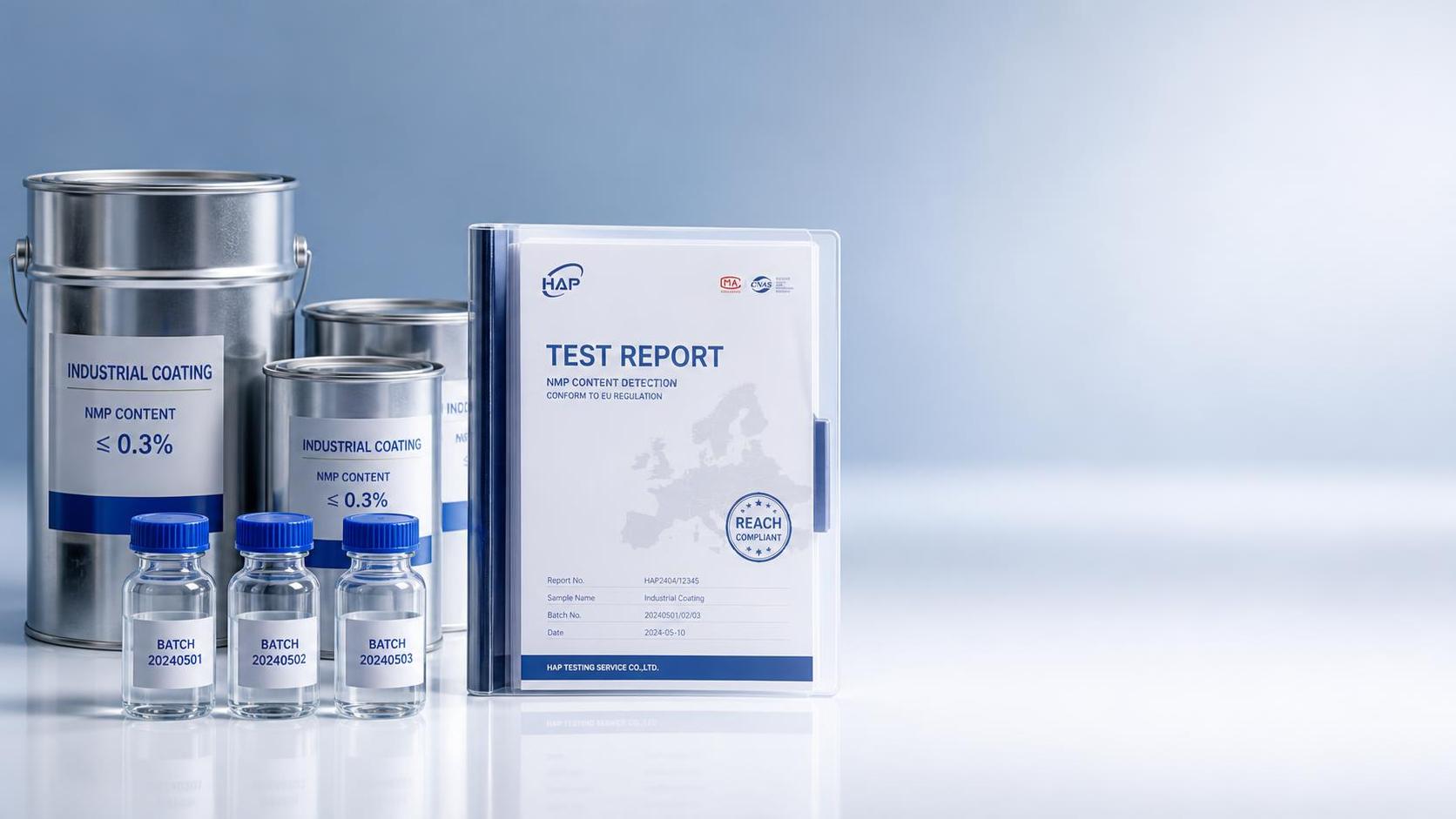
On 2026-08-12, the European Commission issued Regulation (EU) 2026/1342, setting a 0.3% (w/w) limit for N-methyl-2-pyrrolidone (NMP) in ready-to-use coatings and coating products, with mandatory application from 2026-10. For industrial and architectural coatings entering the EU, this is less a general policy signal than a direct compliance trigger, especially for exporters, formulators, testing labs, and customs documentation teams.
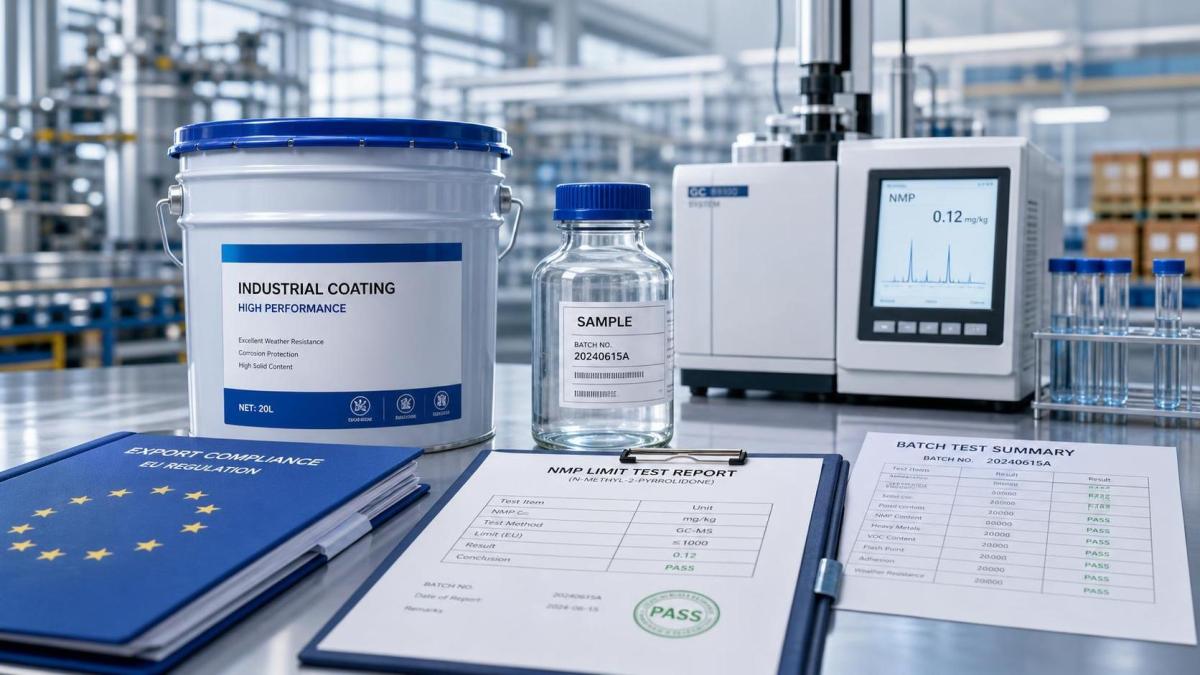
What the new REACH entry covers
The measure adds an NMP limit under REACH Annex XVII for ready-to-use coatings and coating products. The stated threshold is 0.3% (w/w). It applies to industrial and architectural coatings imported into the EU. The rule also exempts certain high-solids technology systems, while requiring a declaration of conformity and batch test reports.
Where the pressure will show up first
Exporters need formulation review, not just paperwork
For coating exporters, the main issue is product composition. If a finished coating contains NMP above the stated threshold, the product may need reformulation before shipment. The impact sits at the intersection of product development, sourcing, and final release, because compliance now depends on both the recipe and the evidence attached to each batch.
Testing and document control move closer to shipment
Third-party testing organizations are likely to become part of the export workflow more often, because batch test reports are explicitly required. That puts more weight on sampling, testing timing, file consistency, and the handoff between laboratory output and customs documentation. Any mismatch between the declaration and the batch report can create clearance risk.
High-solids systems need careful classification
The exemption for certain high-solids technology systems is relevant, but it should not be treated as a broad safe harbor. From an industry perspective, the key issue is whether a product truly falls within the exempt scope and whether supporting documents are aligned with that classification. This makes technical file review and specification matching part of the compliance process.
What exporters should line up now
Check formulation data against the 0.3% threshold
Companies selling industrial or architectural coatings to the EU should confirm whether any ready-to-use product contains NMP at or above the stated limit. This is a formulation-level review, not a marketing-label exercise.
Prepare conformity statements and batch records together
The rule requires both a declaration of conformity and batch test reports. What deserves closer attention is how these documents are kept synchronized across production lots, shipment files, and customs submissions. In practice, this means document control needs to sit alongside release control.
Review supplier inputs and lead times
Where NMP appears anywhere in the supply chain, procurement teams need to know whether incoming materials could affect the final ready-to-use coating. That may influence supplier qualification, release timing, and the amount of pre-shipment verification required before export.
How this should be read right now
Analysis shows this is best understood as a rule that has already moved from policy text into an execution signal. It is not a broad market forecast, and it is not enough to assume the exemption or compliance path without checking product scope, test evidence, and document format. The practical implication for the industry is straightforward: formulation, testing, and customs files now need to be managed as one compliance chain.
What it means for the near term
The most useful reading of this update is that EU market access for coatings is becoming more document- and composition-sensitive at the batch level. For Chinese exporters in particular, the immediate task is to verify product status, align technical and shipment records, and watch for any further clarification on execution practice. That makes this a concrete compliance development, with follow-up attention still needed on implementation details.
Source note
This article is based on the user-provided title, event date, and summary. Typical source types for this kind of update include official regulatory notices, customs or trade authority publications, industry association updates, standard-setting documents, and authoritative media coverage. The specific official source link was not provided in the input and should continue to be verified as implementation details, enforcement practice, and document requirements are clarified.