
Categories List
 China Customs Launches Smart Preclassification Channel for Coatings ExportsAug 16, 2026
- China Customs Launches AI Preclassification Channel for Paint ExportsAug 15, 2026
- 越南要求进口工业涂料提交SVHC声明Aug 14, 2026
- China Customs Opens Smart Pre-Review for Coating ExportsAug 13, 2026
- EU REACH Limits NMP in CoatingsAug 13, 2026
- Shenzhen Fluorosilicone Expo Opens in October 2026Aug 12, 2026

Leave A Reply
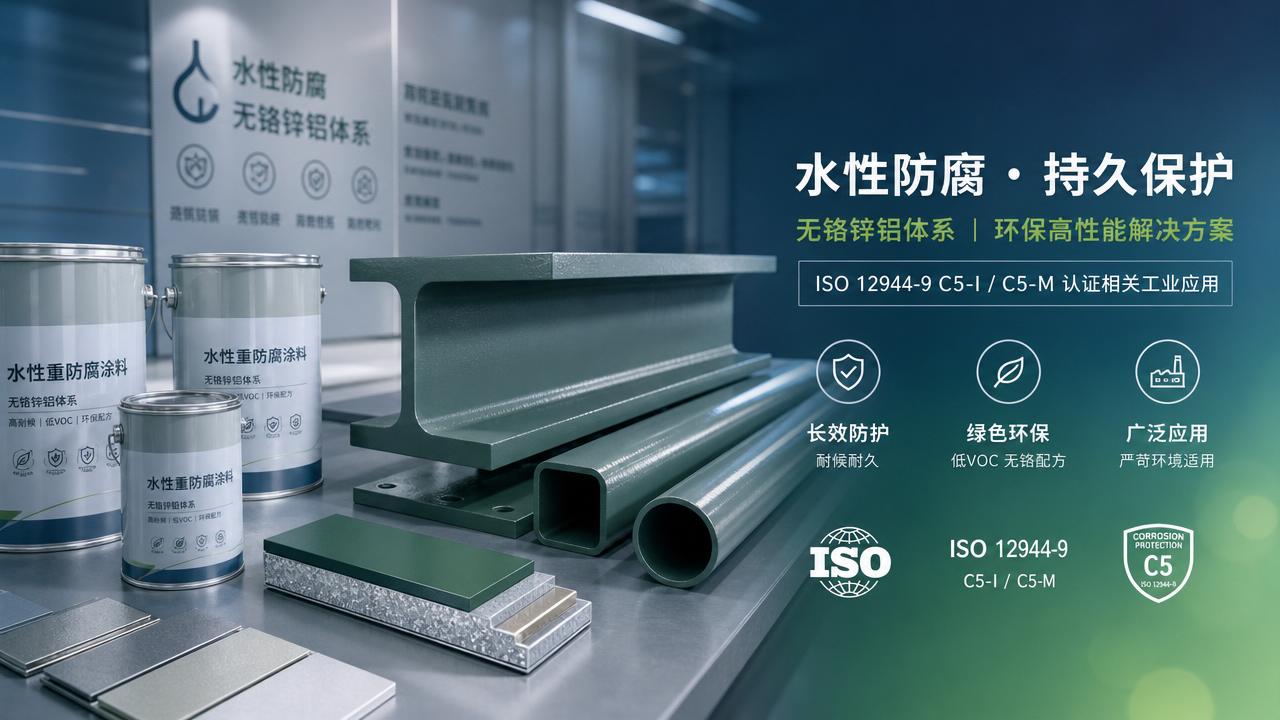
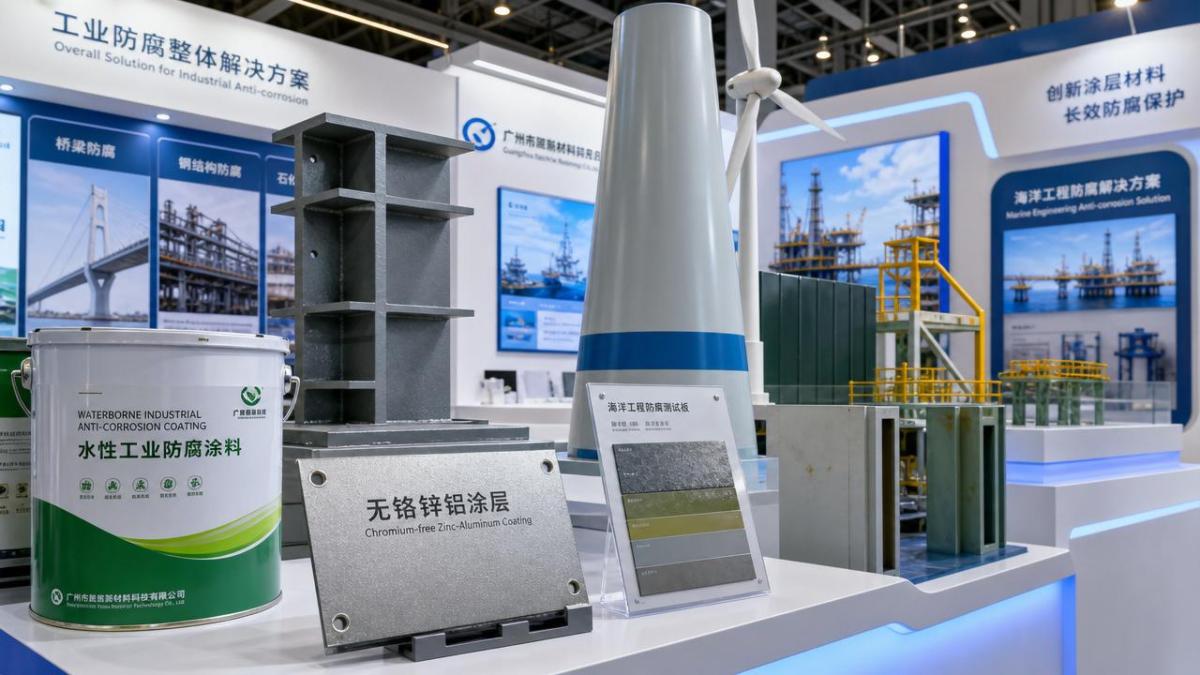
On June 10, 2026, the opening day of the International Coatings Industry Exhibition in Guangzhou (ICIE) highlighted a practical shift in industrial purchasing priorities: waterborne anticorrosion coatings for steel structures are drawing stronger attention in petrochemical, offshore engineering, and wind tower applications, while ISO 12944-9 C5-I/C5-M-certified chromium-free zinc-aluminum coating systems are being presented with export relevance for EPC projects in the EU, the Middle East, and Southeast Asia. For manufacturers, exporters, project buyers, and compliance teams, this matters less as a standalone product trend and more as a signal that certification, environmental positioning, and specification alignment are becoming more visible in procurement and delivery decisions.
What the first day of ICIE confirmed
The confirmed facts are limited but clear. First-day exhibition data from ICIE on June 10 showed that inquiries for waterborne steel-structure anticorrosion coatings used in petrochemical, offshore, and wind tower scenarios rose 67% year on year. At the same event, multiple Chinese manufacturers displayed chromium-free zinc-aluminum coating systems that had passed ISO 12944-9 C5-I/C5-M certification. The event summary also states that these systems support exports to EPC projects in the EU, the Middle East, and Southeast Asia.
Why procurement and compliance teams may read this differently
Specification review is becoming more important for project buyers
From an industry perspective, buyers in industrial projects may be affected because the exhibition signal connects product selection with certification status and end-use scenarios rather than with price alone. The business impact is most likely to appear in technical review, approved-vendor screening, and bid-document alignment. What deserves closer attention is whether procurement documents, technical datasheets, and project specifications increasingly ask for proof tied to ISO 12944-9 C5-I/C5-M performance classes and chromium-free system descriptions.
Export-facing manufacturers need stronger document readiness
For coating producers and coating-system suppliers, the relevance is tied to export execution. Analysis shows that once products are positioned for EPC projects in overseas markets, the practical pressure usually falls on certification evidence, technical files, product declarations, and consistency between test results and tender requirements. The key change to monitor is not merely demand visibility at the exhibition, but whether overseas project qualification increasingly depends on readily reviewable compliance documentation and clearer technical traceability.
Testing and certification support functions may face closer scrutiny
Certification-related service providers and internal quality teams may also be affected because ISO 12944-9 C5-I/C5-M was explicitly visible in the products presented. In business terms, the impact would appear in test report management, certification interpretation, customer communication, and support for tender or delivery packages. Companies in these functions should pay attention to whether customers begin asking more precise questions about certification scope, test basis, and the match between certified systems and actual service conditions.
Practical points companies should watch next
Check whether certificates match the exact offered system
Observably, the first checkpoint for suppliers and buyers is whether the certificate and supporting technical documents correspond to the exact coating system being quoted or exported. Where the event summary mentions ISO 12944-9 C5-I/C5-M-certified chromium-free zinc-aluminum systems, companies should focus on document consistency rather than relying on broad marketing language.
Prepare tender and delivery files earlier in the sales cycle
For export and EPC-oriented business, companies should watch for tighter linkage between pre-sales communication and post-award delivery documentation. This includes technical datasheets, test reports, certification materials, and any product information likely to be requested during supplier qualification or bid evaluation. The event itself does not confirm a new mandatory rule, so this should be treated as a compliance-preparation issue to monitor rather than a completed regulatory shift.
Follow changes in buyer language and project specifications
What deserves closer attention is whether buyers in petrochemical, offshore, and wind tower applications begin using more explicit wording around waterborne systems, corrosion classes, and chromium-free solutions in RFQs, technical appendices, or supplier screening materials. If that wording becomes more common, the commercial effect could move from exhibition-level interest to specification-level execution.
Watch delivery risk where export positioning is involved
For exporters and supply-chain teams, the relevant issue is not only winning orders but also maintaining consistency across quotation, certification presentation, shipment documents, and after-sales quality traceability. Analysis shows that any mismatch between claimed certification status and delivered system details could create friction in project acceptance or customer review, especially in cross-border EPC contexts.
How this signal is best understood at this stage
This development is more appropriately understood as an execution signal than as proof of a fully established rule change. The exhibition data shows stronger buyer attention around waterborne heavy-duty anticorrosion coatings and visible interest in certified chromium-free systems for export-oriented applications. However, the available facts do not show a new regulation, a new formal policy text, or a confirmed shift in all project requirements. Observably, the more useful interpretation is that certification-backed, environmentally positioned coating systems are becoming easier for buyers to compare and discuss in real procurement settings, which may influence how requirements are written and checked next.
What this means for the market now
In practical terms, this event points to a market environment in which compliance language, certification visibility, and technical fit are gaining weight alongside product performance in industrial coating decisions. A neutral reading is that the first-day ICIE signal does not yet prove a universal procurement change, but it does indicate that companies active in steel-structure corrosion protection, especially those serving export EPC demand, should be ready for closer scrutiny of standards alignment, product files, and delivery consistency.
Basis of this article and what still needs verification
This article is based on the user-provided news title, event date, and event summary. For this type of development, commonly relevant source categories may include official event releases, regulatory or trade authority updates, industry association materials, standards organization documents, tender documents, and reporting by established industry media. No specific official source link was provided in the input, so any formal policy interpretation or market conclusion still requires ongoing verification. Items that remain worth monitoring include any later policy detail, certification interpretation in practice, changes in tender wording, market feedback from buyers, and how companies implement these requirements in actual export and project delivery workflows.