
Categories List
 China Customs Launches Smart Preclassification Channel for Coatings ExportsAug 16, 2026
- China Customs Launches AI Preclassification Channel for Paint ExportsAug 15, 2026
- 越南要求进口工业涂料提交SVHC声明Aug 14, 2026
- China Customs Opens Smart Pre-Review for Coating ExportsAug 13, 2026
- EU REACH Limits NMP in CoatingsAug 13, 2026
- Shenzhen Fluorosilicone Expo Opens in October 2026Aug 12, 2026


Leave A Reply

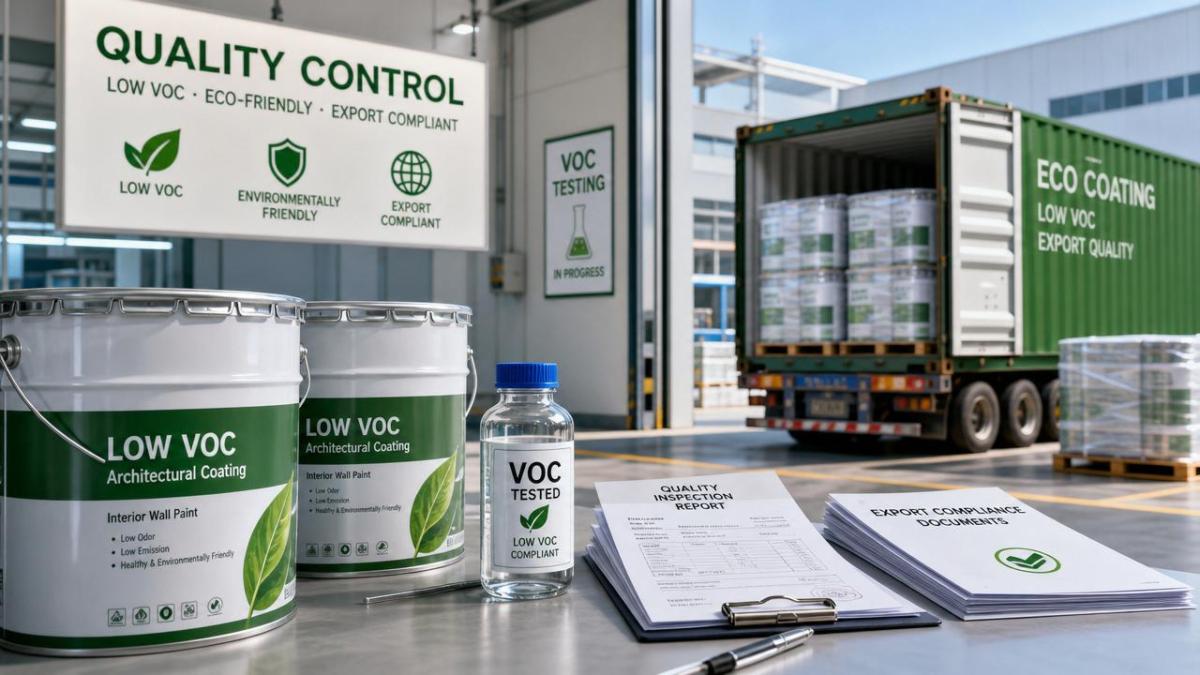
From June 1, 2026, the full implementation of GB 30981.1-2025 marks a concrete compliance shift for export-oriented architectural coatings. The change centers on stricter limits for benzene-series substances, formaldehyde, and total VOC, while export inspection requirements have also been upgraded. For coating producers, exporters, testing-related service providers, procurement teams, and shipment planners, this is worth close attention because non-compliant products will directly face customs clearance barriers rather than only internal quality adjustments.
What the rule change now confirms
The confirmed facts are limited but commercially significant. As of June 1, 2026, China’s mandatory national standard GB 30981.1-2025 is fully in force. For architectural coatings intended for export, the limits on benzene-series substances, formaldehyde, and total VOC are tightened by 25–30% compared with the previous standard. At the same time, the General Administration of Customs has upgraded export inspection standards. Products that do not meet the requirement will not be issued the export customs clearance document.
Where the pressure is likely to appear first
Formulation and manufacturing are closest to the new threshold
From an industry perspective, manufacturers of export architectural coatings are likely to feel the earliest impact because the rule change is tied directly to product composition and measurable emission-related indicators. The main business effect is likely to appear in formulation review, production batch control, internal testing, and release decisions before shipment. What deserves closer attention is whether existing export products, technical files, and compliance records still align with the tighter limits under GB 30981.1-2025.
Export execution now links compliance more directly to shipment release
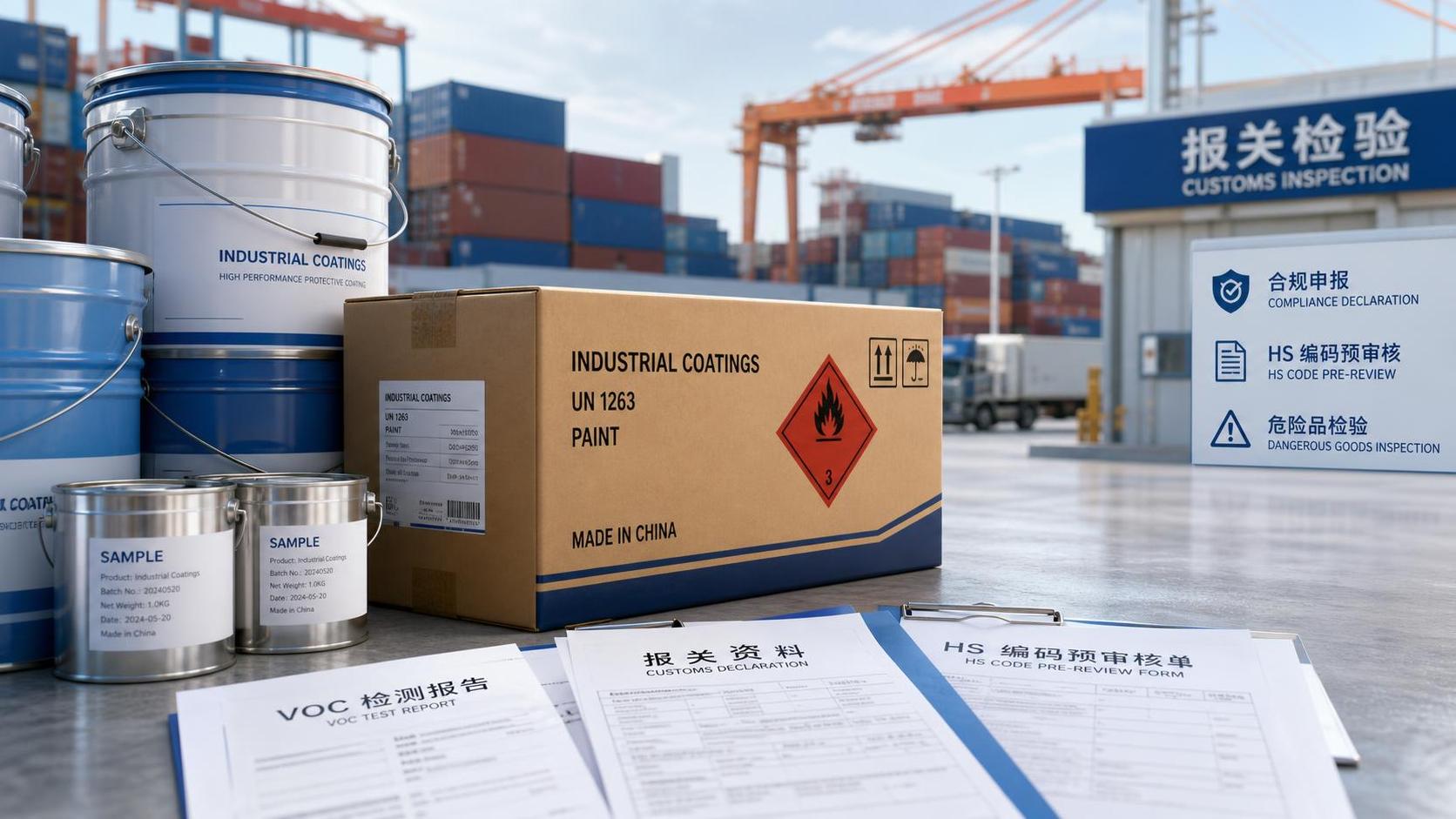
Exporters and trade operators are likely to face the change at the documentation and delivery stage. The confirmed signal is that failure to meet the upgraded inspection requirement may prevent issuance of the customs clearance document, which makes compliance not only a product issue but also a shipment execution issue. In practice, companies should pay close attention to how test evidence, product declarations, and shipment documentation are prepared and matched before export arrangements are finalized.
Procurement and supplier management may need earlier verification
For procurement teams and companies sourcing materials or finished coatings for export orders, the rule change may shift attention upstream. Analysis shows that supplier qualification, incoming specification checks, and technical consistency between ordered products and export requirements may become more important. The key concern is not only price or lead time, but whether supplied products can support downstream inspection and customs release under the tighter VOC-related limits.
Testing-related services may become a more visible control point
Testing service providers and compliance support functions may see greater relevance in the transaction flow because the standard and customs inspection requirement now connect more directly to export viability. Observably, the practical importance of reports, technical documents, and compliance verification is likely to increase, especially where shipments depend on demonstrating alignment with the updated limit values.
What companies should review now
Recheck whether current export products still fit the new standard
Analysis shows that one immediate priority is to review export architectural coating products against the revised limits for benzene-series substances, formaldehyde, and total VOC. Where a product was developed under the previous standard, companies should not assume that earlier compliance remains sufficient after full implementation.
Compare technical documents with export inspection needs
What deserves closer attention is the consistency between product data, test records, specification sheets, and any documents used in export filing or customs-related processes. The input information does not provide detailed enforcement procedures, so it is more appropriate to understand this as a compliance checkpoint that requires document readiness rather than as a settled administrative routine.
Watch delivery schedules and order confirmation timing
Because non-compliant products may not receive the customs clearance document, exporters and delivery planners should closely monitor whether compliance review is completed before shipment commitment. This does not confirm any specific delay pattern, but it does indicate that order scheduling, dispatch timing, and pre-shipment review may require tighter coordination.
Follow later wording and enforcement practice carefully
The confirmed event establishes the standard change and the customs inspection consequence, but it does not provide full detail on implementation practice. For that reason, companies should continue tracking official wording, inspection interpretation, and any updates that affect how compliance evidence is assessed in actual export operations.
How this development is best understood
Observably, this is more than a headline about lower VOC limits. It is better understood as a rule already moving into execution, because the standard has entered full implementation and the customs side has also raised its inspection requirement. At the same time, Analysis shows that the market still needs to watch how inspection interpretation, supporting documentation expectations, and business-side adjustments develop in practice. In that sense, this is both a landed compliance change and an execution signal that still requires follow-up observation.
A compliance signal with trade consequences
For the industry, the significance of this event lies in the combination of a stricter mandatory standard and a direct export control consequence. It is more appropriate to understand this not as a general policy direction, but as a practical compliance threshold affecting formulation review, documentation readiness, shipment planning, and export execution. The immediate facts are already clear; the parts that still require observation are the detailed enforcement approach, market response, and how companies adapt their compliance workflows.
Basis of this article and what still needs verification
This article is generated based on the user-provided news title, event date, and event summary. For developments of this kind, relevant source categories commonly include official notices, regulator releases, customs or trade authority information, industry association updates, standard organization documents, and reporting by authoritative media. No specific official source link was provided in the input, so the exact official link remains to be verified on an ongoing basis. Further observation is still needed on detailed implementation language, compliance interpretation, bidding and specification updates, industry feedback, and how companies carry out the new requirement in actual export operations.