
Categories List
 China Customs Launches Smart Preclassification Channel for Coatings ExportsAug 16, 2026
- China Customs Launches AI Preclassification Channel for Paint ExportsAug 15, 2026
- 越南要求进口工业涂料提交SVHC声明Aug 14, 2026
- China Customs Opens Smart Pre-Review for Coating ExportsAug 13, 2026
- EU REACH Limits NMP in CoatingsAug 13, 2026
- Shenzhen Fluorosilicone Expo Opens in October 2026Aug 12, 2026


Leave A Reply

The timing of the development itself is not explicitly stated in the source input, but a coatings industry conference scheduled for June 15–17 in Ningbo is set to announce a new China coatings export technology certification acceleration plan. The immediate point of attention is that three Chinese fire-resistant coatings companies have already obtained GSO certification for the UAE, allowing entry into Middle East infrastructure and new energy supply chains. For coatings manufacturers, project suppliers, procurement teams, and cross-border supply chain service providers, this is worth watching because it links product performance, certification access, and export readiness in one development.
What has been confirmed so far
According to the provided information, the 2026 Future Technology Development Conference for the Coatings Industry, to be held in Ningbo from June 15 to 17, will announce the launch of the “China Coatings Export Technology Certification Acceleration Plan.”
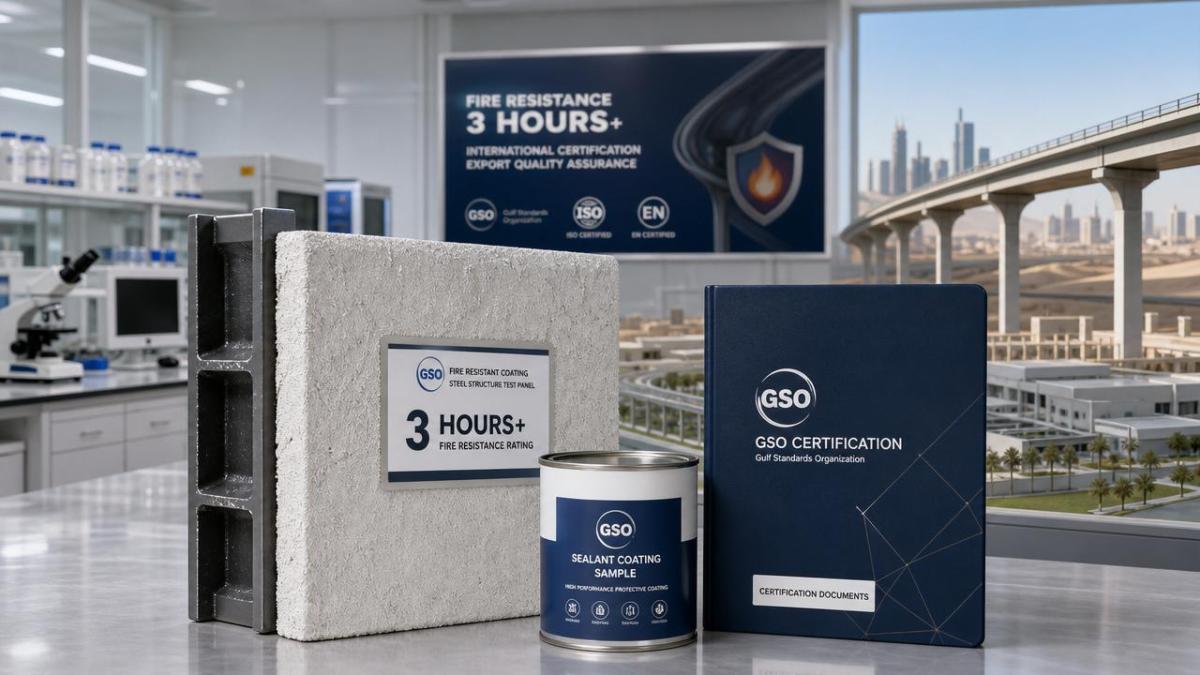
The first disclosed results show that three Chinese fire-resistant coatings companies have passed certification by the UAE’s GSO. Based on that certification result, they have been cleared to enter supply chains serving infrastructure and new energy projects in the Middle East.
The same input also states that the certified products have a fire resistance rating exceeding three hours. No additional company names, project names, or implementation details are provided in the source material.
Why this matters across the supply chain
For manufacturers targeting overseas project markets
From an industry perspective, this development may affect manufacturers most directly because certification is tied not only to product performance but also to actual market access. The relevant business impact is likely to appear in export planning, product qualification work, and customer-facing technical documentation for overseas projects.
What deserves closer attention is whether export-oriented product lines are already aligned with the certification requirements and whether technical claims can be matched with the documents and testing evidence expected by buyers.
For project procurement and specification teams
Procurement teams involved in infrastructure and new energy projects may be affected because certification status can influence supplier screening and eligibility at the bidding or vendor approval stage. In practice, the main issue is not only coating performance, but whether certified products can be smoothly incorporated into approved procurement lists and project compliance workflows.
Observably, buyers and specifiers may pay closer attention to certification scope, fire-resistance thresholds, and the consistency between technical submissions and project requirements.
For export service and delivery partners
Supply chain service providers, including documentation, compliance, and delivery support partners, may also feel the impact because certification-driven exports typically require tighter coordination between technical files, order execution, and customer communication. The business effect is most likely to appear in document preparation, delivery scheduling, and pre-shipment compliance checks.
What deserves closer attention is whether supporting materials, qualification files, and communication records can keep pace with project-side verification demands once more products aim to enter similar overseas channels.
What companies should watch next
Track how the acceleration plan is described in practice
Companies should pay attention to how the newly announced certification acceleration plan is expressed in subsequent official communication. Analysis shows that a plan announcement and its practical implementation are not the same thing, so the market will need to watch for clearer descriptions of scope, process, and applicable product categories.
Focus on the link between certification and project entry
The current information connects certification with access to Middle East infrastructure and new energy supply chains. For companies, the practical issue is how to translate certification status into usable project credentials, customer trust, and smoother approval in real procurement scenarios.
Prepare technical and compliance materials early
For firms already pursuing overseas opportunities, attention should center on qualification files, product performance records, and customer communication materials. Analysis shows that when certification becomes part of market entry, delays often emerge not only from product readiness but from incomplete documentation and inconsistent technical positioning.
Separate market signal from immediate commercial scale
It is more appropriate to understand the current news as a market-access signal rather than proof of broad commercial rollout. Companies should therefore watch both the policy or conference-level narrative and the actual pace of project-side adoption before making broad assumptions.
How this development is best understood now
Analysis shows that this news carries two layers of meaning. First, it indicates that at least some Chinese high-end fire-resistant coatings have moved beyond domestic technical positioning and into a certification-based overseas access stage. Second, it suggests that export competitiveness in this category may increasingly depend on the combination of technical performance and recognized compliance credentials.
At the same time, this should not yet be read as a complete market shift. The disclosed facts are still limited: the input mentions three companies, GSO certification in the UAE context, access to relevant supply chains, and a fire resistance level above three hours. Observably, the next stage worth monitoring is whether this remains an isolated early result or becomes a repeatable pathway for a broader group of suppliers.
A measured takeaway for the coatings market
The value of this update lies less in headline momentum and more in what it signals about export mechanics for high-end fire-resistant coatings. Certification, application performance, and project-side acceptance are appearing together in one industry development, which gives companies a clearer reference point for what overseas readiness may require.
It is more appropriate to understand this as an early but concrete signal with practical relevance, rather than as a fully established industry outcome. The market has a confirmed first result, but broader implications still depend on follow-up disclosures, implementation details, and whether similar certifications translate into sustained project participation.
Source basis and points that still need verification
This article is generated solely from the user-provided news title, event timing note, and summary. The specific official source link was not provided in the input, so further verification is still needed through channels typically relevant to this type of development, such as official conference releases, company statements, industry association updates, authoritative media reporting, and standard or certification body documents.
Follow-up attention should focus on whether additional official wording clarifies the acceleration plan, whether more certification details are disclosed, and whether subsequent project-side adoption confirms the practical reach of the announced development.