
Categories List
 China Customs Launches Smart Preclassification Channel for Coatings ExportsAug 16, 2026
- China Customs Launches AI Preclassification Channel for Paint ExportsAug 15, 2026
- 越南要求进口工业涂料提交SVHC声明Aug 14, 2026
- China Customs Opens Smart Pre-Review for Coating ExportsAug 13, 2026
- EU REACH Limits NMP in CoatingsAug 13, 2026
- Shenzhen Fluorosilicone Expo Opens in October 2026Aug 12, 2026





Leave A Reply

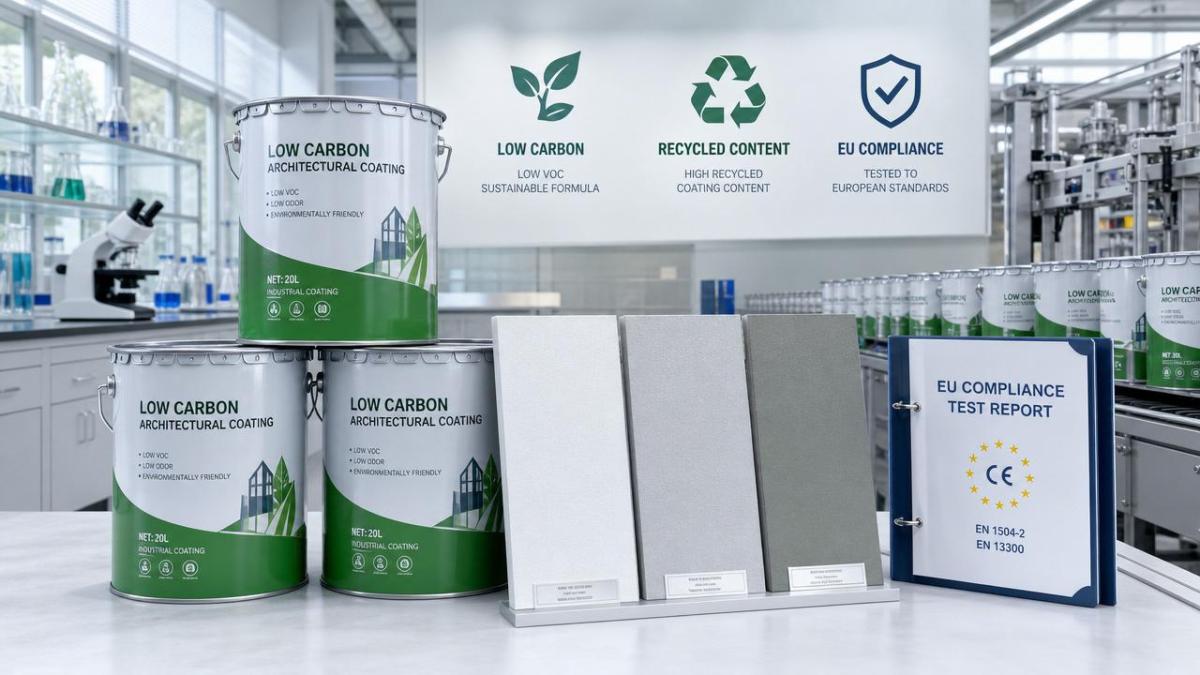
From January 1, 2027, building paints sold in the EU will need to disclose product carbon footprint (PCF) data and the share of recyclable coating content under the final EcoDesign for Construction Products (ECO-CP) rule notified by the European Commission to the WTO/TBT on June 9, 2026. For paint makers, exporters, certification bodies, procurement teams, and project-facing suppliers, this matters because disclosure is moving from a voluntary sustainability topic into a market access and documentation issue tied to an EU-recognized certification pathway.
What the notified final text confirms
The confirmed information provided for this update is limited but commercially significant. The European Commission notified the final ECO-CP regulation to the WTO/TBT on June 9, 2026. Under that text, all building paints sold on the EU market must, from January 1, 2027, disclose their product carbon footprint and the proportion of recyclable coating content. The required certification is to be carried out by EU-authorized bodies in accordance with EN 15804+A2:2023.
Where the pressure may appear across the value chain
Export-facing paint suppliers may face a documentation threshold
From an industry perspective, manufacturers and traders supplying building paints into the EU may be affected first because the rule is framed around products placed on the EU market. The likely pressure point is not only formulation or product positioning, but also whether product files, declarations, and certification readiness can support disclosure from the 2027 start date.
Procurement and raw material coordination may become more visible
Analysis shows that procurement teams and upstream supply coordination functions may need closer attention, because carbon footprint disclosure and recyclable coating ratio reporting depend on input quality and traceable supporting information. The immediate business impact may appear in supplier data collection, internal document alignment, and the ability to answer customer or certification queries without delaying orders.
Distributors and project suppliers may need clearer customer communication
For channels, importers, and project supply businesses, the effect may show up in quotation, tender, and compliance communication stages. What deserves closer attention is whether downstream customers begin to ask earlier for disclosure-related materials, certification status, or supporting statements before transactions are finalized.
What companies should track now
Watch the difference between rule text and operational execution
Observably, one practical issue is the gap between a published requirement and day-to-day implementation. Companies should pay close attention to how the disclosure obligation and certification process are expressed in formal documents and customer-facing requirements, especially where timelines, submission formats, or scope interpretation affect deliveries.
Check which product lines enter the EU market from 2027
Businesses should review which building paint products are sold into the EU and whether those lines will require immediate disclosure preparation. This is not only a regulatory review task; it also affects portfolio planning, order screening, and contract communication for products crossing into the 2027 compliance window.
Prepare for certification-related lead times
Because certification must be carried out by EU-authorized bodies under EN 15804+A2:2023, companies should focus on scheduling, supporting files, and possible review timing in their own workflows. Analysis shows that even where the rule itself is clear, execution risk can emerge through incomplete records, mismatched data, or late preparation.
Align external messaging with verified information
For sales, compliance, and account teams, it is more appropriate to communicate only what can be documented and certified. Claims around PCF or recyclable coating content should be consistent with verified materials, especially when responding to EU customers, distributors, or project buyers.
Why this looks like more than a short-term notice
Analysis shows that this update is better understood as a concrete compliance signal rather than a routine policy headline. The reason is that the information provided already includes a defined market scope, a clear effective date, required disclosure items, and a specified certification basis. At the same time, it should still be treated with operational caution, because implementation details in actual business practice often determine how quickly obligations translate into customer requirements and transactional checks.
How to read the signal at this stage
At this stage, the most balanced interpretation is that the market is being given a clear direction: environmental disclosure for building paints in the EU is becoming part of product access expectations. It would be premature to extend that into broader conclusions not contained in the provided information, but it is reasonable to view this development as an actionable compliance milestone for affected suppliers rather than a distant policy discussion.
Basis for this article and follow-up verification
This article is based on the user-provided news title, event date, and event summary concerning the ECO-CP final text, the January 1, 2027 effective point, the disclosure requirements for PCF and recyclable coating proportion, and certification under EN 15804+A2:2023. For this type of industry update, relevant source categories typically include official notices, company disclosures, industry association updates, authoritative media coverage, and standard-setting documents. No specific official source link was provided in the input, so the exact underlying publication path still requires continued verification. Follow-up attention should remain on any official wording updates, certification execution details, and how the requirement is applied in real EU market transactions.