
Categories List
 China Customs Launches Smart Preclassification Channel for Coatings ExportsAug 16, 2026
- China Customs Launches AI Preclassification Channel for Paint ExportsAug 15, 2026
- 越南要求进口工业涂料提交SVHC声明Aug 14, 2026
- China Customs Opens Smart Pre-Review for Coating ExportsAug 13, 2026
- EU REACH Limits NMP in CoatingsAug 13, 2026
- Shenzhen Fluorosilicone Expo Opens in October 2026Aug 12, 2026

Leave A Reply
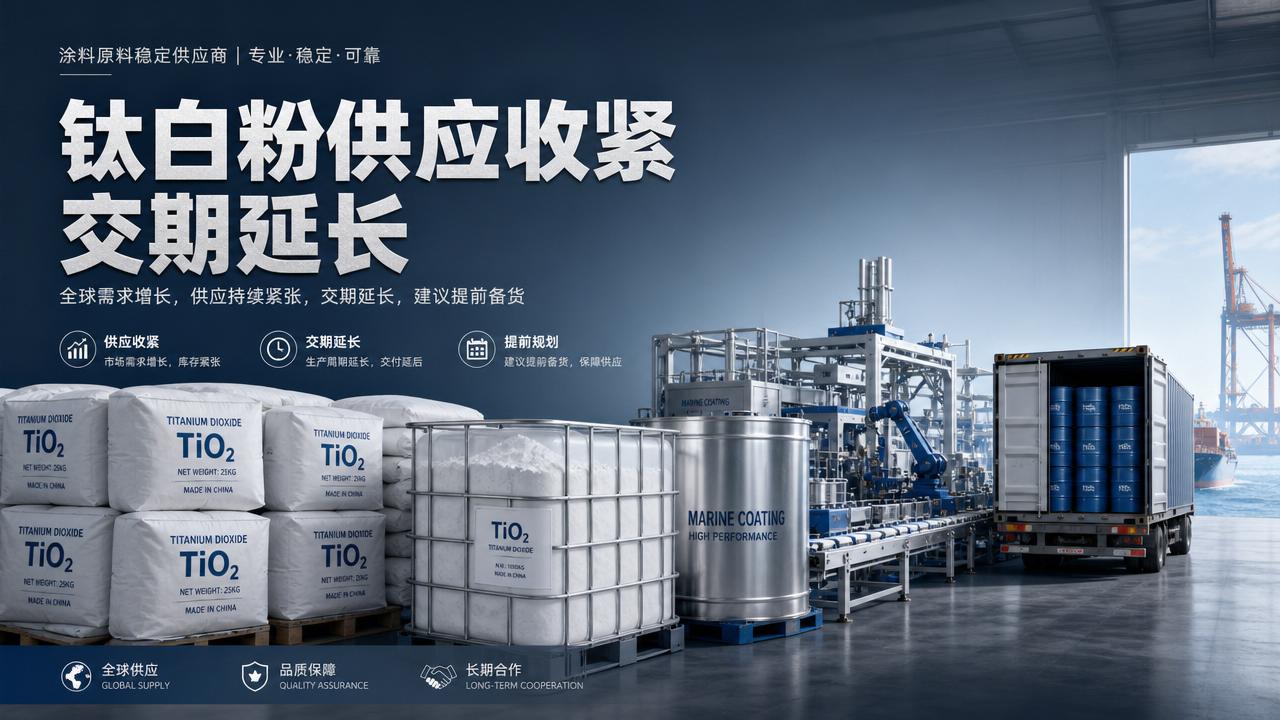
China’s main titanium dioxide producing regions moved into a stricter round of environmental output controls from June 1, 2026, putting immediate pressure on sulfate-process supply used in high-weatherability coatings. For buyers of marine coatings, heavy-duty anticorrosion coatings, and project coatings, the issue is no longer only price movement but also whether pigment availability, lead times, and supplier preparedness can support delivery commitments in the coming weeks.
What the June restriction actually changes
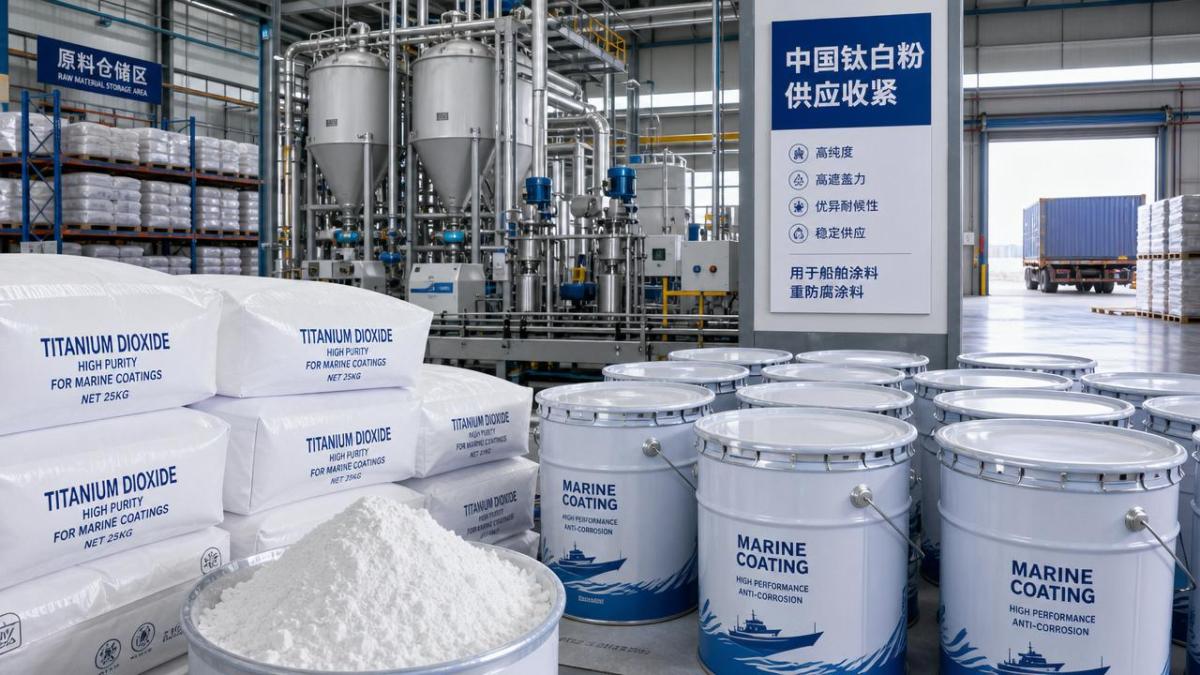
According to a June 7 notice cited from the China National Coatings Industry Association, major sulfate-process titanium dioxide production areas in Jiangsu and Shandong began a new round of environmentally driven output restrictions from June. The affected capacity accounts for about 35% of national capacity, while sulfate-process capacity in the main producing areas is being reduced by 15% from June.
The reported market effect was immediate: spot prices for rutile titanium dioxide rose 8.2% in one week. At the same time, lead times for this raw material have generally extended to six to eight weeks.
The material is identified in the source information as a key coloring and hiding component for high-end marine paints and heavy-duty anticorrosion coatings.
Where pressure is likely to appear first
Procurement teams in engineering coatings
From an industry perspective, procurement functions are likely to feel the impact first because the reported changes combine tighter supply, higher spot pricing, and longer delivery cycles. The main pressure points are order timing, volume locking, and the risk of delayed replenishment for rutile grades used in demanding coating systems.
Coating manufacturers managing delivery schedules
Manufacturers serving marine, heavy-duty anticorrosion, and other weather-resistant coating applications may face pressure in production planning if titanium dioxide arrivals become less predictable. The most relevant business issue is whether current raw material coverage is sufficient to support confirmed orders through a six- to eight-week lead-time window.
Trading and supply chain intermediaries
Traders and supply chain service providers may see tighter coordination requirements between upstream suppliers and downstream buyers. What deserves closer attention is not only current availability, but also whether contract execution, shipment scheduling, and customer communication remain aligned as spot conditions change quickly.
Overseas buyers sourcing from China
The source information specifically points to overseas project coating buyers. For this group, the risk is tied to dependence on Chinese supply for a critical pigment input, especially where coating performance requirements limit substitution flexibility.
What companies should review now
Order locking and purchase timing
Analysis shows that buyers with near-term coating production or project delivery exposure should pay close attention to order timing. The source information explicitly indicates that overseas engineering coating buyers need to lock orders in advance.
Supplier inventory and reserve position
Another immediate checkpoint is whether Chinese suppliers hold strategic titanium dioxide reserves. This matters because longer quoted lead times do not affect all suppliers in the same way if inventory coverage differs.
Substitution and formulation resilience
The source information also highlights the need to assess suppliers’ ability to offer alternative formulations. Observably, this does not mean substitution is already available in every case; it means buyers should verify whether suppliers can maintain coating performance requirements if standard rutile raw material procurement becomes more difficult.
Customer communication and delivery commitments
Companies with open quotations, framework orders, or pending shipment schedules should closely review how longer raw material lead times may affect promised delivery windows. The practical focus is on aligning procurement status with external customer communication before delays become contractual issues.
Why this matters beyond a single price move
Analysis shows that this development should not be read only as a short-lived price spike. The combination of environmental production controls, an 8.2% weekly increase in rutile titanium dioxide spot prices, and lead times extending to six to eight weeks points to a broader supply tightness signal within a specific raw material segment important to high-performance coatings.
At the same time, it is more appropriate to understand this as a developing industry situation rather than a fully settled long-term shift. The confirmed facts show immediate supply and pricing strain, but the persistence and wider downstream effect still require continued observation.
How to read the signal at this stage
At this stage, the most balanced interpretation is that the market is dealing with a real short-term supply constraint in a material that has direct relevance for marine and heavy-duty anticorrosion coatings. For the industry, the significance lies less in headline price movement alone and more in the combination of constrained output, extended lead times, and the need to test supplier readiness under tighter supply conditions.
In practical terms, this is best understood as both an immediate procurement issue and a signal that supply-chain resilience for key coating raw materials remains under scrutiny.
Basis of this article and what still needs verification
This article is generated based on the user-provided news title, event date, and event summary. The factual basis used here is limited to the provided information concerning production restrictions in China’s main titanium dioxide regions, the reported price increase, the extended lead time, and the stated implications for overseas buyers.
For this type of industry update, commonly relevant source categories may include official notices, company statements, industry association releases, authoritative media coverage, and standard-setting or regulatory documents. A specific official source link was not provided in the input, so continued verification is still necessary.
What merits follow-up is whether official wording changes further, whether lead times remain at six to eight weeks, and how Chinese suppliers’ reserve capacity and alternative formulation capability are communicated in actual business execution.