
Categories List
 China Customs Launches Smart Preclassification Channel for Coatings ExportsAug 16, 2026
- China Customs Launches AI Preclassification Channel for Paint ExportsAug 15, 2026
- 越南要求进口工业涂料提交SVHC声明Aug 14, 2026
- China Customs Opens Smart Pre-Review for Coating ExportsAug 13, 2026
- EU REACH Limits NMP in CoatingsAug 13, 2026
- Shenzhen Fluorosilicone Expo Opens in October 2026Aug 12, 2026
Leave A Reply
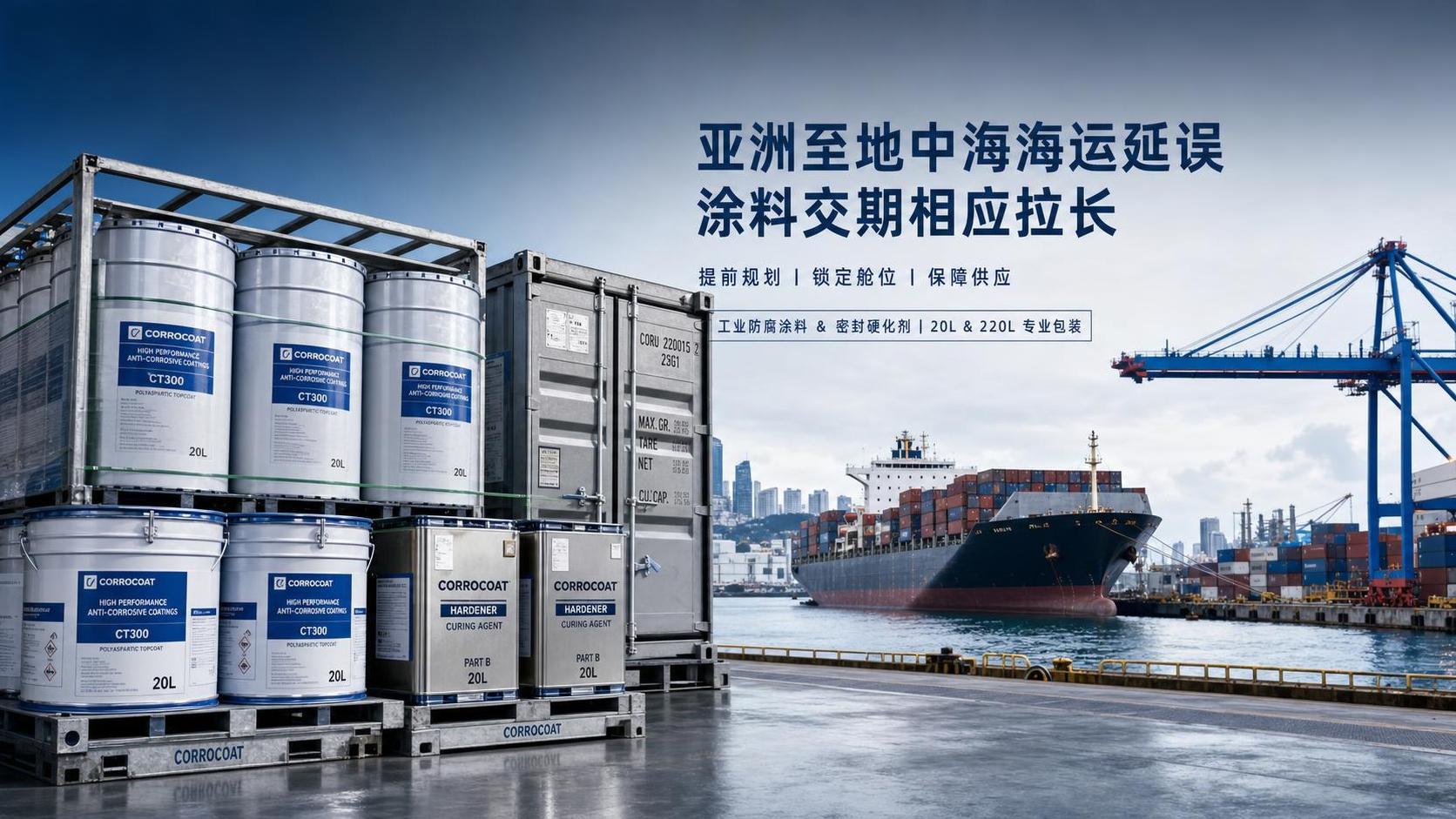
The timing of the underlying disruption was not specified in the provided information, but the latest Drewry weekly update released on August 3, 2026 shows that continued disruption in the Red Sea, combined with restricted Suez Canal transit, has pushed up Asia-to-Mediterranean container shipping costs and extended delivery times for heavy-duty anti-corrosion coatings. For coating suppliers, importers, contractors, and buyers handling seaborne orders, this matters because freight conditions are now directly affecting order scheduling, packaging choices, and delivery commitments.
What the latest shipping update confirms
According to Drewry's latest weekly report released on August 3, 2026, the Red Sea crisis remains unresolved and Suez Canal passage is still constrained. Spot container freight rates from Asia to major Mediterranean ports, including Barcelona and Piraeus, were up 42% compared with early July. Some shipping lines have suspended direct sailings on the route.
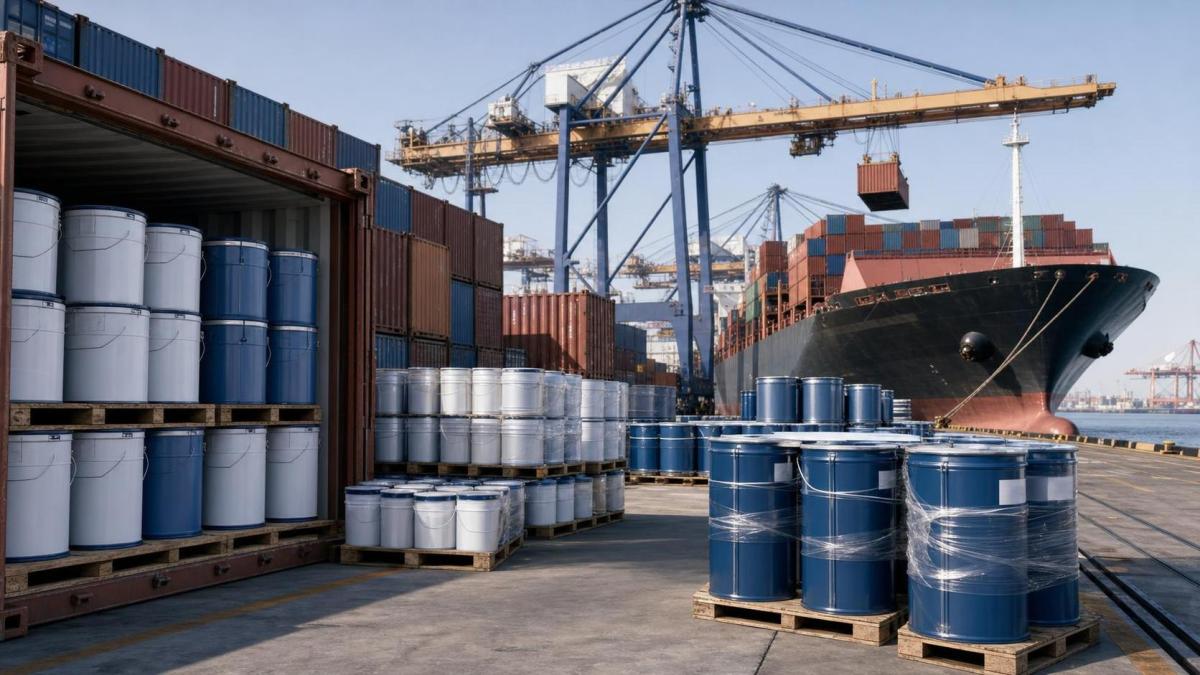
The reported impact has already reached heavy-duty anti-corrosion coating orders that depend on ocean freight delivery, especially large-pack formats such as 20L and 220L units and special hardener combination sets. Manufacturers including JinFeiMa have started using multi-port transshipment options, such as routing via Singapore or Jebel Ali, as well as air freight contingency arrangements. Even with those measures, delivery lead times have generally been pushed out to 6-8 weeks.
Where the pressure is likely to be felt first
Export orders tied to marine delivery schedules
From an industry perspective, exporters and trading companies handling shipments into Mediterranean destinations may face the most immediate pressure where customer commitments depend on regular vessel schedules. The reported rate increase and suspension of some direct services can affect booking availability, freight budgeting, and promised delivery windows.
Coating manufacturers shipping large-pack products
Analysis shows that manufacturers of heavy-duty anti-corrosion coatings may see operational strain in the shipment stage rather than only in production. This is particularly relevant for 20L and 220L packaging and special hardener combination sets because the provided information specifically identifies these categories as being affected by the disruption in sea freight delivery.
Procurement teams and downstream project buyers
Buyers that rely on imported coating systems may need to watch lead-time reliability more closely than nominal order dates. Observably, when freight routes shift to transshipment or emergency air options, the main business concern is not only higher logistics cost but also whether material arrival still aligns with planned application or maintenance windows.
Logistics and fulfillment service providers
Supply chain service providers may need to pay closer attention to route design, handover points, and exception handling. The move toward transshipment through ports such as Singapore or Jebel Ali indicates that execution risk is now spreading across more nodes in the delivery chain.
What companies should monitor now
Whether routing changes become the default for open orders
What deserves closer attention is whether multi-port transshipment remains an emergency measure for selected shipments or becomes the working norm for outstanding Mediterranean-bound orders. That distinction affects customer communication, freight planning, and contractual delivery expectations.
Which product combinations are most exposed
The current update points specifically to large-container coating shipments and special hardener combination sets. Companies involved in procurement or fulfillment should therefore review which SKUs, pack sizes, and bundled items depend most heavily on sea freight and may be harder to reroute without delay.
How lead-time commitments are described to customers
Analysis shows that a shift to a 6-8 week delivery cycle changes the practical basis for quotation, order confirmation, and delivery promises. For suppliers and distributors, this makes documentation discipline and customer notice timing more important, especially where orders were originally planned around shorter transit assumptions.
When air freight is realistic and when it is only a fallback
The provided information confirms that some manufacturers have activated air freight contingency plans, but it does not establish that air freight can broadly replace ocean shipping for all affected orders. Companies should therefore treat air freight as a selective response and continue verifying feasibility by product type and order urgency.
Why this matters beyond one freight spike
Observably, this development should not be read only as a short-term freight fluctuation. It also signals that route instability in the Asia-Mediterranean corridor can quickly spill over into industrial coating delivery performance when products depend on regular seaborne movement. At the same time, the current information is still best understood as an active logistics disruption rather than a settled long-term market outcome, because the provided facts describe route pressure, rising spot rates, and longer delivery cycles, but do not confirm how long those conditions will persist.
How to read the current signal
It is more appropriate to understand this as a high-priority operating signal for companies exposed to Mediterranean-bound coating shipments. The confirmed facts point to tighter freight conditions, delayed deliveries, and changing logistics arrangements. The broader industry significance lies in execution risk: not only what freight costs today, but whether packaging, routing, and promised handover dates can still be managed predictably under disrupted shipping conditions.
About the basis of this article
This article is based on the user-provided news title, event timing information, and event summary. The specific official source link was not provided in the input and still requires ongoing verification. For this type of industry update, source categories that are typically relevant include official shipping or canal notices, company announcements, industry association updates, authoritative media reporting, and standard-setting or trade documentation where applicable. Continued attention should focus on later route adjustments, any further changes in direct sailing availability, and whether extended coating lead times remain at the current 6-8 week level.