
Categories List
 JFM Paint Strengthens Global Expansion Strategy Through International Market ExchangeSep 10, 2026
 JFM Paint Strengthens Global Presence Through Successful Participation in KOREA BUILD WEEK 2026Aug 27, 2026
 EU REACH Adds 12 New SVHCs, Forcing Industrial Coating Export Declarations UpdateAug 16, 2026
- Vietnam Rule: Industrial Coating Imports Need SVHC Declaration from China Starting Oct. 1Aug 15, 2026
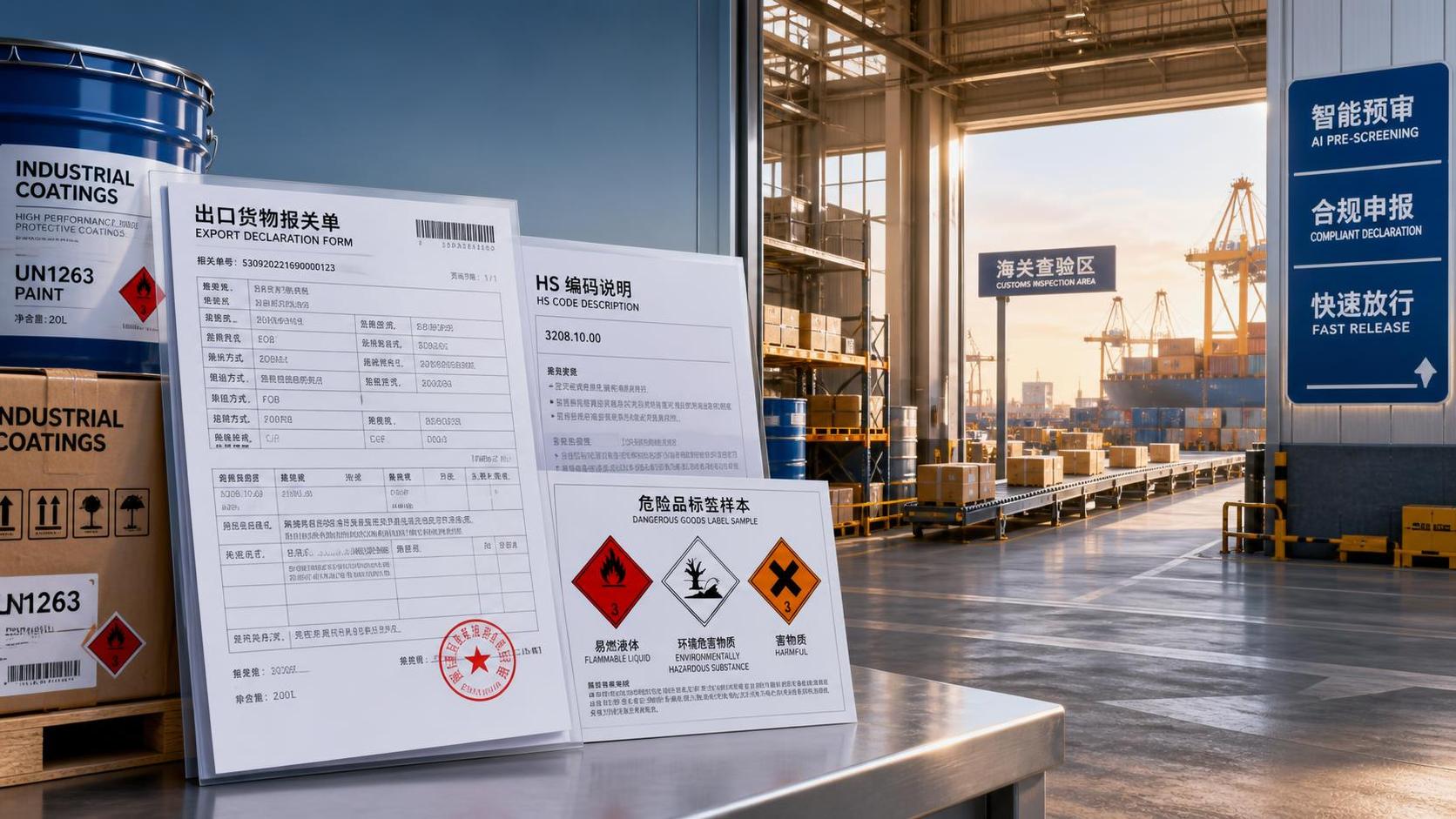
- China Customs Launches Paint Export PrecheckAug 14, 2026
- Nippon Paint Reacquires European Auto Coatings UnitAug 12, 2026





Leave A Reply
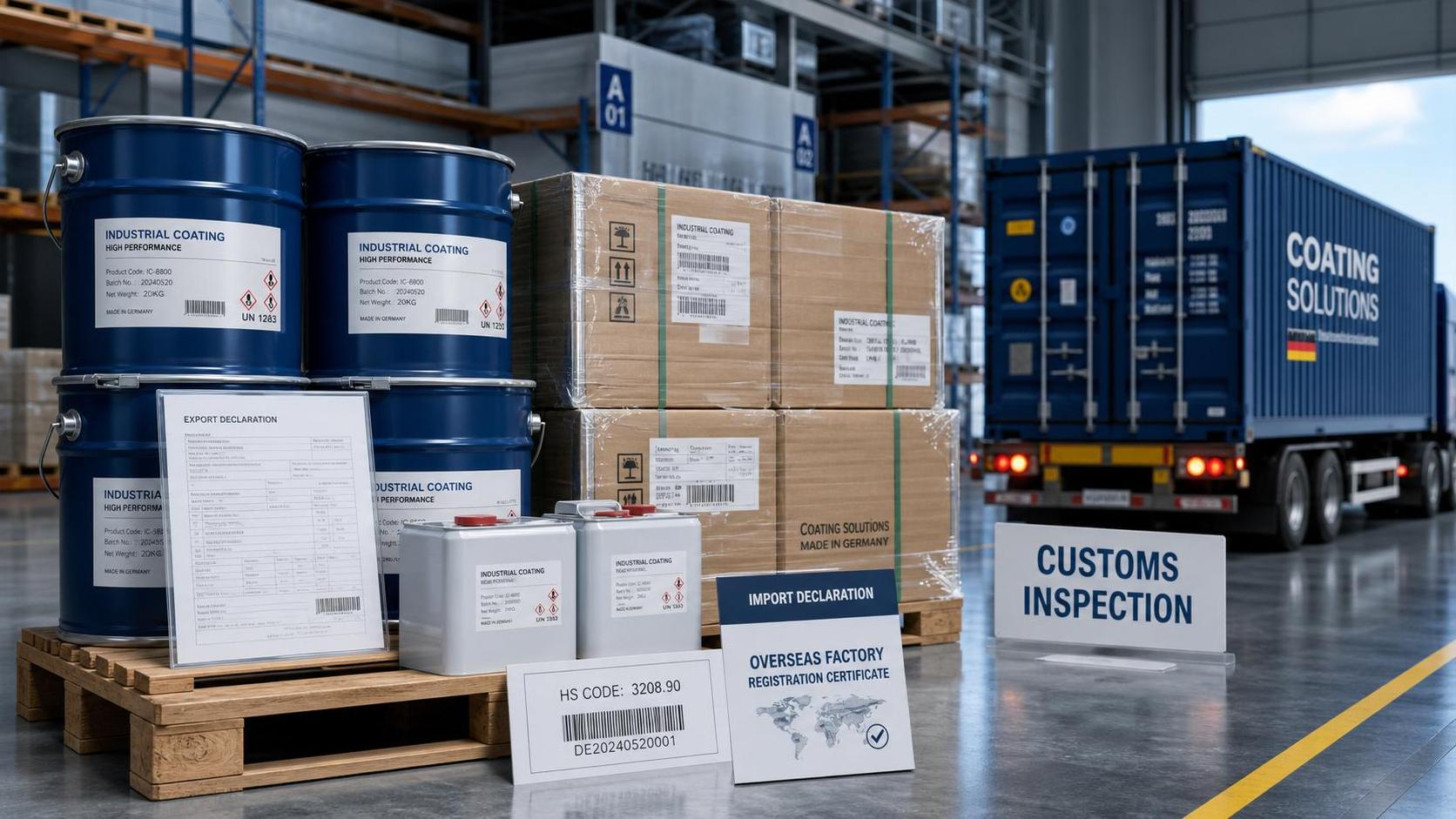
China’s full implementation of General Administration of Customs Order No. 280, together with Announcement No. 27, took effect on June 1, 2026, adding a new declaration requirement for imported coating-related goods. For exporters shipping coatings to China, as well as businesses tied to cosmetic and health-product coating auxiliaries, the immediate issue is no longer only product movement but whether the overseas manufacturing site has a valid China registration number available at customs filing. That makes this update worth close attention across compliance, customs clearance, procurement, and delivery planning.
What the new declaration requirement confirms
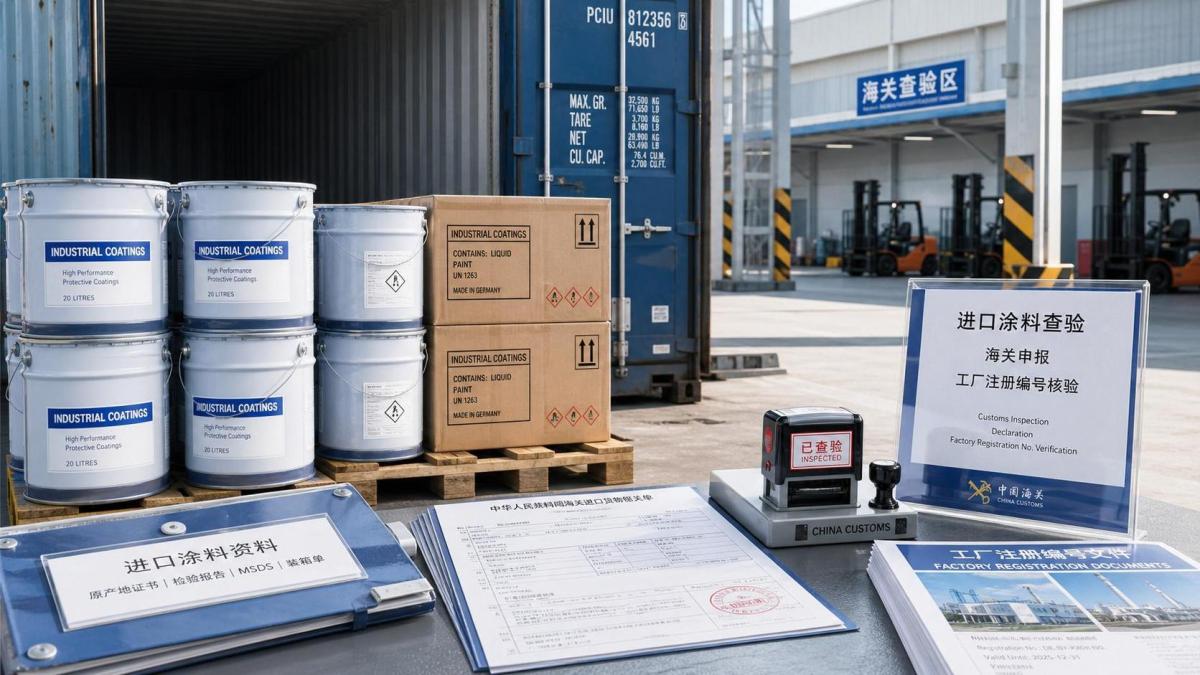
According to the provided information, from June 1, 2026, imported coating products must declare the China registration number of the overseas manufacturing enterprise during customs clearance.
The requirement applies to coating-related imported goods, including coating auxiliary materials associated with cosmetics and health products.
The same information also confirms that products from overseas factories that have not completed registration filing with the General Administration of Customs cannot complete import declaration.
The policy therefore directly affects the compliance entry path and customs clearance timing of global coating exporters serving the China market.
Where the pressure is likely to appear first
Exporters shipping directly into China
From an industry perspective, direct trading companies are likely to feel the impact first because the customs filing stage now depends on whether the overseas factory’s China registration number is ready and correctly declared. The most immediate pressure point is transaction execution: goods may be commercially ready, but the import process still depends on factory registration status.
Manufacturing sites behind cross-border supply
For overseas production facilities, the key issue is market access rather than only paperwork. Analysis shows that if a factory has not completed the relevant customs registration filing, its products cannot move through import declaration, which turns factory-level compliance into a shipment-level gatekeeper.
Importers, distributors, and channel operators
Companies responsible for importing, distributing, or circulating coating products in China may need to pay closer attention to supplier documentation and timing coordination. The effect is likely to show up in customs preparation, handover of supporting information, and delivery scheduling, especially where multiple overseas factories supply similar product lines.
Supply chain and customs service providers
Service providers involved in declaration, logistics coordination, or import compliance may face a more documentation-sensitive workflow. What deserves closer attention is whether factory registration details are complete and aligned before declaration begins, because the rule directly touches customs processing efficiency.
What companies should watch now
Registration status must be checked earlier
Analysis shows that businesses importing coating products should pay closer attention to whether each overseas manufacturing site has completed the required filing and whether the registration number is available for declaration use. This is a practical checkpoint, not a background compliance item.
Product scope needs careful internal mapping
The provided information indicates that the requirement covers not only coating products in a narrow sense but also coating auxiliary materials linked to cosmetics and health products. Companies should therefore review which imported items fall within this scope and avoid treating category boundaries as self-evident.
Documents and communication need tighter coordination
For procurement teams, import operators, and customs-facing staff, the issue is likely to be operational consistency. The registration number, supplier identity, and declaration materials need to match across internal records and external filings, making supplier communication and document control more important than before.
Watch for how rule language translates into execution
Observably, the policy text establishes a clear compliance threshold, but businesses still need to track how official wording is reflected in daily customs practice. The difference between a stated requirement and smooth operational execution is likely to matter for shipment planning and customer commitments.
Why this looks like more than a short-term filing change
This section is an editorial observation. It is more appropriate to understand this update as a concrete compliance signal rather than a temporary administrative adjustment. The reason is that the requirement ties market access for imported coating-related goods directly to the registration status of the overseas factory, which shifts attention from product-only review toward supply-origin traceability in customs procedures.
At the same time, it should not be overstated as a complete redefinition of the sector. Based on the provided information alone, the clearest conclusion is that the rule has already produced an operational threshold, while its wider commercial effects still need continued observation through actual import practice.
How the industry may best read this development
A neutral reading of this development is that it introduces an immediate compliance checkpoint with direct consequences for import declaration and clearance timing. For companies linked to coatings, cosmetics-related coating auxiliaries, and health-product coating auxiliaries, the near-term priority is readiness at the factory-registration and customs-document level.
Analysis shows that this is best understood as an already effective rule with longer-term implications still unfolding. In other words, the compliance requirement is clear now, while the full extent of its operational and commercial impact remains something the industry should continue to monitor carefully.
Basis of this article and what still needs verification
This article is generated from the user-provided news title, event date, and event summary. The confirmed factual basis used here is limited to the stated implementation date, the activation of Order No. 280 and Announcement No. 27, the declaration requirement for overseas factory registration numbers, and the consequence for unregistered factories in import declaration.
For this type of industry update, commonly relevant source categories may include official government announcements, company disclosures, industry association updates, authoritative media coverage, and standard-related documents. A specific official source link was not provided in the input, so continued verification remains necessary. Future attention should focus on any updated official wording, implementation guidance, and how the requirement is applied in day-to-day customs clearance practice.