
Categories List
 JFM Paint Strengthens Global Expansion Strategy Through International Market ExchangeSep 10, 2026
 JFM Paint Strengthens Global Presence Through Successful Participation in KOREA BUILD WEEK 2026Aug 27, 2026
 EU REACH Adds 12 New SVHCs, Forcing Industrial Coating Export Declarations UpdateAug 16, 2026
- Vietnam Rule: Industrial Coating Imports Need SVHC Declaration from China Starting Oct. 1Aug 15, 2026
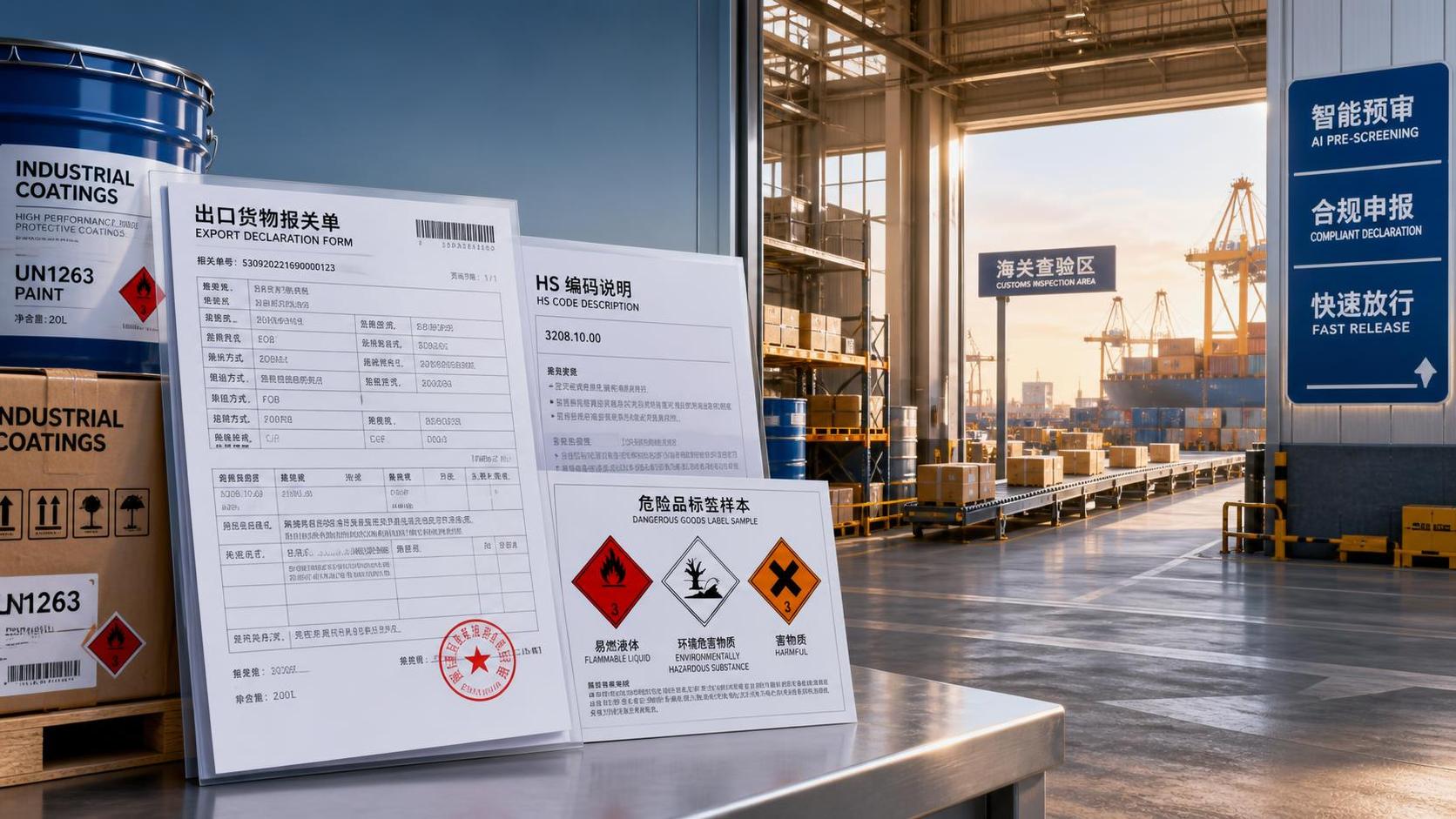
- China Customs Launches Paint Export PrecheckAug 14, 2026
- Nippon Paint Reacquires European Auto Coatings UnitAug 12, 2026




Leave A Reply
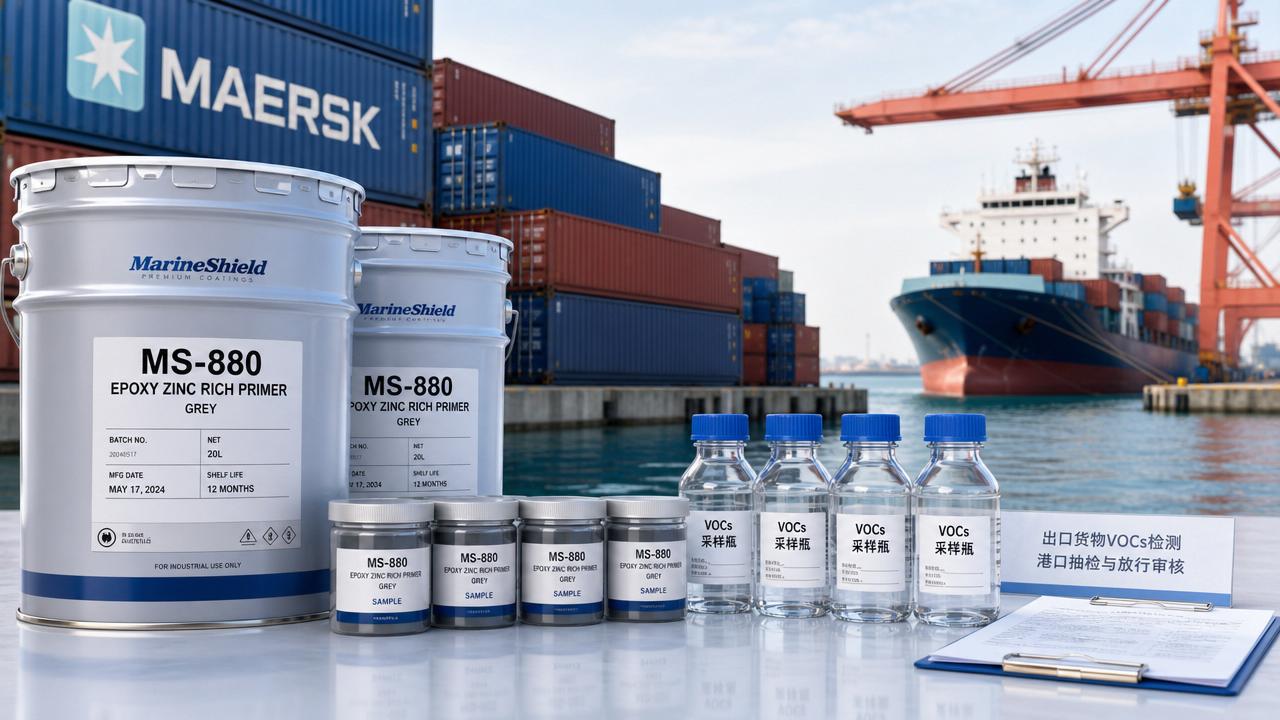
From June 1, 2026, paint exports moving through Shanghai, Ningbo, and Taicang face a stricter compliance step: on-site VOCs sampling checks for products under HS 3208 and 3209, backed by bilingual test reports in Chinese and English. For exporters, manufacturers, laboratories, and logistics providers, the development matters because cargo without a valid report will not be released immediately and may face an average delay of three to five working days.
What the new port requirement confirms
The confirmed change takes effect on 2026-06-01 and applies at three core Yangtze River Delta ports: Shanghai, Ningbo, and Taicang.
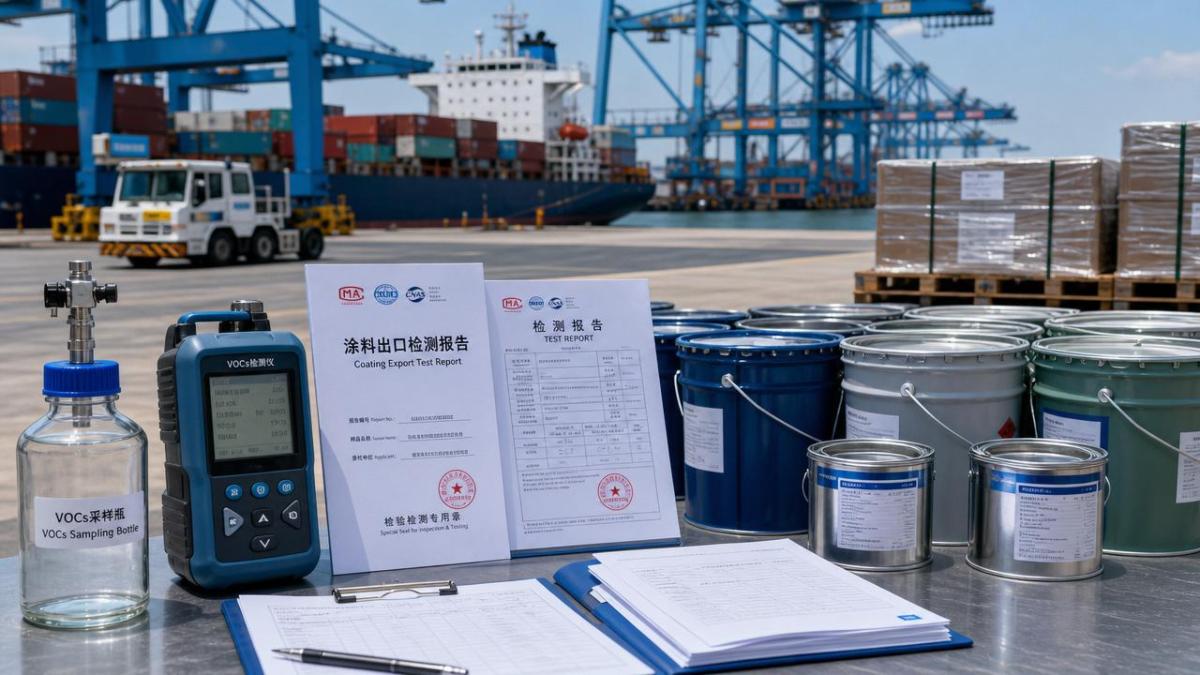
According to the provided event summary, all exported coatings classified under HS 3208 and HS 3209 will be subject to mandatory on-site sampling inspection for VOCs content.
The accompanying VOCs test report must be issued by a CNAS-accredited laboratory and must be provided in both Chinese and English.
The testing basis stated in the input is GB/T 23985–2026 or ISO 11890-1:2023.
The same input also states that cargo without a valid report will be held from release, with an average delay of three to five working days.
Where the operational pressure is likely to appear
Export-facing paint suppliers may feel the impact first
From an industry perspective, exporters of coatings are the most directly exposed because the requirement is tied to release at the port. The immediate pressure point is documentation readiness: if a bilingual VOCs report is missing, invalid, or not aligned with the required testing basis, shipment timing may be affected.
Production and quality teams need tighter document coordination
Analysis shows that manufacturers involved in export orders may need closer coordination between production batches, internal quality control, and external laboratory testing. The practical issue is not only whether VOCs testing has been completed, but whether the report format, language version, and laboratory qualification match what ports now require.
Logistics and customs service providers face timing risk
Observably, freight forwarders, customs brokers, and other supply chain service providers may see more execution risk around booking schedules, cut-off times, and customer communication. A documented average delay of three to five working days can affect shipment planning even when cargo itself is otherwise ready.
Overseas buyers and procurement teams may focus on delivery certainty
What deserves closer attention is the downstream effect on delivery commitments. Buyers and procurement teams connected to exported paint products may need clearer visibility into whether required VOCs documentation has been prepared before cargo reaches the port.
What companies should watch now
Check whether reports are both valid and bilingual
The immediate practical point is straightforward: the report must come from a CNAS-accredited laboratory and include both Chinese and English versions. Companies should pay close attention to whether their current testing workflow already produces documentation in that form.
Review product coverage under HS 3208 and 3209
Businesses handling coating exports should focus on whether the affected product lines fall within HS 3208 or HS 3209, because the inspection scope in the provided information is defined by those categories.
Distinguish between test completion and release readiness
Analysis shows that having a VOCs test result is not necessarily the same as being ready for port clearance. The issue here is execution at the port: whether the report matches the stated standards, whether it is available at the time of inspection, and whether internal teams and external agents are working from the same set of documents.
Prepare delivery and customer communication buffers
Because the input states that cargo without a valid report may be delayed by an average of three to five working days, companies may need to review shipment timelines, buffer arrangements, and customer notices for orders routed through the three ports concerned.
How this development is best understood at this stage
Observably, this is more than a routine document reminder because the requirement combines mandatory on-site sampling with a report format condition and a clear release consequence. At the same time, it is more appropriate to understand this as an operational compliance signal rather than a fully defined long-term industry outcome.
Analysis shows that the strongest near-term implication is execution risk at the export stage, not a confirmed structural shift in the wider coatings market. Whether the measure remains limited to the stated ports and product scope, or whether implementation details evolve further, is a point that still requires continued observation.
Why the market should keep following this issue
The current significance of this update lies in its direct effect on export handling for paint shipments through major Yangtze River Delta ports. It does not by itself confirm a broader market result, but it does signal that documentation quality, laboratory qualification, and timing coordination are becoming more visible parts of export compliance for coatings.
It is more appropriate to understand this development as an immediate operational change with possible broader implications, rather than as a final conclusion about long-term trade conditions.
About the information used here
This article is based on the user-provided news title, event date, and event summary. For this type of development, commonly relevant source categories may include official port notices, customs-related announcements, company notices, industry association updates, authoritative media coverage, and standard-setting documents.
No specific official source link was provided in the input, so the exact primary publication path still requires ongoing verification. What deserves closer attention next is whether there are further official clarifications on implementation details, documentation practice, or scope application at the ports mentioned above.