
Categories List
 China Customs Launches Smart Preclassification Channel for Coatings ExportsAug 16, 2026
- China Customs Launches AI Preclassification Channel for Paint ExportsAug 15, 2026
- 越南要求进口工业涂料提交SVHC声明Aug 14, 2026
- China Customs Opens Smart Pre-Review for Coating ExportsAug 13, 2026
- EU REACH Limits NMP in CoatingsAug 13, 2026
- Shenzhen Fluorosilicone Expo Opens in October 2026Aug 12, 2026


Leave A Reply
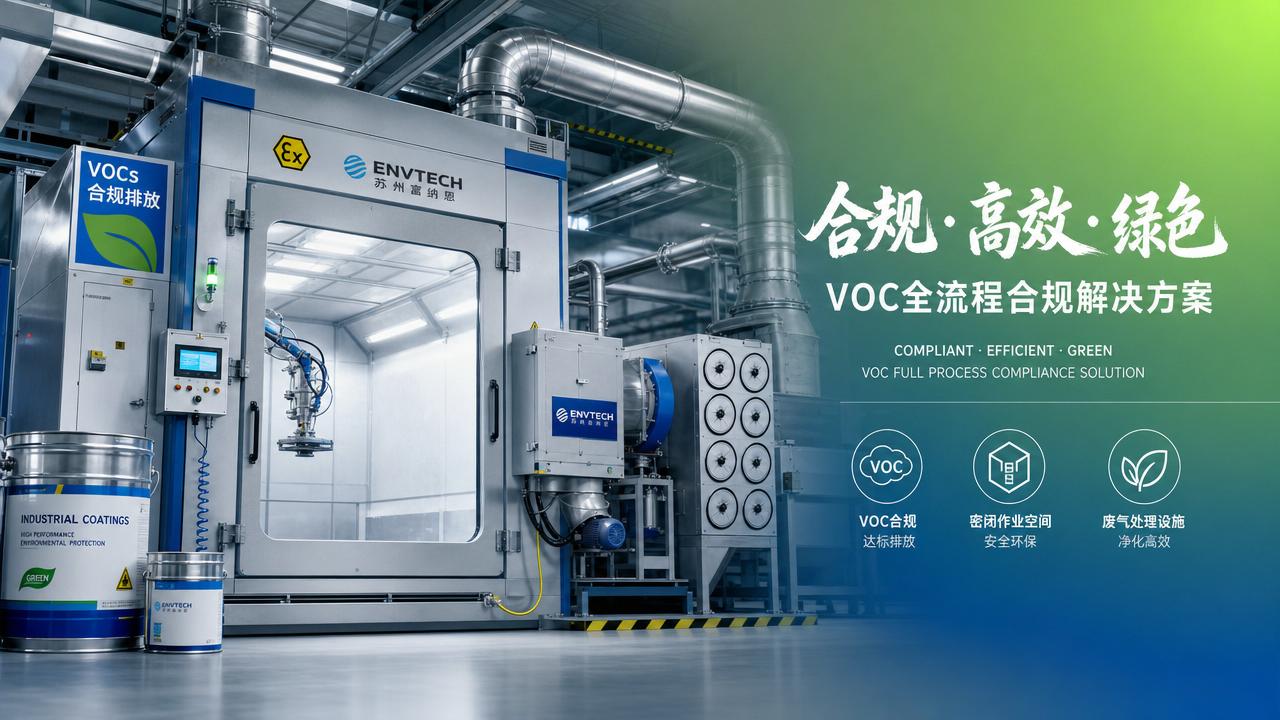
On August 15, 2026, the Eco-Environment Code of the People's Republic of China is set to take effect, and the rule highlighted in Article 214 puts a clearer compliance obligation on the use of VOC-containing raw and auxiliary materials, including imported coatings. For companies involved in importing, purchasing, processing, and using such materials, this is worth close attention because the issue is no longer limited to product entry or procurement terms: it extends directly to whether the use site is equipped with enclosed operating space and VOC treatment facilities that meet explosion-proof and anti-static requirements, with enforcement language already signaling that absence of installation is treated as a violation.

What the new requirement explicitly covers
The confirmed information provided for this update is limited but clear on several points. The Eco-Environment Code of the People's Republic of China will formally take effect on August 15, 2026. Article 214 states that where VOC-containing raw and auxiliary materials are used, including imported coatings, the use stage must be supported by enclosed operating space and VOC control facilities that satisfy explosion-proof and anti-static requirements. The provided summary also states that the Ministry of Justice has issued an enforcement standard described as a “window-open, window-close” approach, under which failure to install the required facilities is deemed unlawful.
Why this matters across the supply chain
Imported coating transactions now connect more directly to site compliance
From an industry perspective, import-related businesses may be affected because the rule expressly mentions imported coatings within the scope of VOC-containing materials. That means commercial responsibility is not only about product movement, but also about whether downstream use conditions can meet the stated operating and treatment requirements. What deserves closer attention is the possibility that procurement review, contract language, technical specifications, and handover documentation may increasingly focus on the actual use environment rather than only on product attributes.
Purchasing and manufacturing teams may face stricter pre-use checks
Companies that purchase or process VOC-containing materials may be affected most directly at the use stage. Analysis shows that the practical pressure point is not merely whether materials are bought on time, but whether production, coating, or related operating spaces are enclosed and supported by VOC treatment systems aligned with explosion-proof and anti-static conditions. In practical terms, internal compliance review may need to pay closer attention to installation status, technical documentation, and whether use can legally begin once materials arrive.
Supply-chain coordination may shift toward readiness before delivery or use
Supply-chain service providers, channel participants, and buyers may also need to watch how this requirement changes delivery coordination. Observably, if the legal risk is triggered by non-installation at the use stage, then scheduling, site readiness, and acceptance conditions may become more sensitive topics in procurement and delivery workflows. This does not confirm any specific market practice yet, but it suggests a compliance link between material supply and facility preparedness that relevant parties should monitor.
What companies should review now
Check whether compliance review covers the use environment
Analysis shows that companies should not limit their review to the material itself. Where VOC-containing raw or auxiliary materials are involved, the more immediate issue is whether the operating space and VOC treatment setup meet the stated explosion-proof and anti-static conditions before use begins.
Revisit procurement files and technical documents
What deserves closer attention is whether purchase documents, technical attachments, supplier communications, and project handover materials clearly address the conditions for lawful use. If existing files focus only on product delivery and not on use-site readiness, companies may need to reassess that gap from a compliance perspective.
Watch for changes in enforcement wording and practical interpretation
The provided information confirms an enforcement standard under which non-installation is treated as unlawful. However, since no further implementation detail is provided here, companies should treat this as a strong execution signal while continuing to monitor how official wording, inspection practice, and related compliance interpretation develop.
Plan around timing, acceptance, and operational start-up
From an industry perspective, businesses may need to pay closer attention to whether delivery timing, commissioning, and operational start-up are aligned with facility installation status. This is especially relevant where imported coatings or other VOC-containing materials are procured in advance of actual use.
How this signal is best understood at this stage
Observably, this update is more appropriate to understand as an implementation-level compliance signal rather than a general policy discussion. The confirmed facts point to a rule that is already tied to a concrete legal consequence: if the required installation is absent, the conduct is treated as unlawful. At the same time, analysis should remain cautious. The provided information does not establish broader market outcomes, sector-wide enforcement intensity, or detailed operating criteria, so the most reasonable reading is that the compliance threshold at the use stage has become more explicit, while the finer points of execution still warrant continued observation.
A practical reading for the market
For the market, the significance of this development lies in the fact that VOC-related compliance is framed not only around what material is involved, but also around where and how it is used. Analysis shows that the update should currently be read as a concrete compliance requirement with immediate relevance for importers, purchasers, processors, and end users handling VOC-containing materials. It is not yet a basis for broad conclusions about market impact, but it is a clear signal that facility readiness and lawful use conditions deserve more attention in trade, procurement, and operational planning.
Basis of this article and what still needs verification
This article is generated based on the user-provided news title, event date, and event summary. For events of this type, commonly relevant source categories may include official announcements, releases by regulatory authorities, customs or trade administration information, industry association updates, standards documents, and reporting by authoritative media. No specific official source link was provided in the input, so the exact official publication path still requires ongoing verification. It remains necessary to continue monitoring later details such as implementation guidance, enforcement interpretation, specification wording in tender documents, industry feedback, and how companies put the requirement into practice.