
Categories List
 IndexBox: Environmental Rules Drive Coatings Shift and Mica Sheet DemandNov 06, 2026
- China Extends Countervailing Duties on US-Origin n-Propanol for Five YearsNov 06, 2026
- 2026 Global Coatings Industry Segment Champions Ranking ReleasedNov 05, 2026
- China’s Powder Coatings Output Exceeds 3 Million Tonnes in 2025Oct 28, 2026
- October Coatings Feedstock Watch: Emulsions Lead Price Hikes, Acrylic Acid Rises Across GradesOct 27, 2026
- Huaqin Technology Reports White Camouflage Coating PatentOct 26, 2026





Leave A Reply
The precise event date is not specified in the supplied material, although its summary places the reported coatings raw-material increases in October 2026. Emulsion suppliers are described as moving first on prices, while acrylic acid prices rise across the range. These developments matter to raw-material buyers, coatings manufacturers and distributors because higher input costs are already being passed along the supply chain. The material identifies commercial price adjustments but provides no evidence of a new policy, regulation, standard, certification requirement or trade rule; the immediate issue is therefore how pricing changes may affect purchasing terms and delivery commitments.
Emulsions Lead the Reported October Price Increases
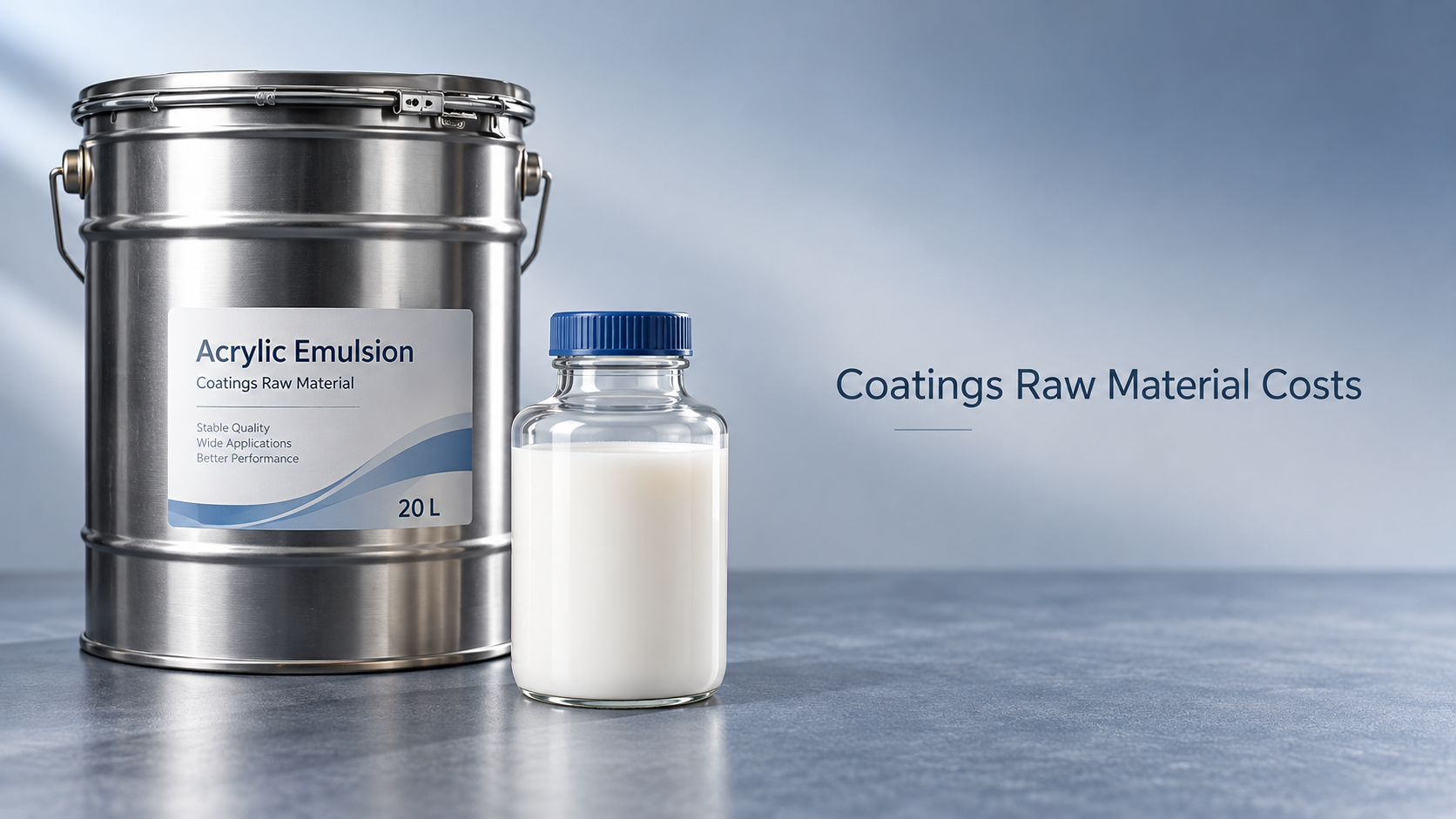
The supplied summary reports rising prices for upstream coatings materials, including hydrocarbon solvents and emulsions. Emulsions led the price adjustments, while acrylic acid prices increased across the range. Some products recorded increases of RMB 300–500 per tonne.
In East China, mainstream acrylic emulsion prices reached RMB 8,500–8,600 per tonne, approximately 6.82% higher month on month. The summary also states that raw-material cost increases are passing progressively through the supply chain, squeezing industry margins and prompting multiple coatings companies to issue price-adjustment notices.

Commercial Terms Become the Main Point of Exposure
Raw-material buyers face closer scrutiny of quotations
Analysis suggests that buyers of emulsions and acrylic acid may need to reassess the relationship between quoted prices and planned purchasing dates. The practical exposure could arise when a quotation expires before an order is confirmed or when a supplier proposes revised pricing. Buyers should check the applicable quotation and agreed terms; the supplied material does not establish a common effective date or a uniform pricing mechanism.
Coatings producers may face gaps between input and selling prices
From an industry perspective, manufacturers could experience additional margin pressure if higher procurement costs take effect before adjustments to customer prices. Relevant points for review include existing order prices, any agreed adjustment provisions and the treatment of deliveries spanning a proposed price change. These are possible contractual effects, rather than confirmed changes to industry rules.
Distributors may need to reconcile supplier and customer commitments
Analysis suggests that distributors could face a mismatch between supplier repricing and prices already offered to customers. Checking purchase confirmations, customer quotations and outstanding delivery commitments may help identify this exposure. The reported price increases do not, by themselves, establish that existing agreements have changed.
Check Effective Dates, Product Scope and Existing Orders
Match each increase to the relevant material
As a procurement recommendation, companies should verify which products and grades are covered by each supplier notice. The reported RMB 300–500 per tonne increases apply to some products; the input does not support applying that range to every solvent, emulsion or acrylic acid purchase.
Confirm how revised prices apply to committed business
As a practical review step, buyers and sellers should compare any price-adjustment notice with the terms governing confirmed orders and scheduled deliveries. The supplied information does not establish whether increases apply to new quotations, unconfirmed orders or existing commitments, so those details require individual verification.
Assess substitutions against agreed specifications
Analysis suggests that cost pressure may encourage consideration of alternative materials or suppliers. Any such option should be assessed against the relevant product specifications and customer approval arrangements before adoption. The input confirms no substitution programme, revised technical standard or new certification obligation.
Keep commercial notices distinct from compliance requirements
As a compliance review recommendation, companies should establish whether a notice changes only price or also proposes changes to product specifications, documentation or delivery terms. No new regulatory filing, testing obligation, certification requirement or trade restriction is identified in the supplied material.
A Repricing Signal, With Implementation Still to Be Verified
Editorial analysis suggests that this development is best understood as a commercial repricing signal. The available facts establish reported upstream increases and downstream price-adjustment notices, but do not establish a policy change or a binding industry-wide pricing rule.
What deserves closer attention is whether announced increases are reflected in actual transactions, how suppliers define their effective dates and how customers respond. These remain observation points. The supplied information does not confirm transaction-level implementation, the duration of the increases or a common approach to existing orders.
Use the Reported Increases to Review Purchasing Exposure
From an industry perspective, the immediate significance lies in the connection between higher material costs, purchasing commitments and coatings selling prices. A proportionate response is to verify product-specific notices, assess outstanding orders and review potential margin exposure. At this stage, the information supports closer commercial monitoring, while any claim of a new regulatory or trade requirement would require separate evidence.
Evidence Behind This Report and Outstanding Checks
This article is based solely on the user-provided news title, event-time field and event summary. The event-time field does not specify an occurrence date, while the summary refers to October 2026. Specific official source links were not provided in the input, and continued verification is needed.
Further verification should focus on the underlying supplier and coatings-company notices, their product coverage and effective dates, actual purchasing and delivery arrangements, and industry feedback. Any subsequent claim of policy, standards, certification or trade-rule changes would need to be checked against the relevant official documents; no such change is established by the supplied information.