
Categories List
 EU Conditionally Approves AkzoNobel and Axalta MergerNov 07, 2026
- PPG Beats Q3 Expectations as Industrial Coatings Margins Come Under PressureOct 29, 2026
- MEGAP&C Reports Nine-Month Results as Marine Equipment Coatings Revenue JumpsOct 27, 2026
- BNBM Discloses Strategy for Integrated Coatings System SolutionsOct 26, 2026
- Beijing New Building Materials Reports Q3 2026 Results as Coatings Volumes RiseOct 25, 2026
- New Materials Firm 301683: Nine-Month Revenue Up 24% to CNY900m, Net Profit Up 8.3%Oct 25, 2026







Leave A Reply
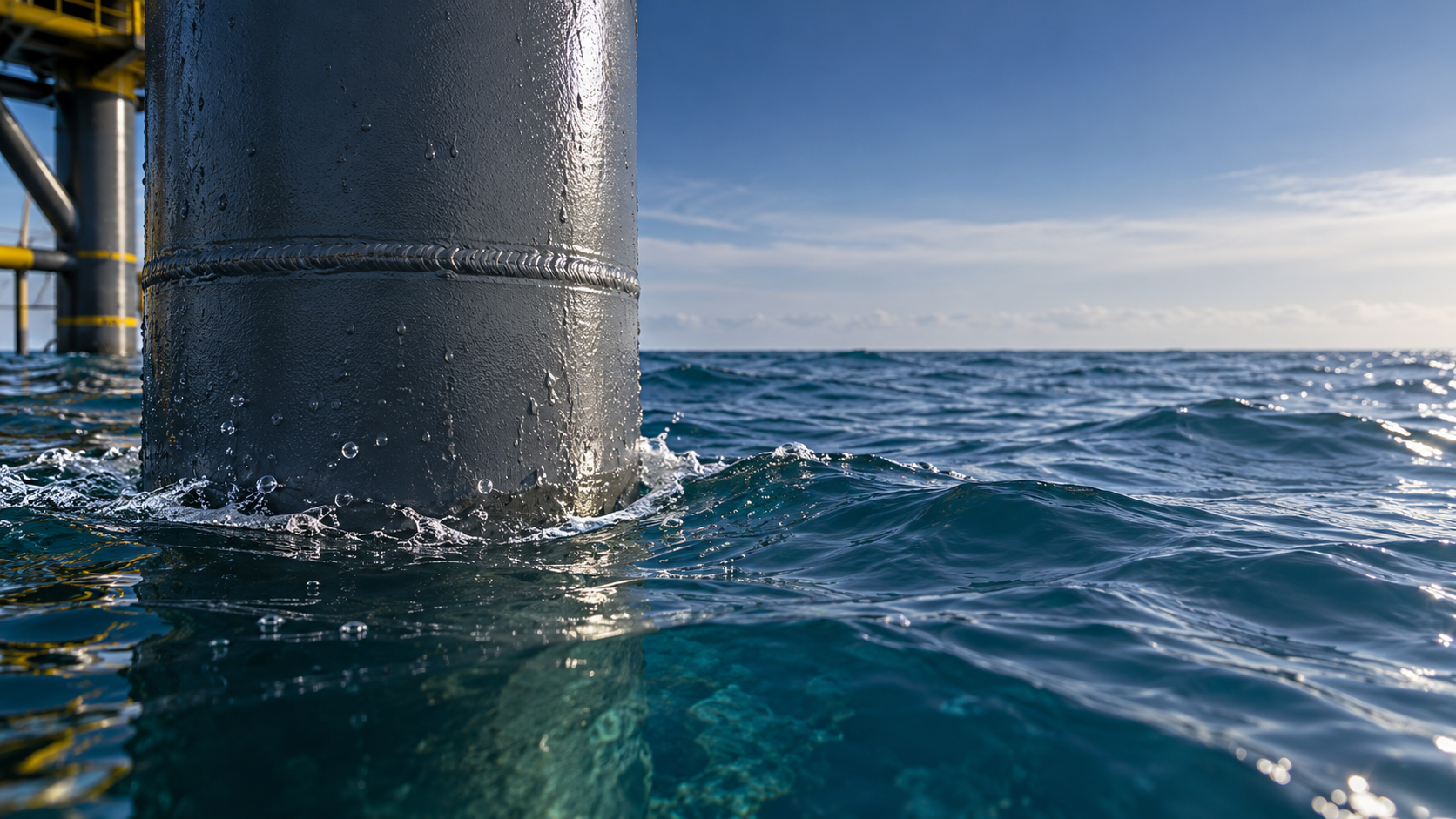
Guangxin Materials has announced that its environmentally friendly, zinc-free graphene heavy-duty anticorrosion coating has passed certification under NORSOK M-501 for splash-zone and fully immersed service. The event date is not explicitly specified in the supplied information, although the announcement is described as having been released on the evening of October 20, with no year given. From an industry perspective, the development could be relevant to marine engineering procurement, coating selection and contractor qualification reviews, because it provides a reported certification result for assessment against project requirements.
Certification Covers Two Marine Exposure Categories
According to the supplied announcement summary, the coating passed certification under CSDS No.7A, covering splash-zone exposure, and CSDS No.7B, covering fully immersed exposure, within NORSOK M-501, Surface Preparation and Protective Coating.
The supplied information describes NORSOK M-501 as an internationally authoritative standard in marine engineering corrosion protection. It states that the certification demonstrates the product’s technical capability to provide long-term protection in demanding marine environments.

Procurement Reviews May Gain Another Product to Assess
Buyers could examine a certified zinc-free option
Analysis suggests that marine engineering buyers considering zinc-free protective coatings may now have an additional product to evaluate against their specifications. The practical relevance would depend on whether the reported certification scope matches the exposure conditions and coating requirements of a particular project. The announcement alone does not establish approval for every marine application.
Contractors may need closer specification alignment
For engineering contractors and equipment integrators, the potential effect lies in technical submissions and material selection. Where project documents reference the relevant NORSOK M-501 categories, this certification could support a product review. Analysis suggests that contractors would still benefit from checking the supporting documents and any application conditions before incorporating the coating into a proposed system.
Suppliers may face more detailed documentation requests
From a supply-chain perspective, distributors and coating suppliers could receive requests for evidence connecting the offered product to the reported certification. Certification and testing service providers may also be asked to clarify its scope. These are possible commercial responses; the supplied information does not report changes in orders, delivery schedules or customer acceptance.
Check the Certification Scope Before Changing a Coating Specification
Obtain the underlying certification documents
As a practical recommendation, businesses considering the product should obtain and review the certification documents and relevant technical materials. Useful checks would include the product identification, covered exposure categories and any stated limitations. The supplied summary does not identify the certification issuer, certificate number, applicable standard edition or detailed conditions.
Compare splash-zone and immersion requirements separately
Analysis suggests that procurement and engineering teams should assess CSDS No.7A and No.7B coverage against the intended service conditions separately. Confirmation of both categories provides a basis for review, but project suitability still needs to be evaluated through the applicable specification and supporting documentation.
Validate substitution proposals before procurement commitments
If a buyer is considering replacing an existing coating with this zinc-free graphene product, a reasonable next step would be to assess the proposed coating system, supporting technical evidence and project acceptance process. Neither the zinc-free formulation nor the reported certification establishes automatic interchangeability with another product.
Confirm supply and application details independently
For procurement planning, businesses should verify availability, delivery arrangements and application documentation directly with the supplier. These are recommended checks rather than reported outcomes: the supplied information provides no details on production capacity, lead times, application procedures or commercial deployment.
A Product Certification Milestone, With Wider Adoption Still to Be Observed
At this stage, it is more appropriate to understand the announcement as a product-level certification milestone within an existing standards framework. The supplied information does not establish a revision to NORSOK M-501, a new legal obligation or a change in trade rules. Its immediate relevance is the reported qualification of a particular coating for the two stated exposure categories.
From an industry perspective, the next useful signals would be the availability of supporting certification documents, references in project specifications and evidence of customer acceptance. Such information could help establish how the certification translates into procurement decisions. The announcement does not by itself demonstrate broader market adoption or a shift in industry purchasing requirements.
Use the Result as Evidence for Project Evaluation
The reported certification gives marine engineering buyers and contractors a concrete development to examine when assessing zinc-free graphene corrosion protection. A measured response is to verify the certification scope, compare it with project requirements and confirm the technical and supply conditions before making procurement commitments. Any wider effect on material selection or supplier competition remains a matter for continued observation.
Basis of This Report and Evidence Still Needed
This article is based exclusively on the news title, event-time information and event summary supplied by the user. No specific official source link was provided in the input, and the announcement and underlying certification documents remain subject to further verification.
Relevant materials for subsequent checks would include the company’s official announcement, certification documentation and applicable standard documents. Continued observation should focus on the interpretation of certification coverage, any project tender specification changes, customer acceptance and reported implementation experience. The analysis and recommendations above should be read separately from the facts stated in the supplied summary.